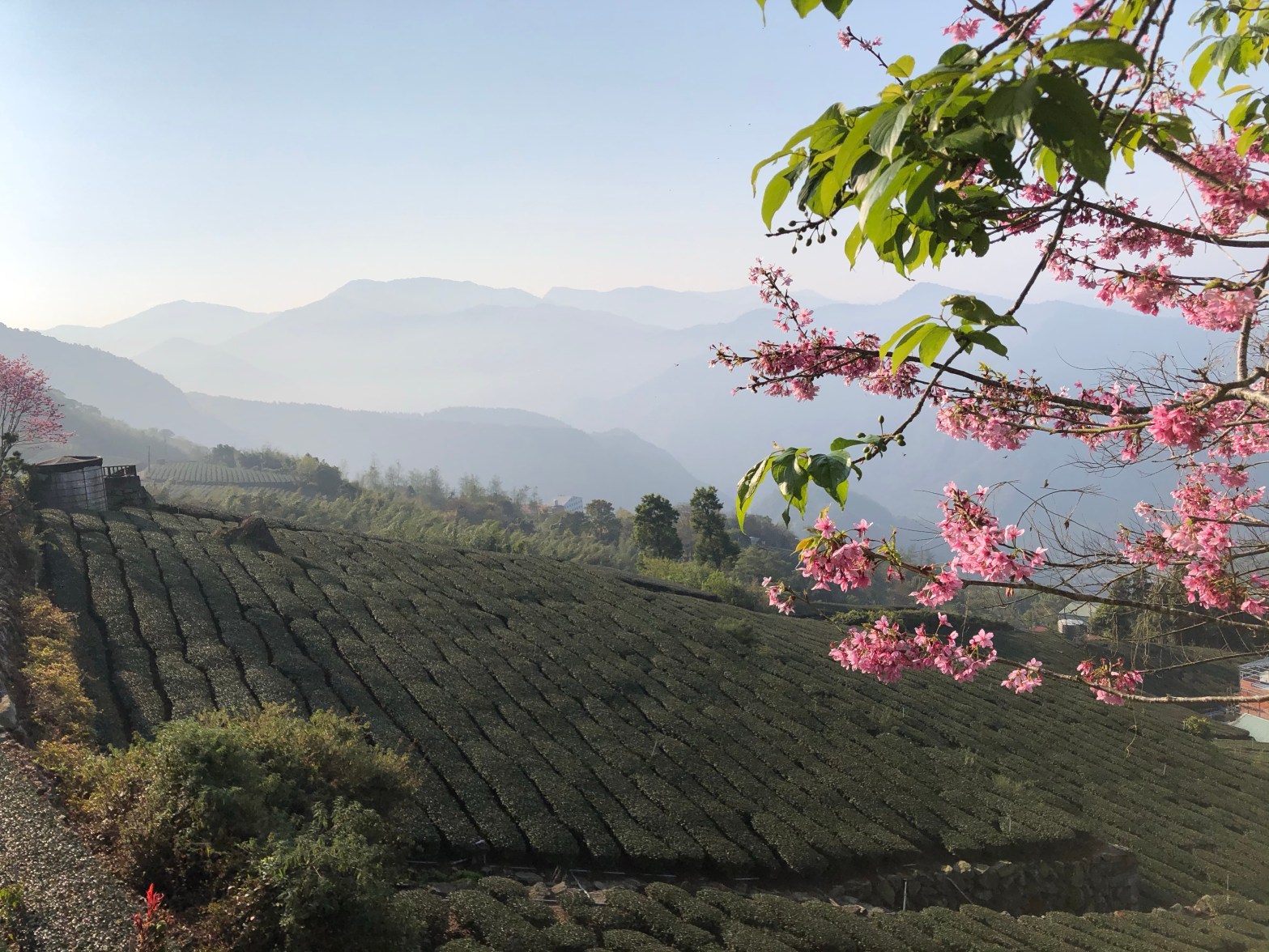
An often overlooked fact about Taiwan is that a majority (2/3) of the island’s land mass consists of a chain of mountains that run down the spine of the island from north to south, with over 100 peaks above 3000 meters and the highest peak Jade Mountain (玉山 Yushan) reaching 3952 meters. One of the most famous regions is Alishan, which is also probably the oldest tourist attraction in Taiwan. It is famous for its sunrises over a sea of clouds, expansive views of the highest peaks in Taiwan, striking valleys, misty forests, cool weather and millennium-old trees.
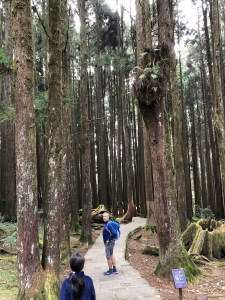
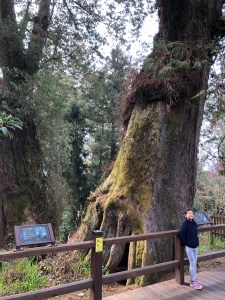
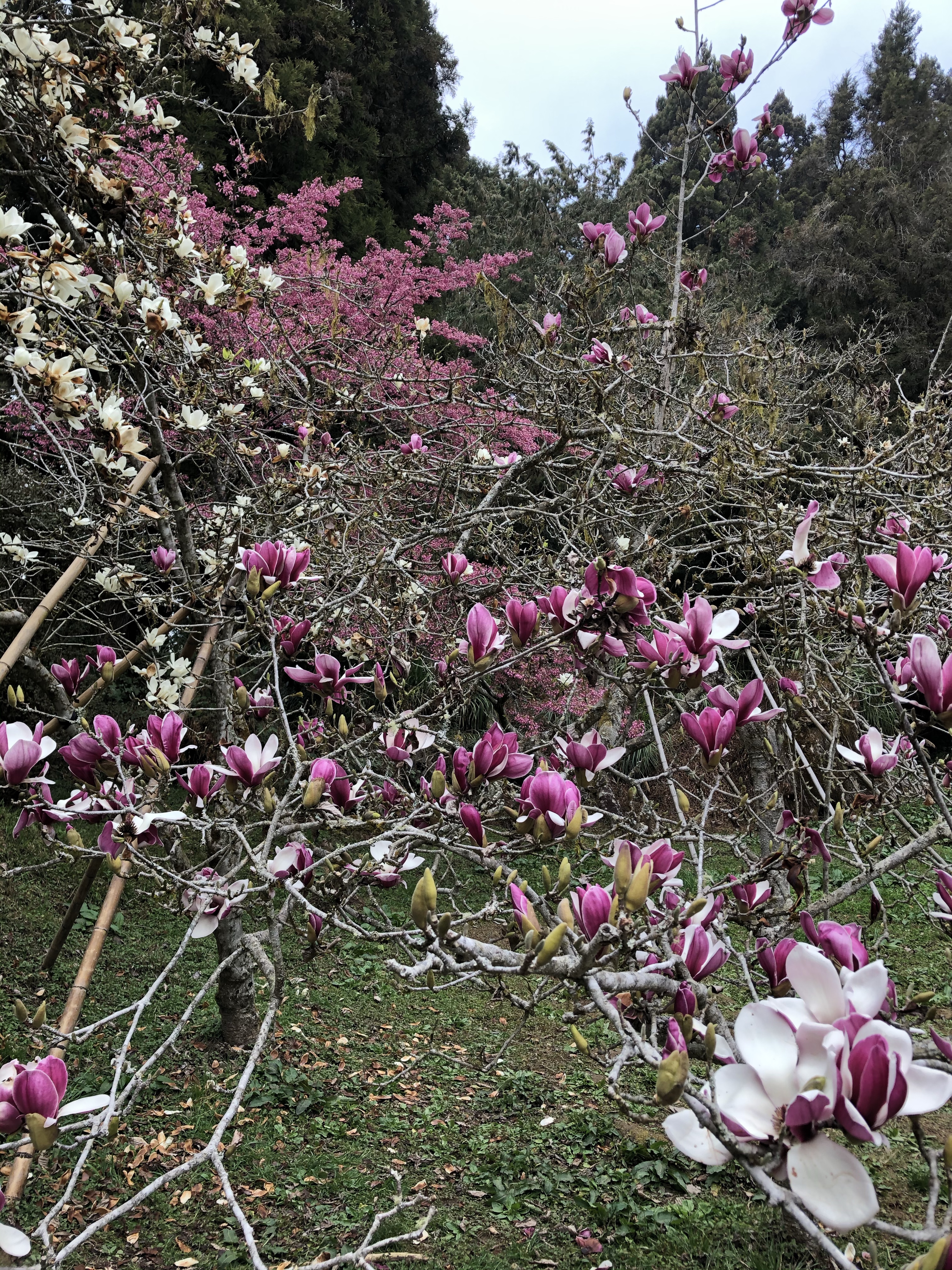
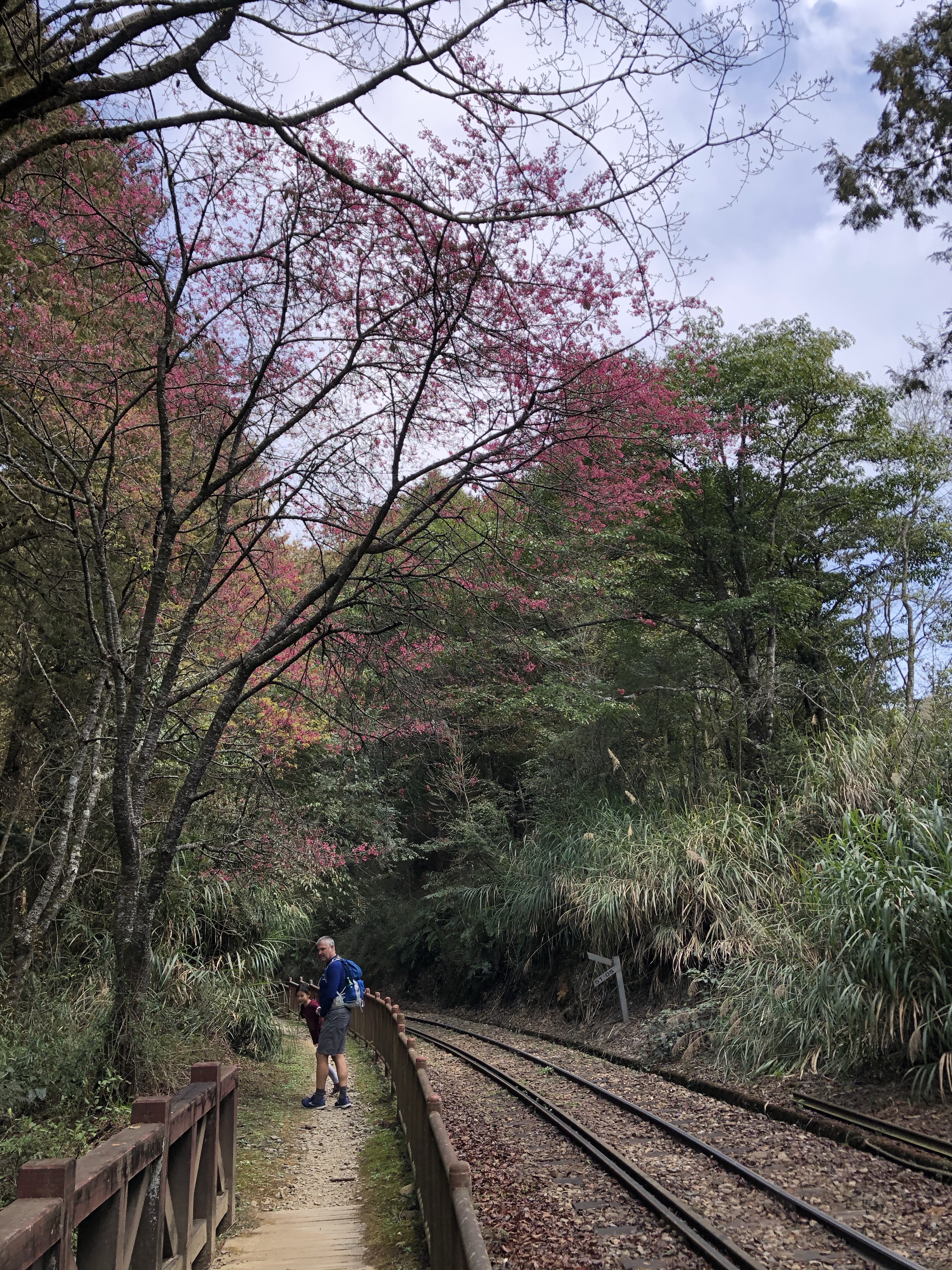
As we witnessed in the Alishan Forest Recreation Area, it continues to be a very popular destination, which means busloads of tour groups appear enmasse to walk the very well-maintained trails and view the cherry blossoms in spring (which we had the pleasure of witnessing).
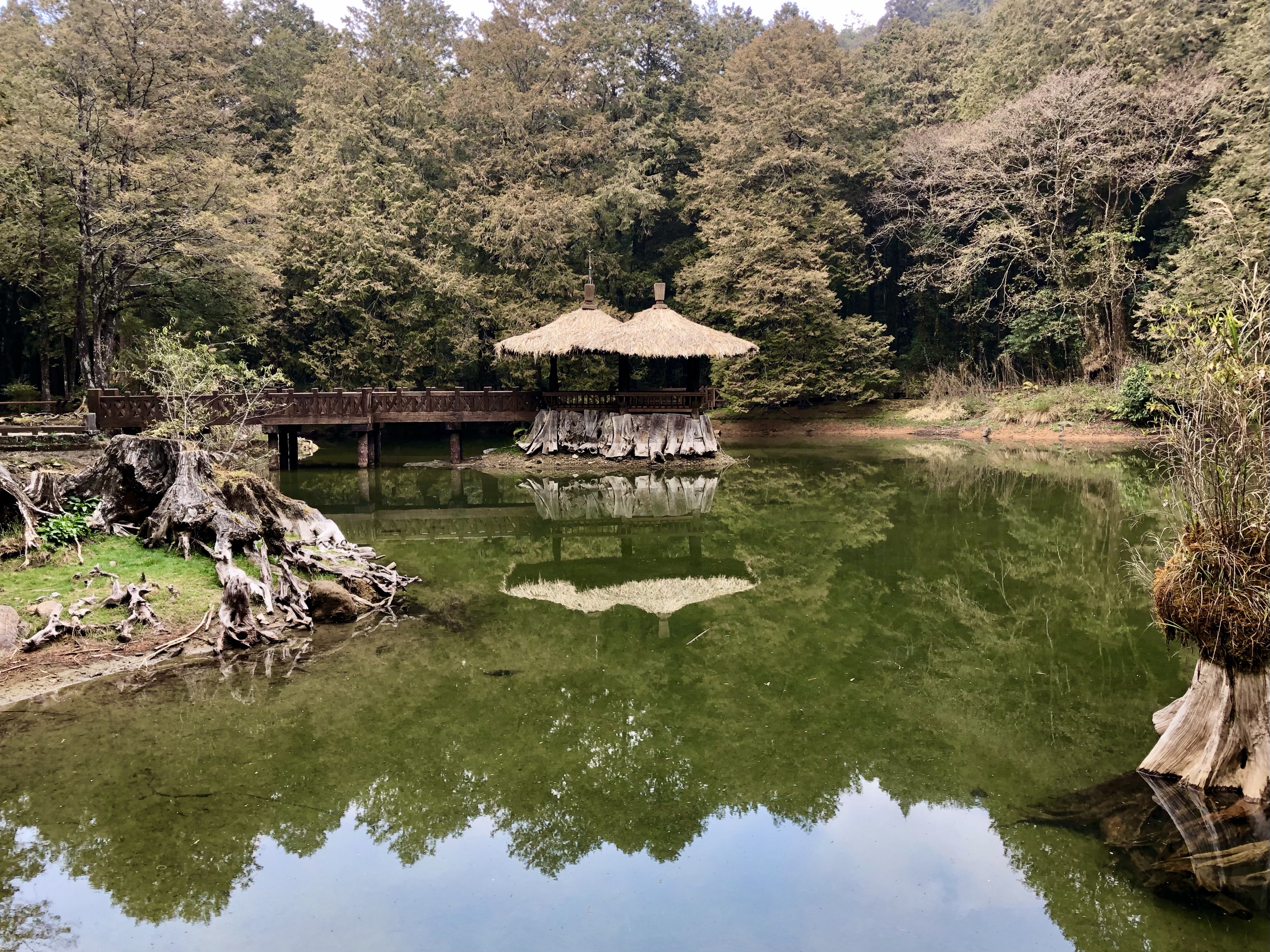
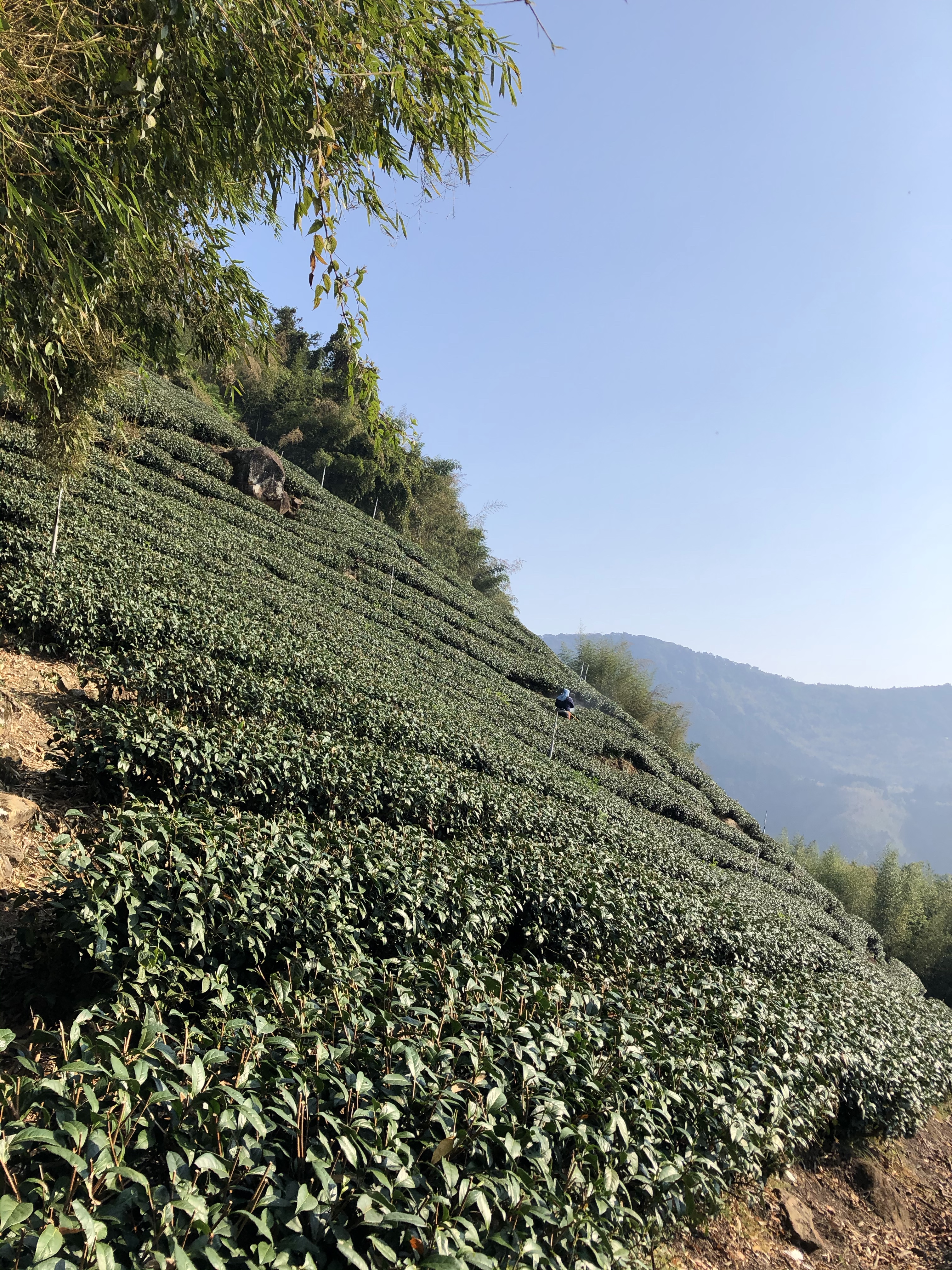
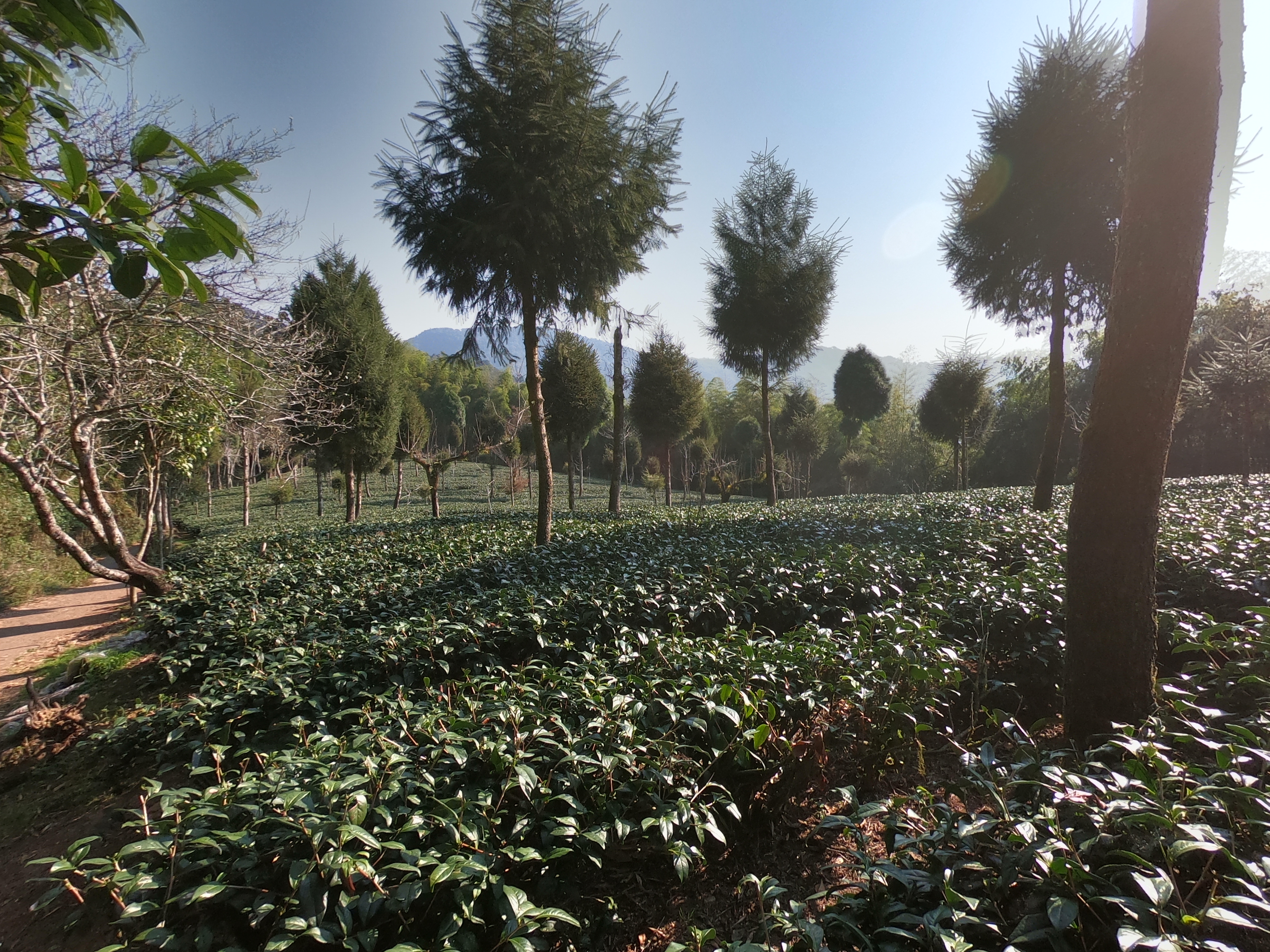
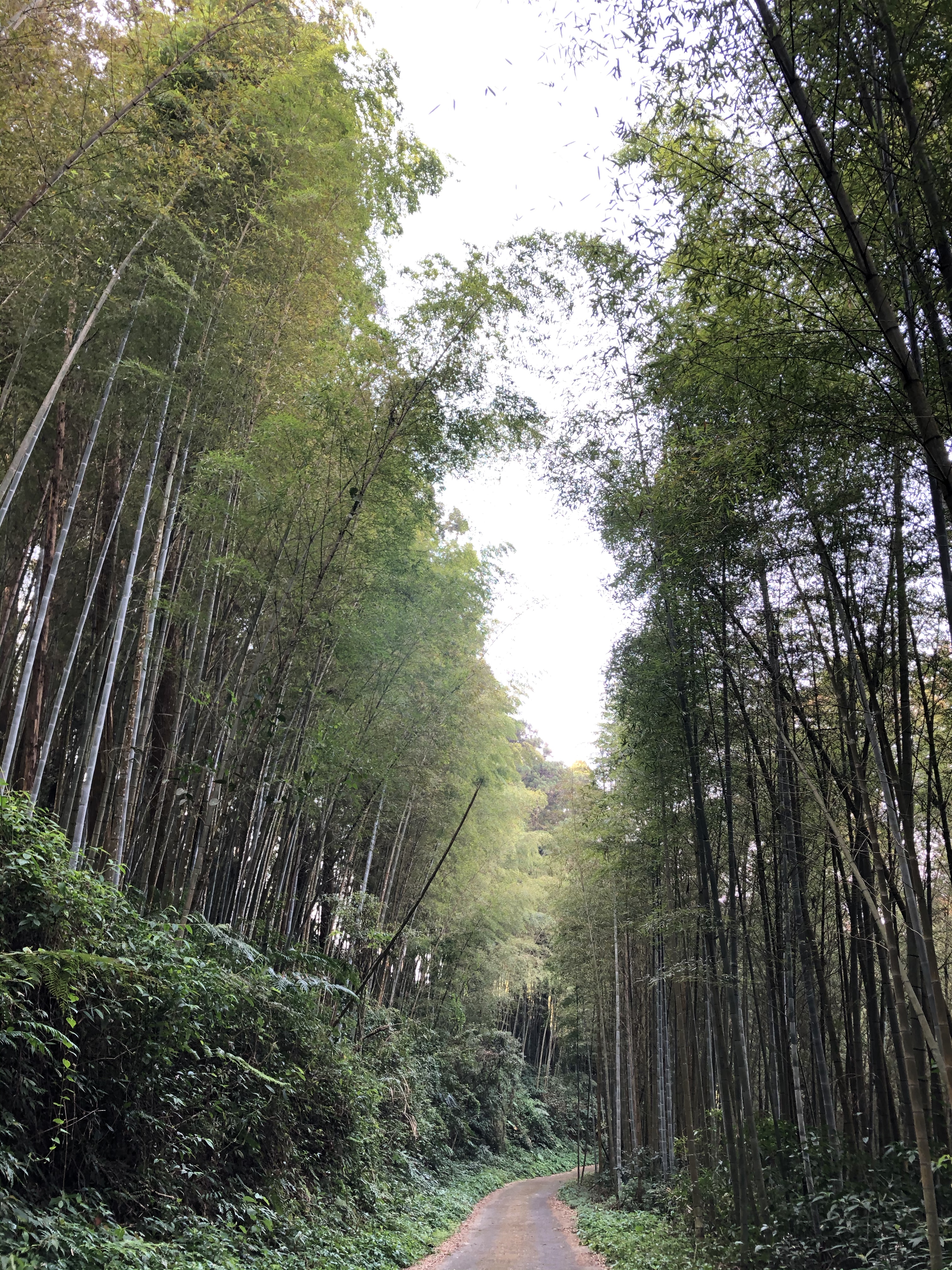
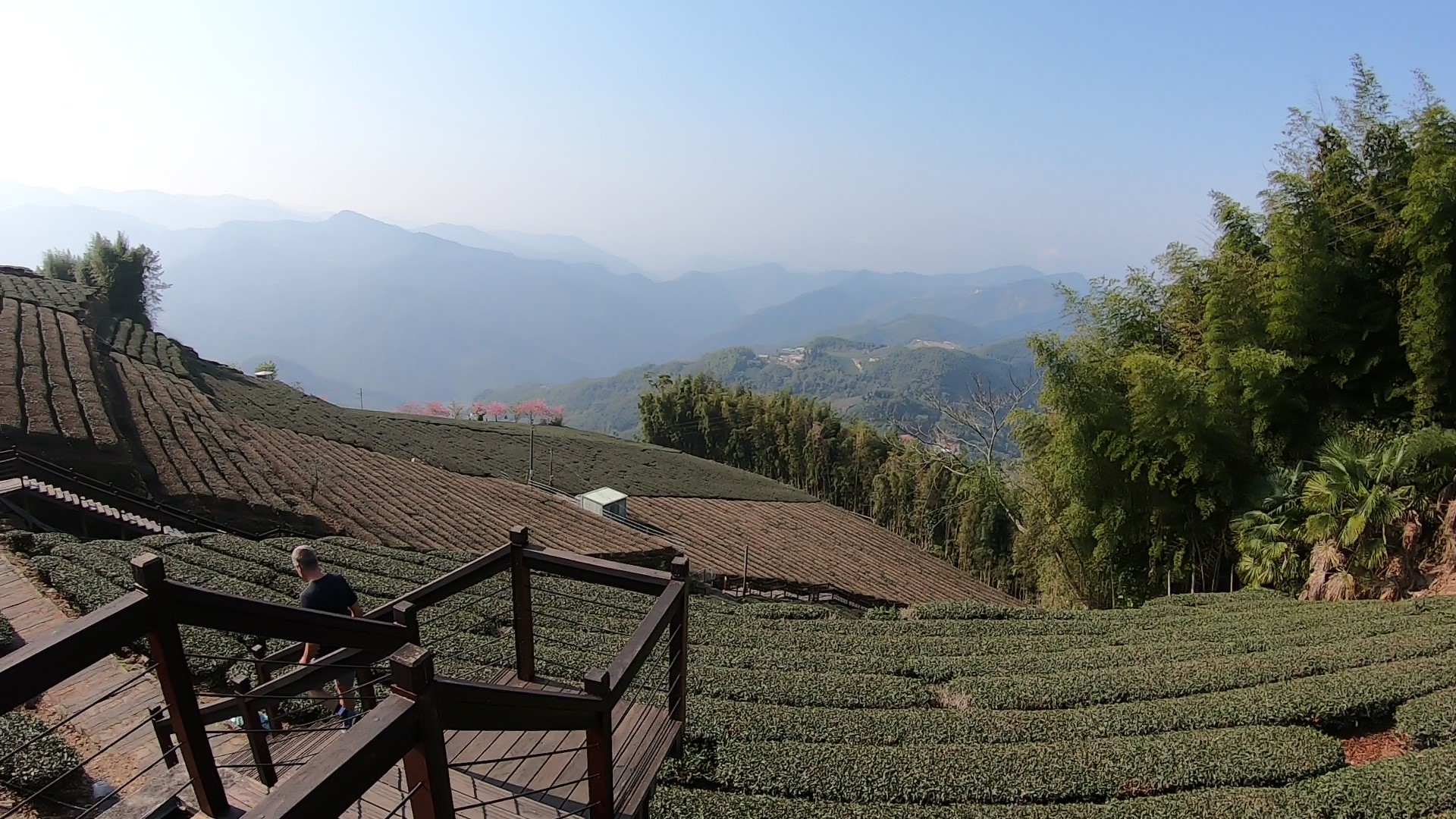
However, one should not be deterred by this fact, because, luckily, the Alishan National Scenic Area and broader Chiayi County encompasses a far larger protected area, of which Alishan Forest Recreation Area is only a small part. It is very possible to get away from the masses. When we walked off the beaten path, even within the park, we were rewarded with amazing views of tea plantations terraced on steep slopes, grand bamboo stands, soaring cypress and cedars, and beautiful misty serenity.
How to Get There
There are two main ways to get to Alishan, both departing from the city of Chiayi (嘉義). The faster and more direct option is the buses that run regularly between Chiayi train station (or Chiayi HSR station) and Alishan Forest Recreation Area. The bus option twists and turns through well-maintained mountain roads and lends itself to stunning and nail-biting views off the side of the mountains into the deep valleys.
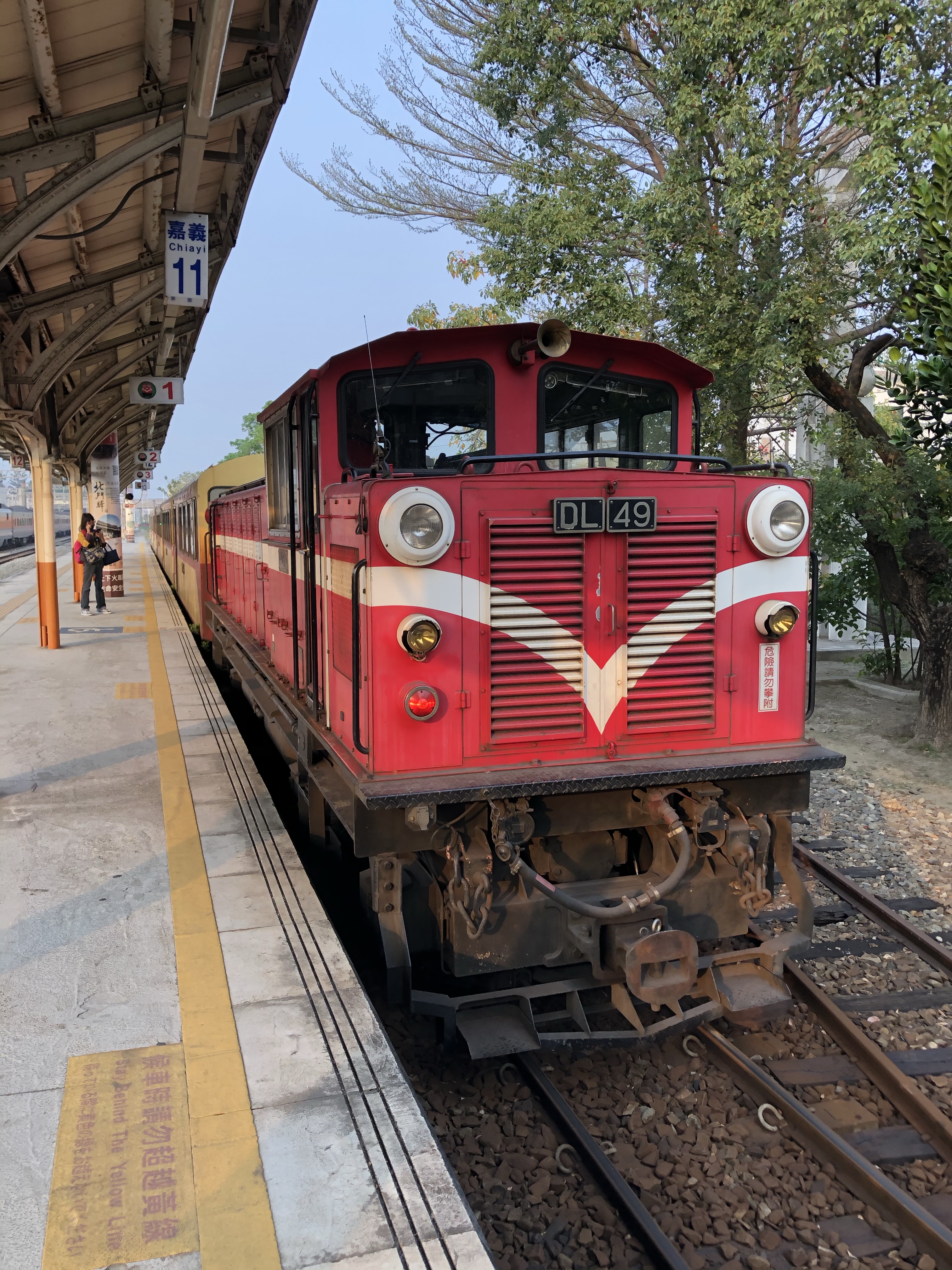
However, for those with a bit more time (and prone to motion sickness), like us, the Alishan Forest Train is a step back in time and offers amazing vistas as the train chugs up, around, and through the mountains. The railway was built by the Japanese in the early 1900’s to transport massive ancient Taiwan hinoki (cypress) wood off of Alishan. It was quite an engineering feat as it snakes through over 50 tunnels and over 70 wooden bridges, hugging the mountain edges. One of only a few narrow gauge (762 mm) trains in operation in the world today, it ascends over 2200 meters, from Chiayi. The train takes about 2.5 hours to reach Fenqihu, a historic village set in the mountains and serves as a major stop on the Alishan Forest Train railway. There are several stops before Fenqihu which appear to be accessible by hiking trails or be the start of them, which would make for some dramatic hiking in the future. The train continues on to two other stops but, as of this writing, the railway connecting to the Alishan area is still being repaired and, therefore, one would still need to catch a bus onward to Alishan. For those with some transportation flexibility, I would even recommend catching the train at Zhuqi station (竹崎車站) where it begins to ascend the mountains and skip the 1 hour ride through Chiayi metro area.
Once at Fenqihu, there are buses available onwards to Shizhuo (石槕) and Alishan. The buses are not frequent so check the timetable at the stop down the hill from the town where all the tour buses are parked. The published schedule online may not reflect the actual times for buses 7322 and 7329.
Fenqihu (奮起湖)
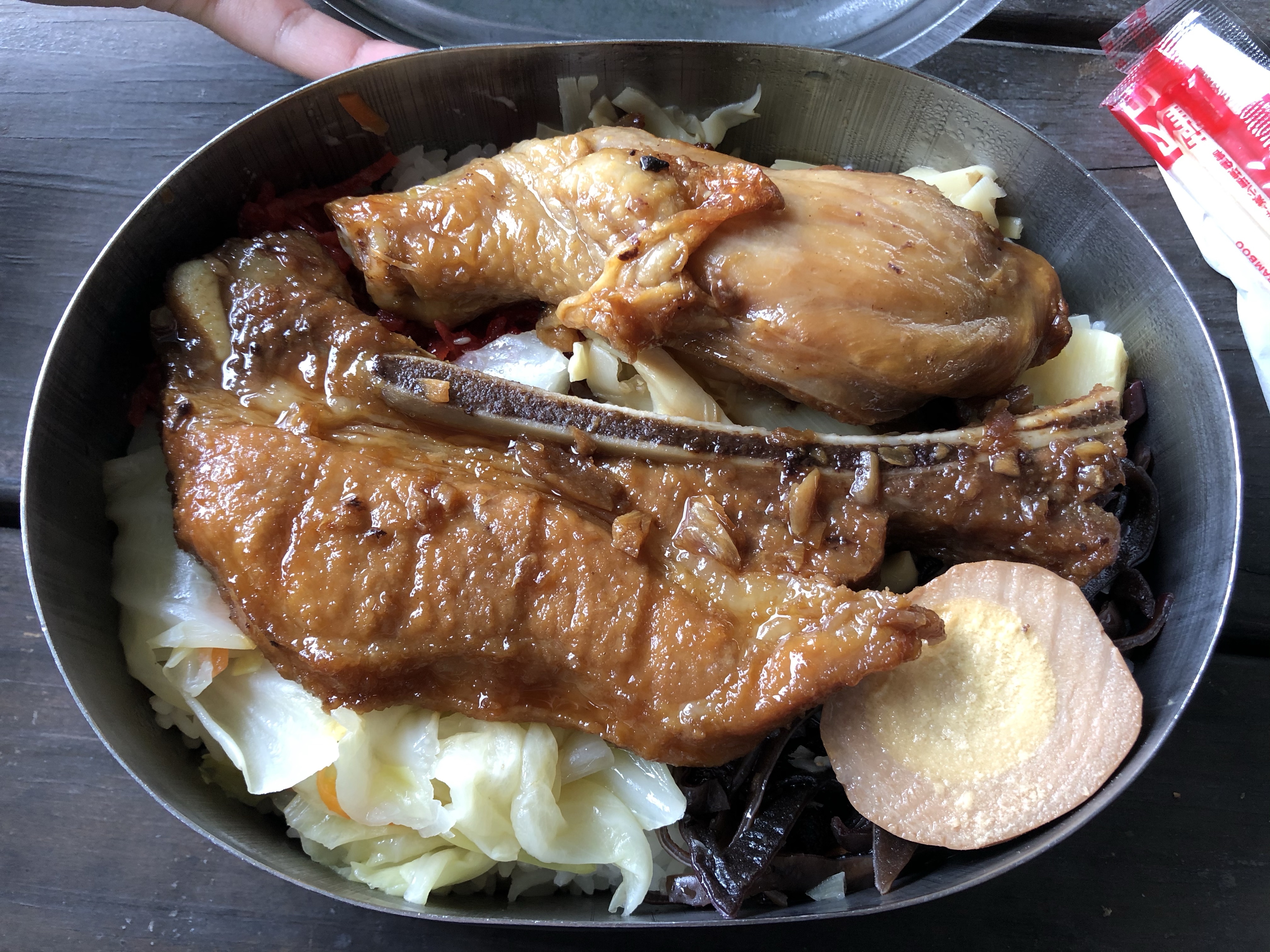
Fenqihu is a small mountain village that has maintained some of its old world charm. We noticed the clouds rolled in and around the mountains giving the town and the surrounding forest that dreamy misty feel. It is a relaxing place to wander around through its steep and tight alleys full of vendors and have a famous railway bento lunch or sip some locally grown coffee on an outdoor veranda. There are also different forms of wasabi products to be purchased including fresh wasabi root.


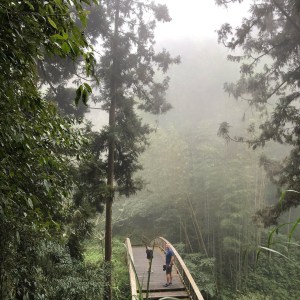
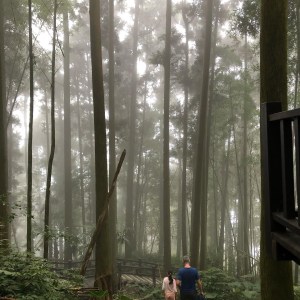
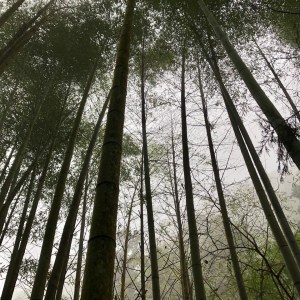
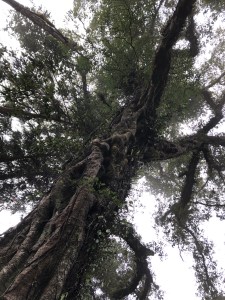
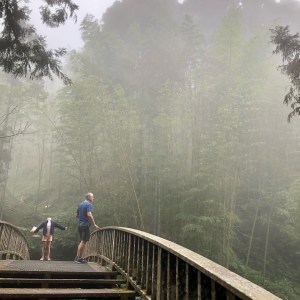
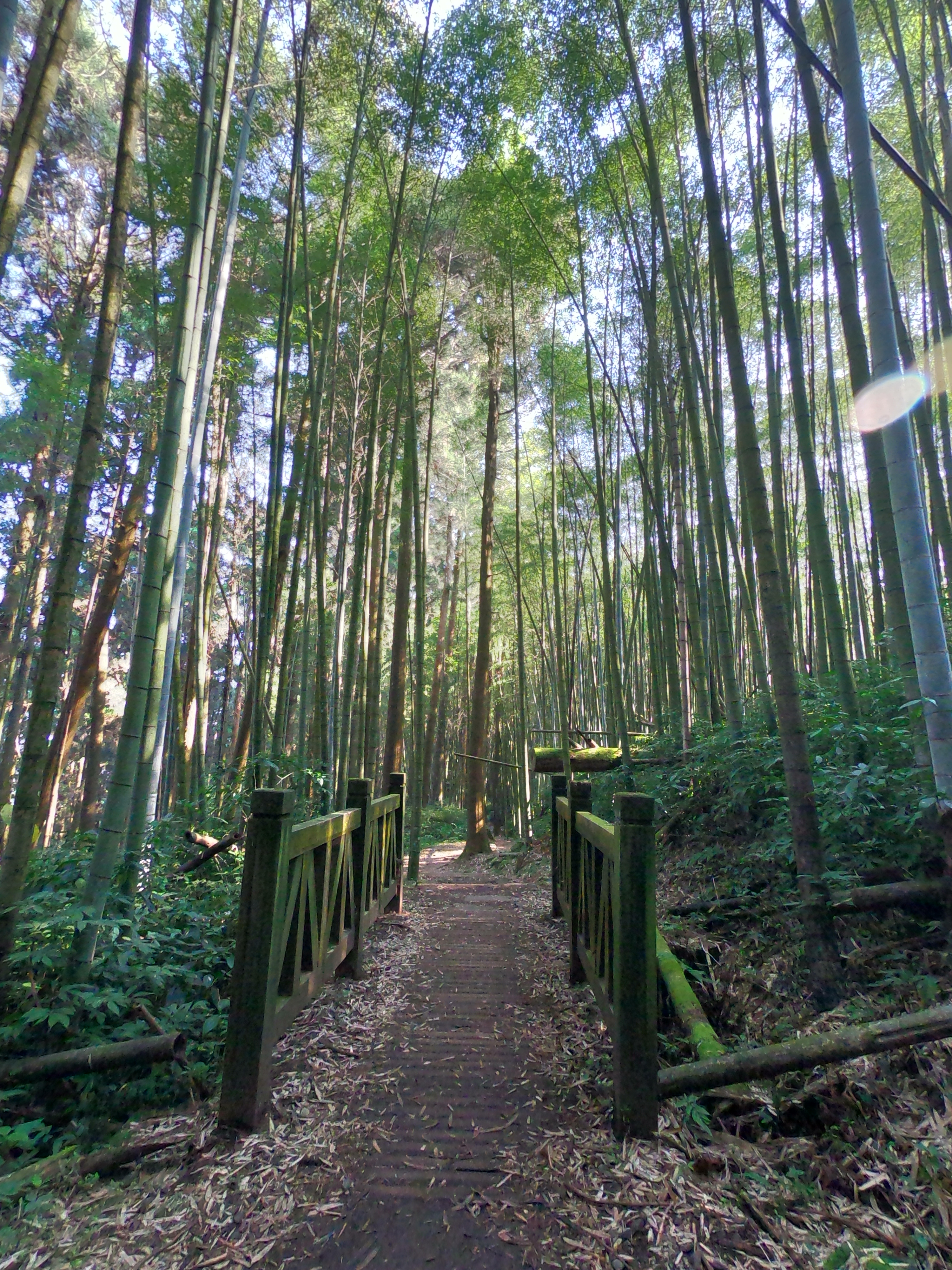
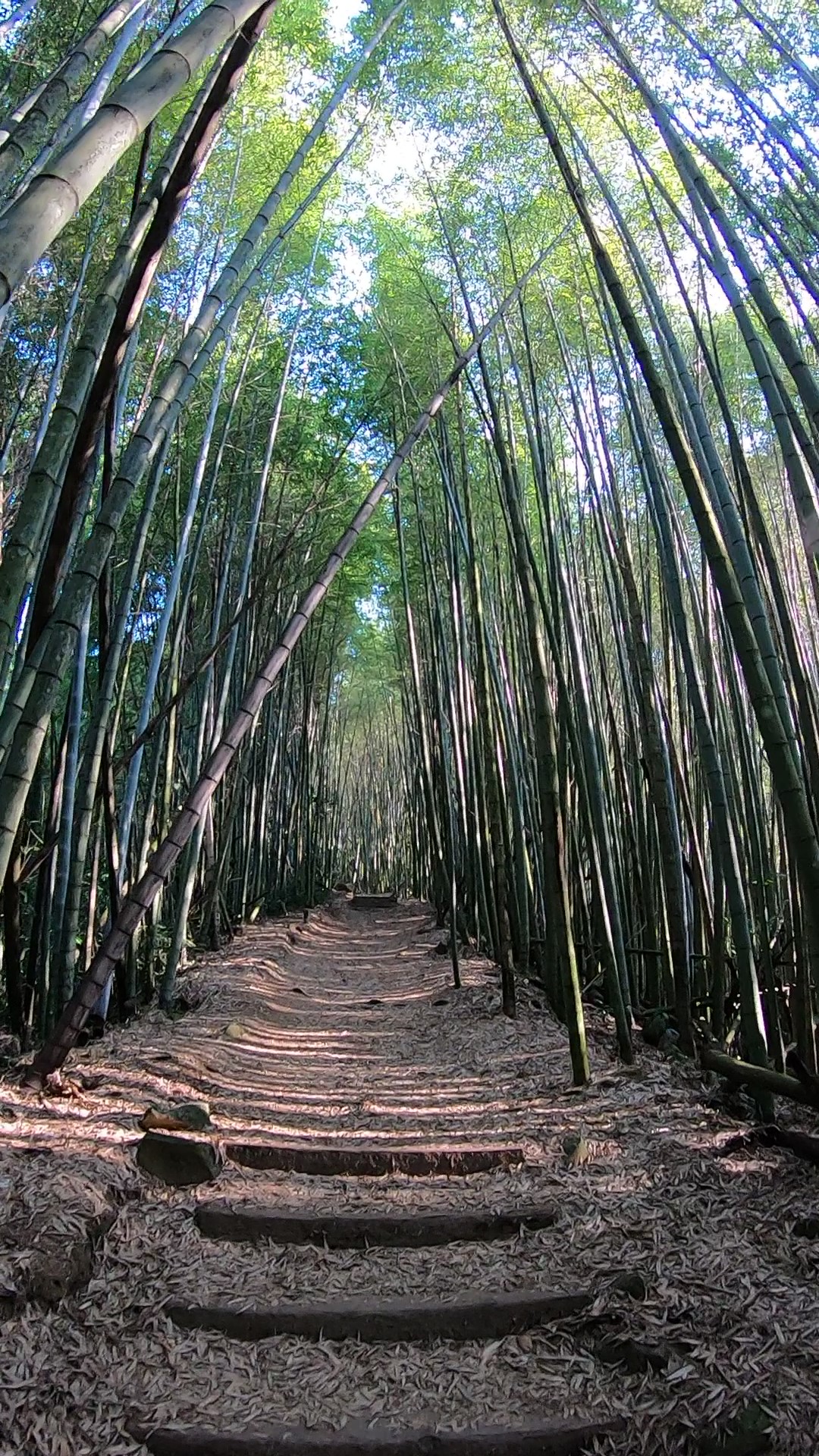
The town is a starting point for some nice trails that take you away from the busy train station area. We especially loved the logging trail (奮起湖木馬棧道) that steps through giant bamboo and cedars and ending at an old tree. The out and back trail is relatively short but the numerous steep steps deter the casual tourist from taking the road less traveled allowing us to enjoy the cool, fresh air in quiet contemplation.
Alishan Tea Plantations in Shizhuo (石槕)
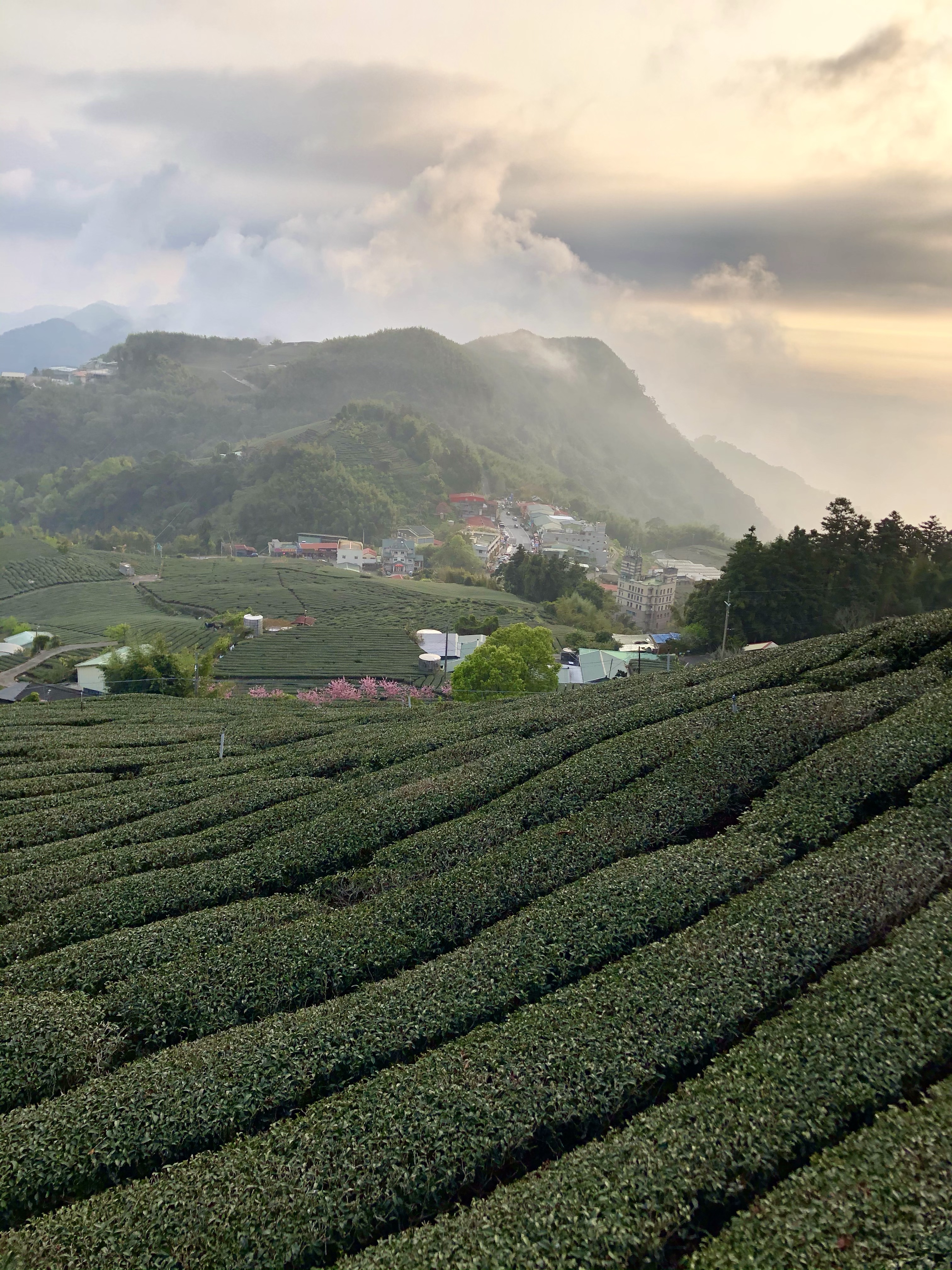
The dominance of the mountain range on such a compact island means land is at a premium but it also means these are ideal growing conditions for the world-renowned high-mountain oolong tea (烏龍茶). Those in the know recognize this tea to be some of the most prized and unique teas in the world. Taiwan oolong, especially high-mountain tea (grown at altitudes above 1000 meters), are very aromatic, slightly bitter and sweet teas (meant to be sipped and not adulterated with milk, sugar, or honey).
We learned from our B&B host in Shizhuo—whose family dates back five generations of tea plantation owners—that there’s also a distinction between which season tea leaves are picked, with the best times being spring (April/May) and winter (November/December). They also explained to us that the serene vistas of tea plantations are here to stay for generations to come as this is a protected area. Decades ago, the government designated this region as a protected scenic area by purchasing/claiming ownership of all the land and leasing the tea plantations back to descendants of original plantation owners for a nominal fee. Development is not permitted except for grandfathered home plots where homestays and B&B’s have been established. These simple accommodations are nestled in the mountainside with easy access to hiking and provide dramatic vistas everywhere one turns.
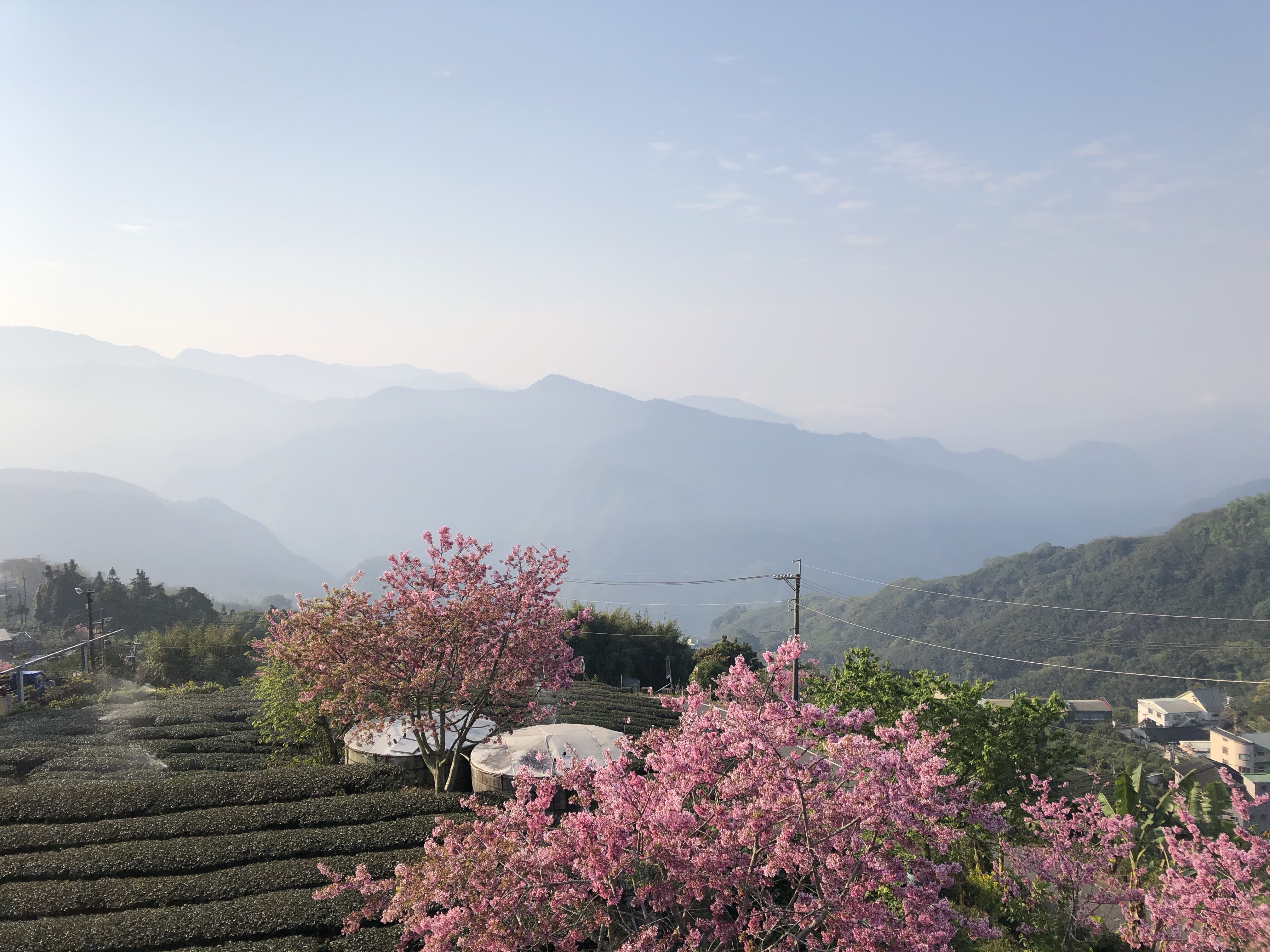
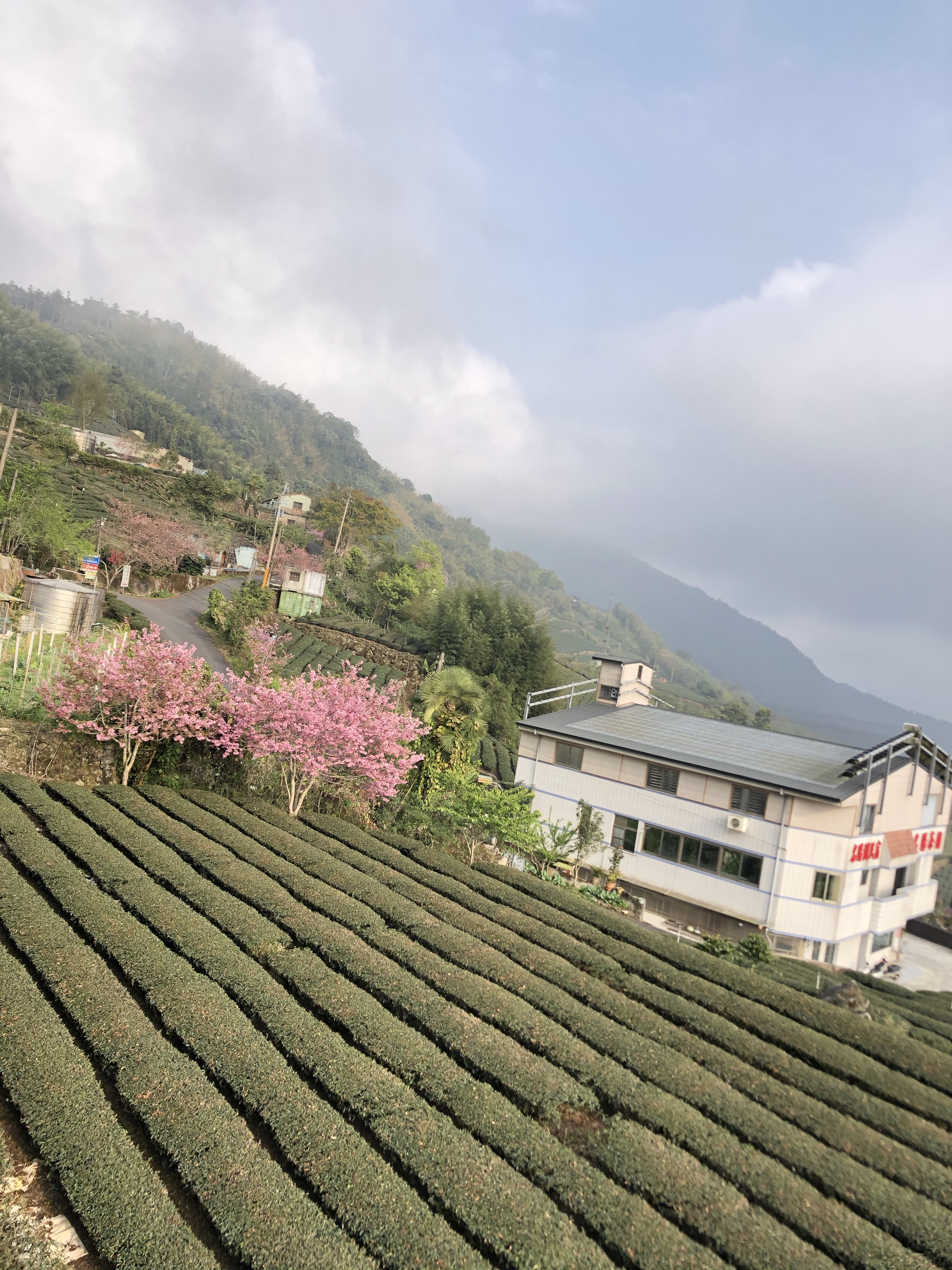

In and around Shizhuo, there are hiking and walking paths that go through tea fields, bamboo stands, and cedar forests. An early morning hike reveals a magical landscape of Crouching Tiger, Hidden Dragon caliber. I highly recommend starting at the Mist Trail, where one can get unobstructed sweeping views of the tea fields and a new coffee field as some tea plantations are experimenting with growing coffee. The results has been very interesting, though expensive, coffee beans.
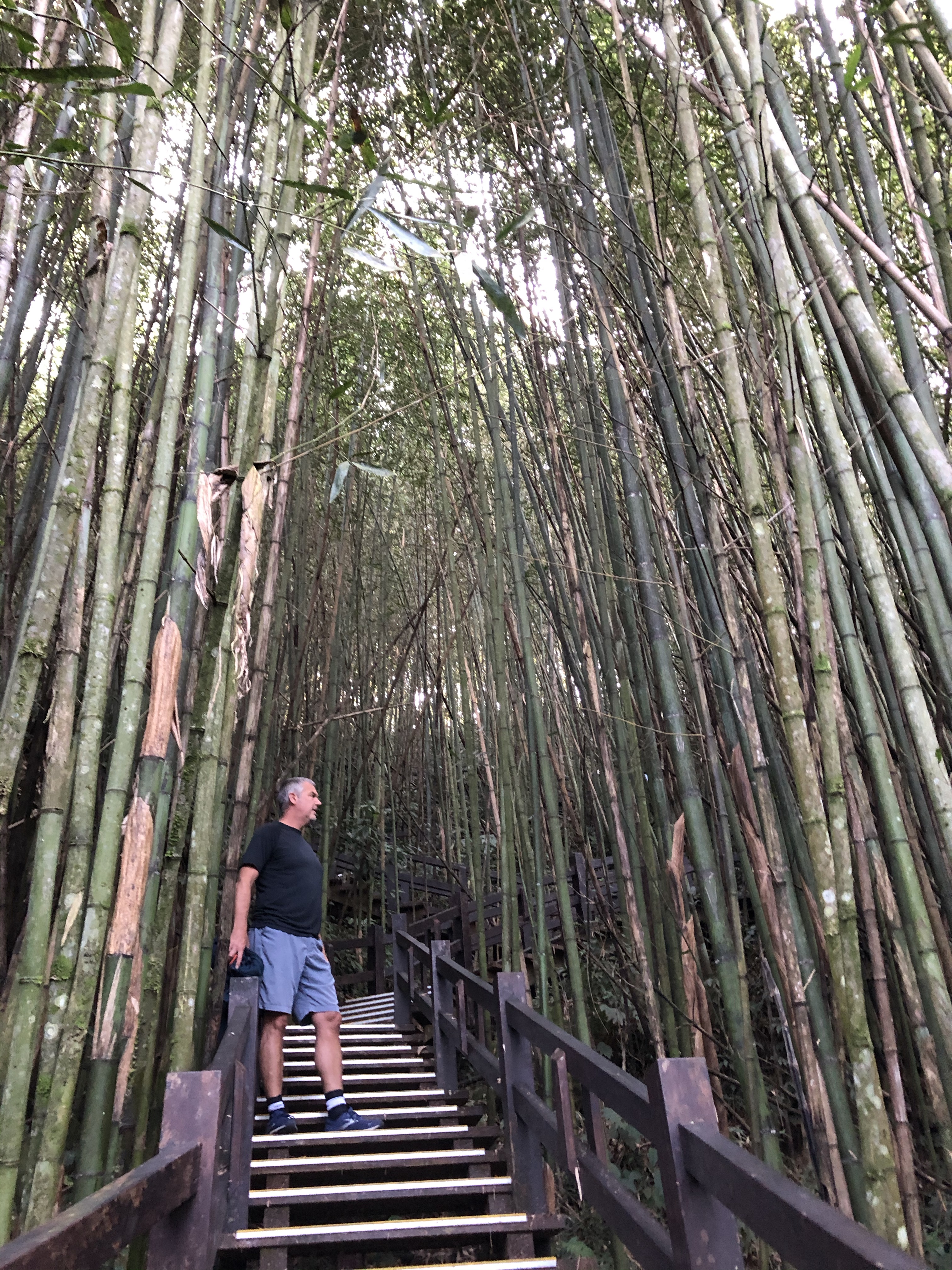
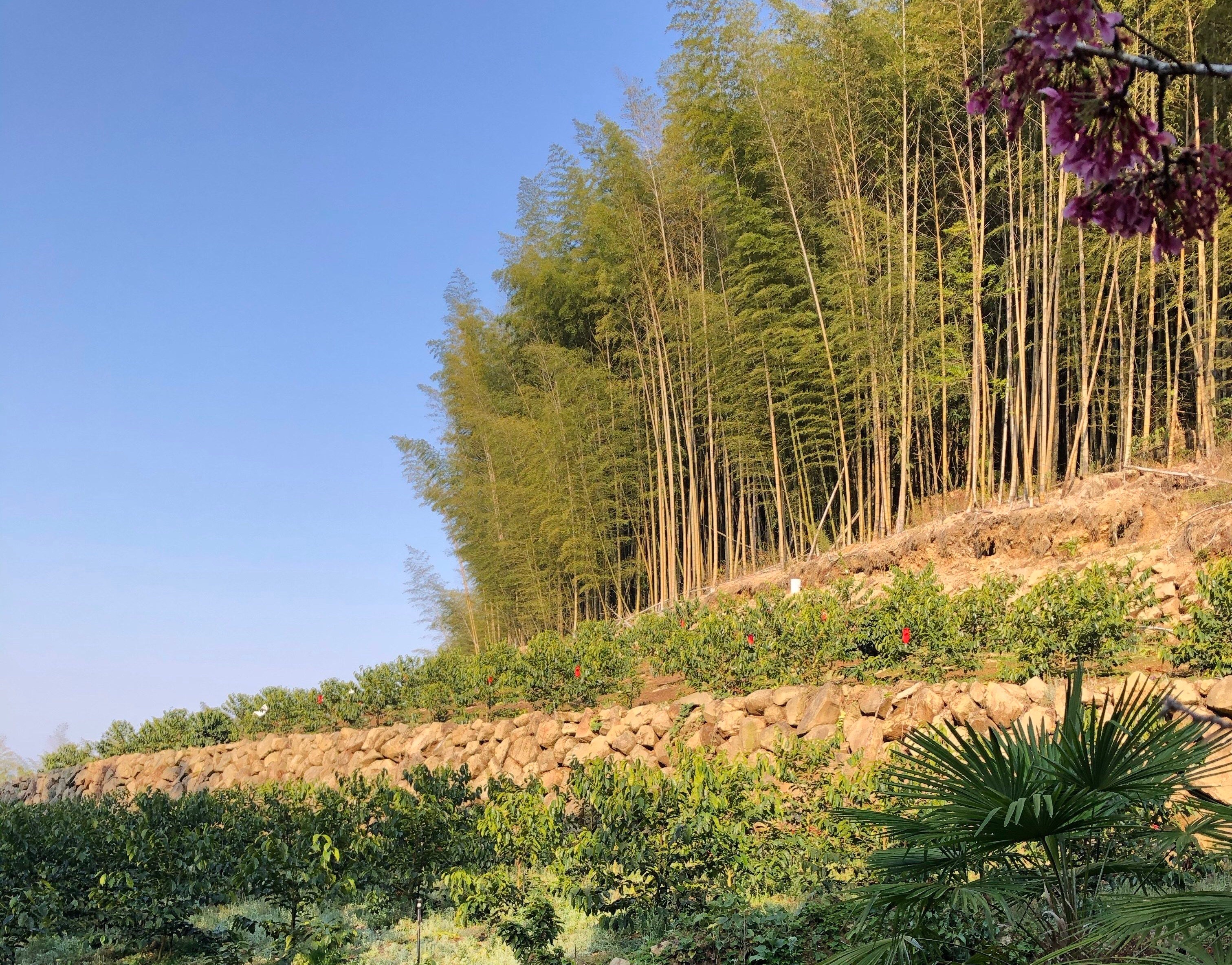
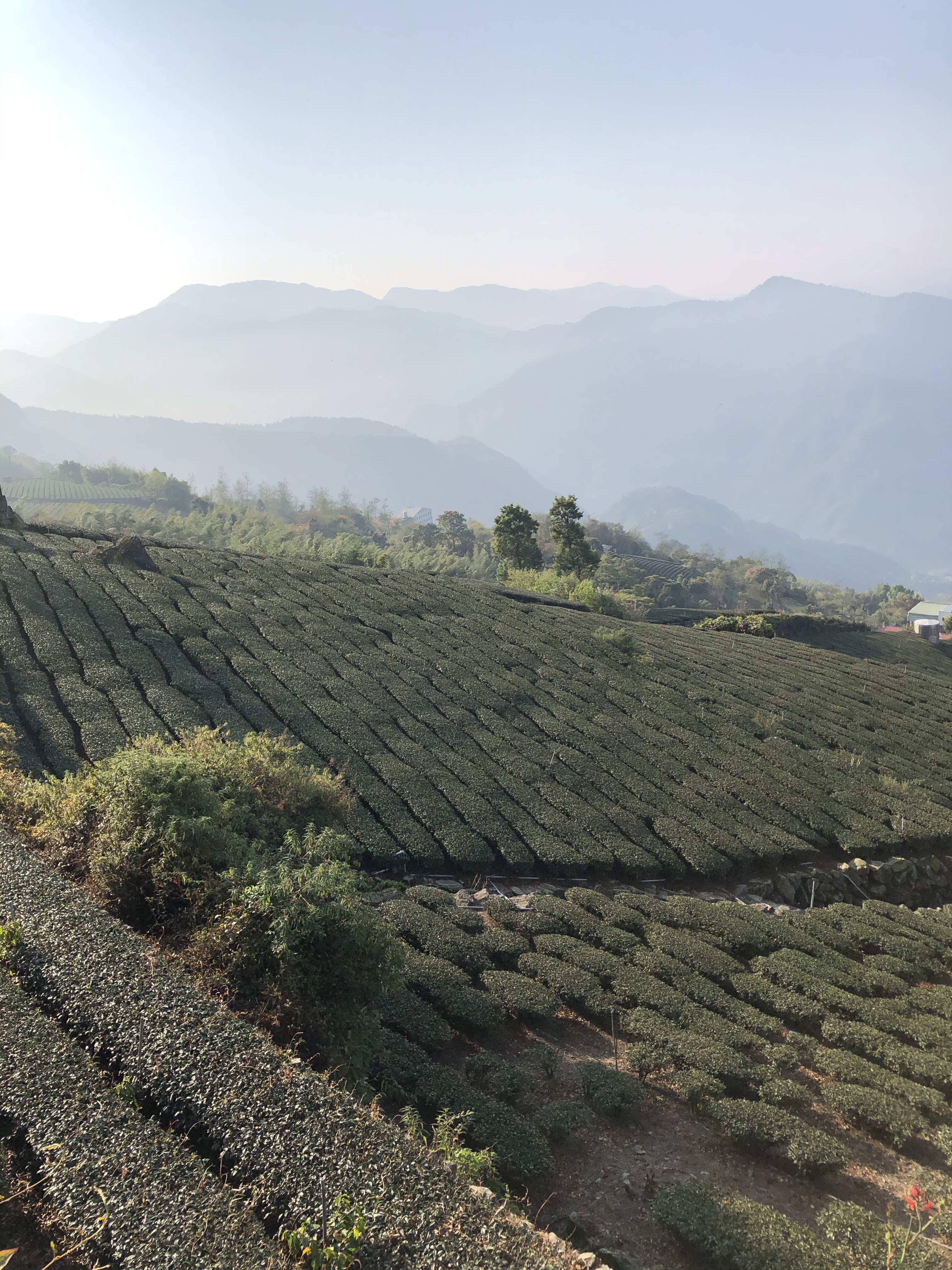
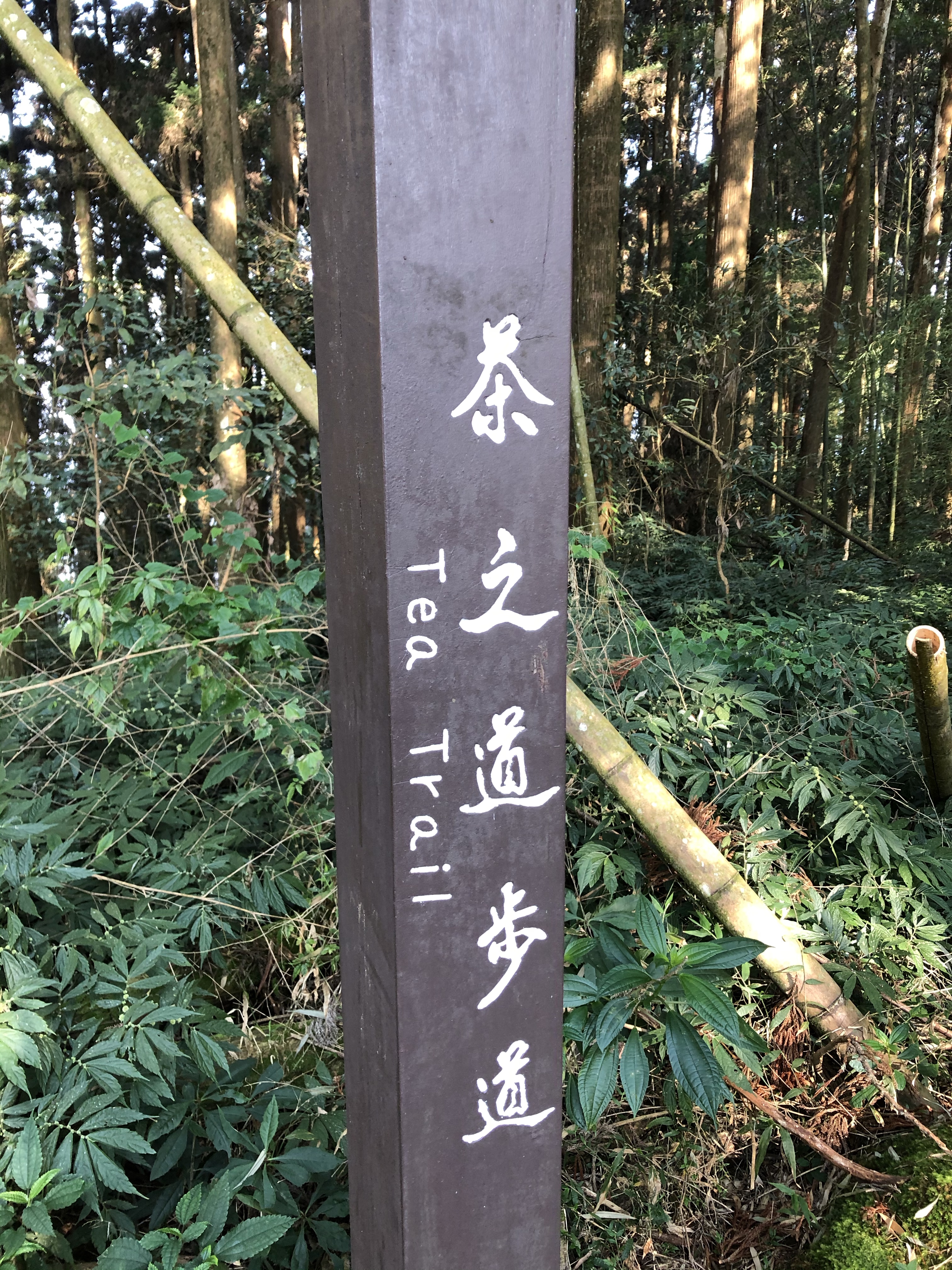
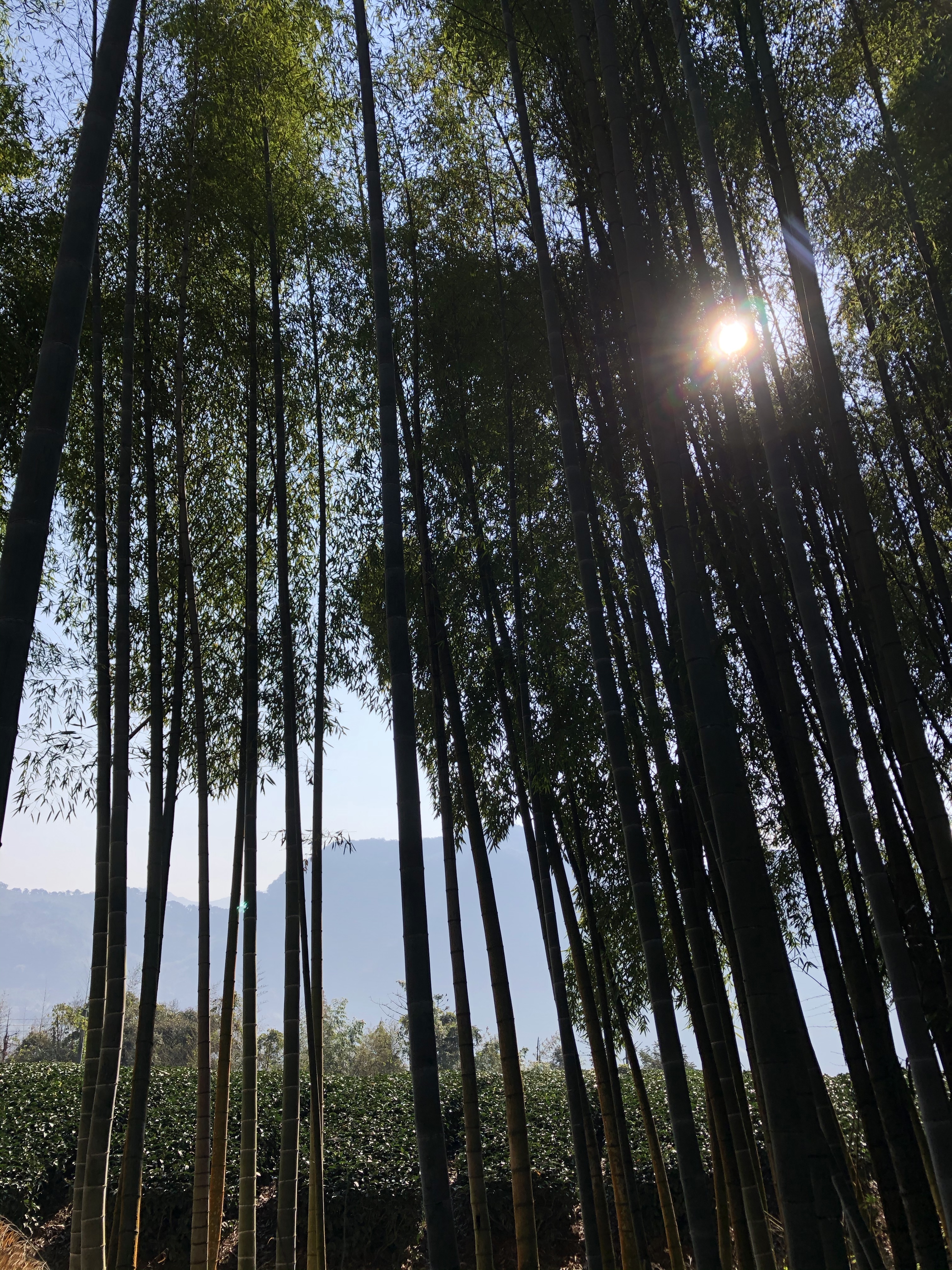
The Mist Trail then connects to the dramatic Tea Trail with its bamboo canopies and high-altitude terraced tea fields. After the 1 kilometer climb straight uphill, one can choose to connect to the Cloud Trail, return downhill on a country road, or continue upward to Datong Mountain (大凍山). Coming downhill, one can also pass the cherry orchard blooming in March and the Sunset Trail that consists of a long series of steps down through tea fields.
Additional Resources
For more detailed descriptions and recommendations for activities in the Alishan area, this blog by Nick Kembel is extremely thorough.
 Everyday Dan Bing