
For those who want to check out this southern city of Taiwan, here is a suggested three day itinerary for exploring the area in and around the city center. It is best to book a hotel near Siziwan, Central Park or Formosa Boulevard as they are quite central locations and help facilitate traveling around the city via subway, tram and YouBike. These were some highlights of our stay.
Day 1 (Starting in the South)
Caishan (柴山) and Shoushan (壽山) National Nature Parks
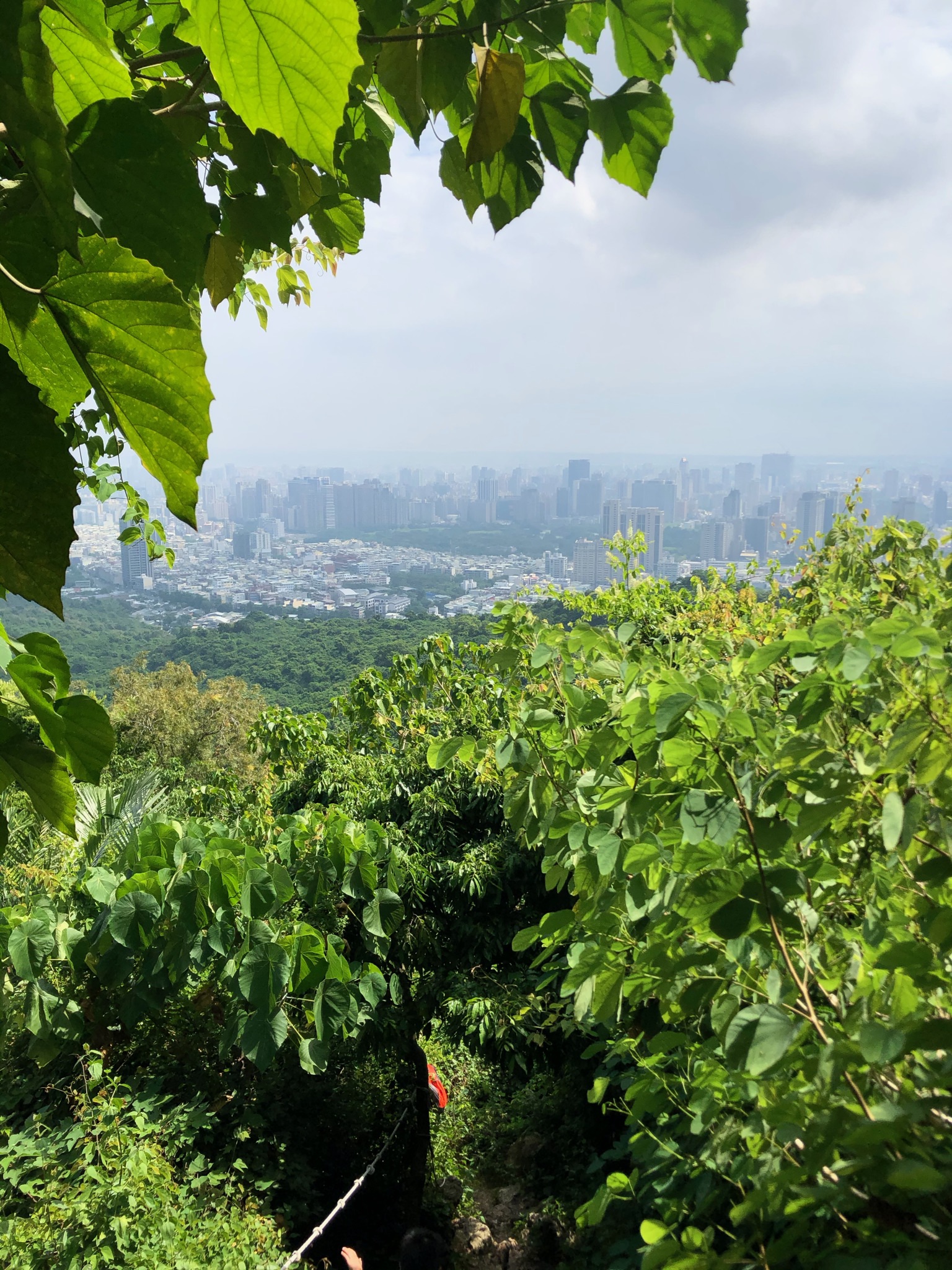
Hike up one or both of these mountains on their very well constructed staircase trails or go off the beaten path and explore the rocky offshoots that take one into jungles of tropical trees and old coral formations as well as breaks for taking in panoramic views.
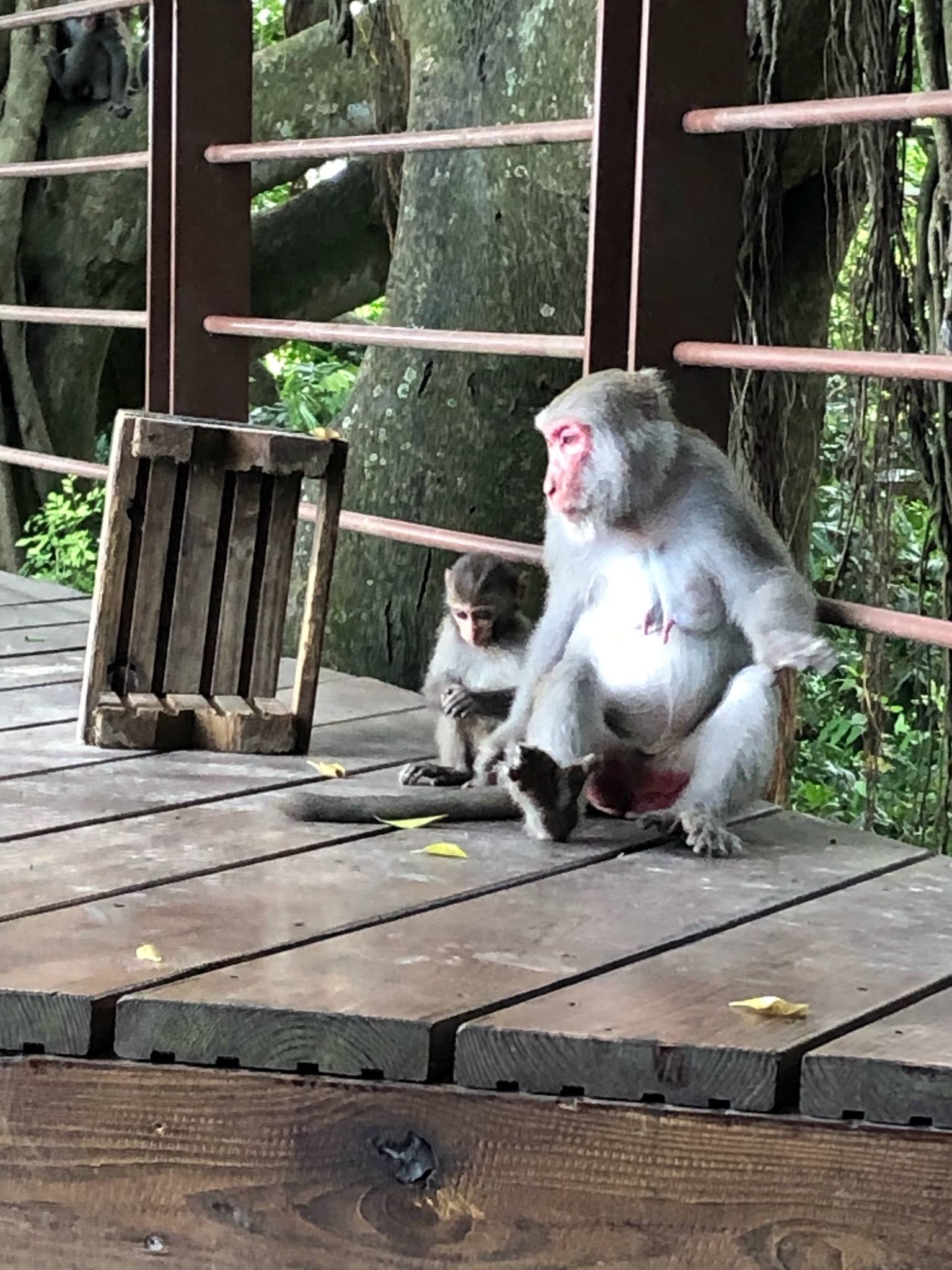
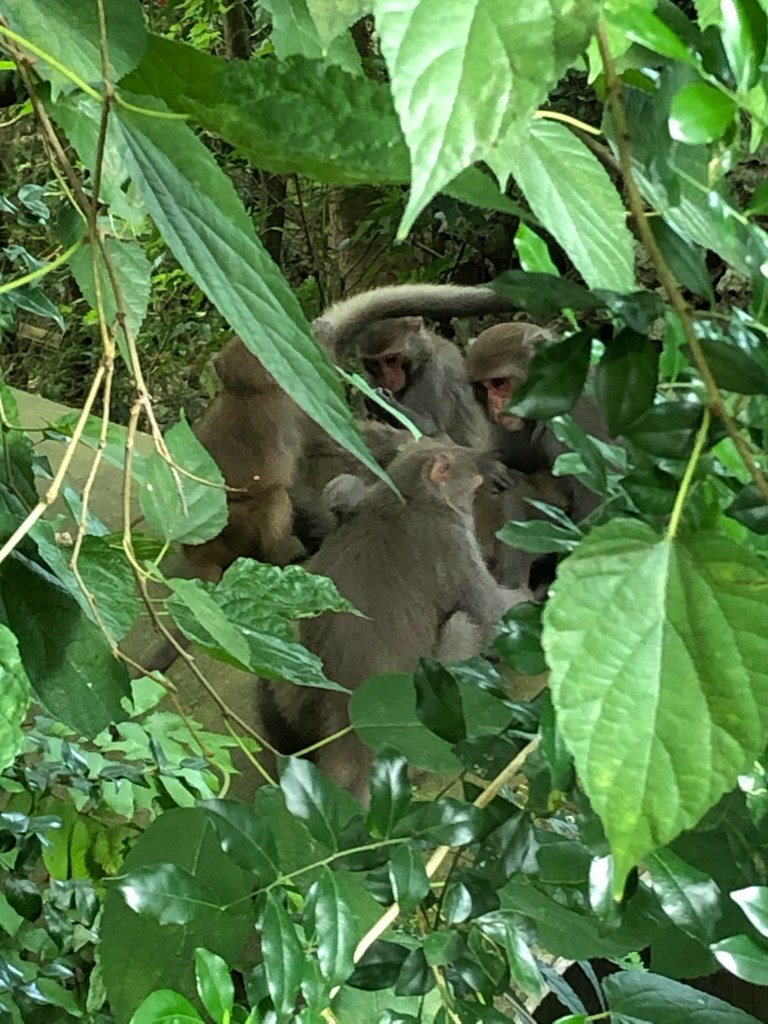
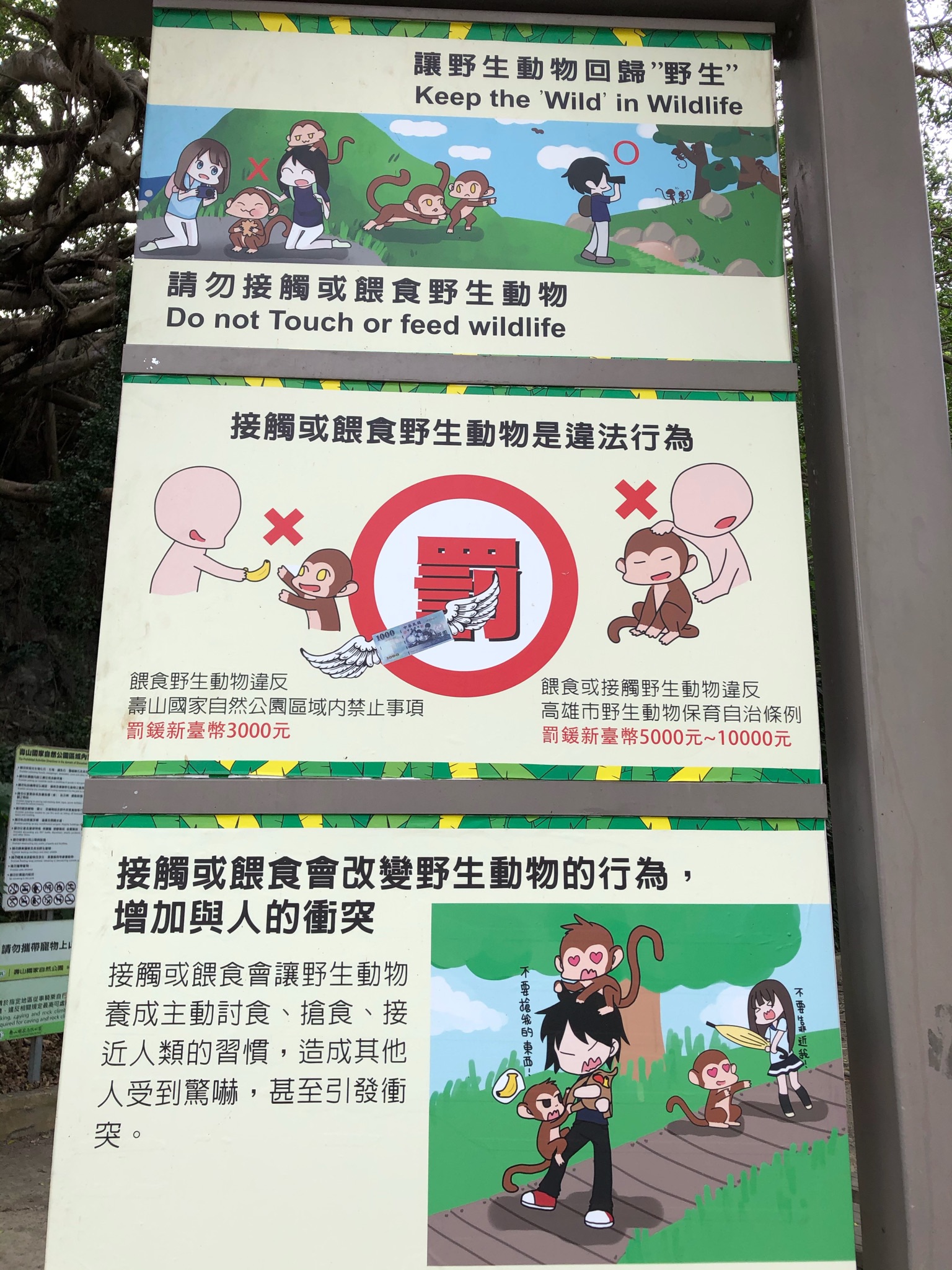
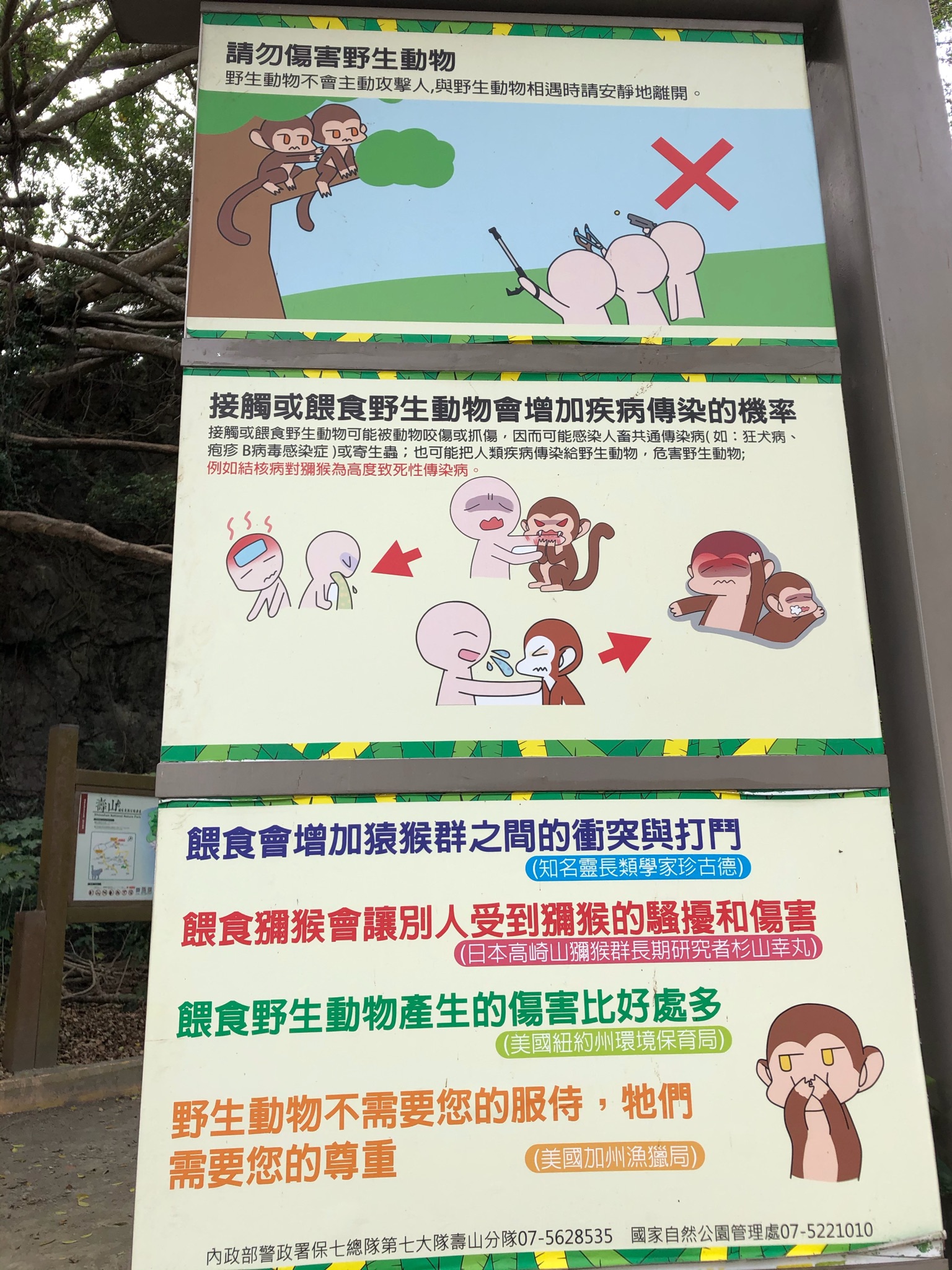
These mountains are often referred to as Monkey Mountain because the Formosan macaque reign in these mountains and one will likely encounter numerous macaque families hanging out on the trails. In typical Taiwanese fashion, there will be signage warning you the many ways not to approach the macaques.
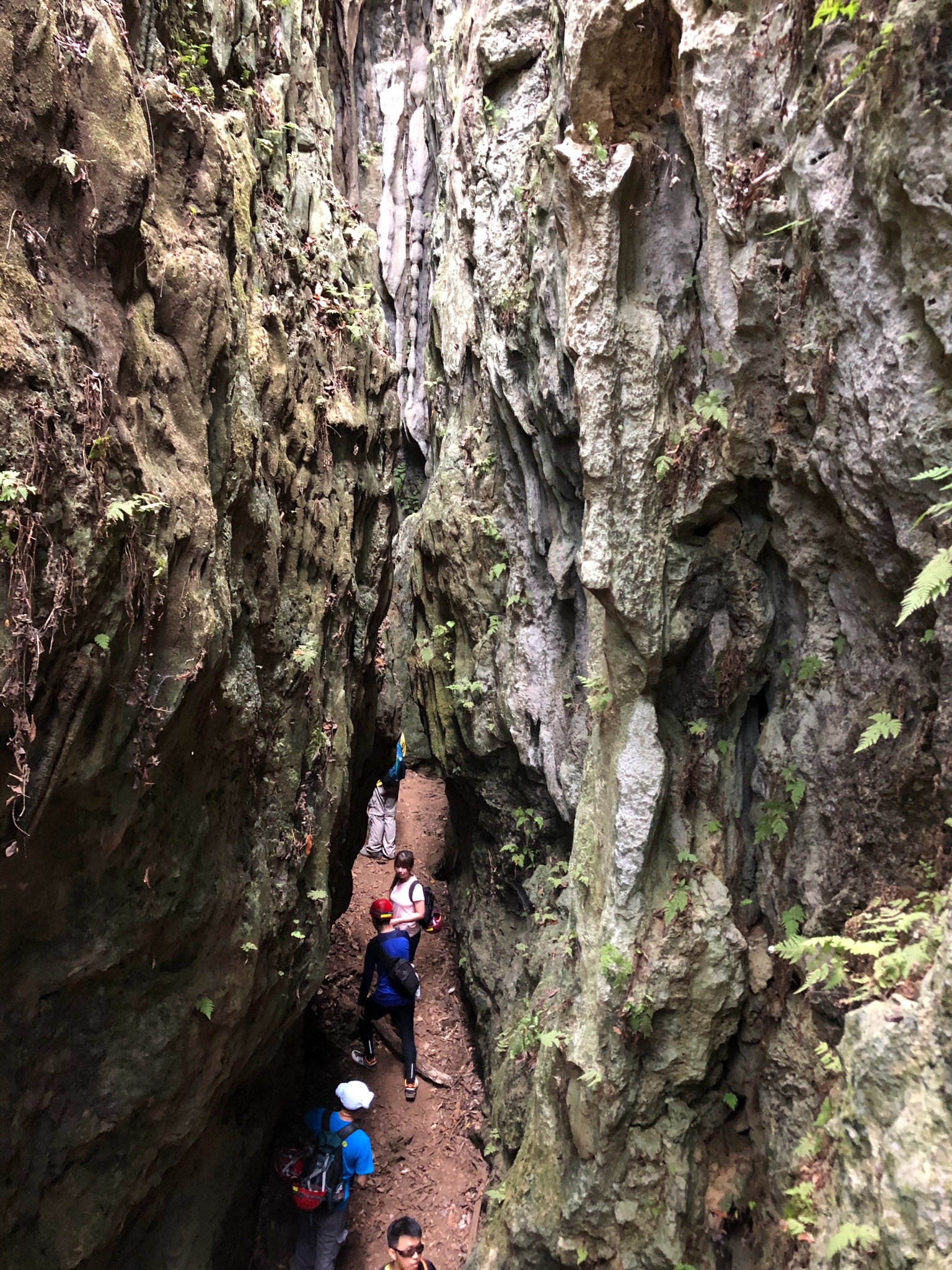
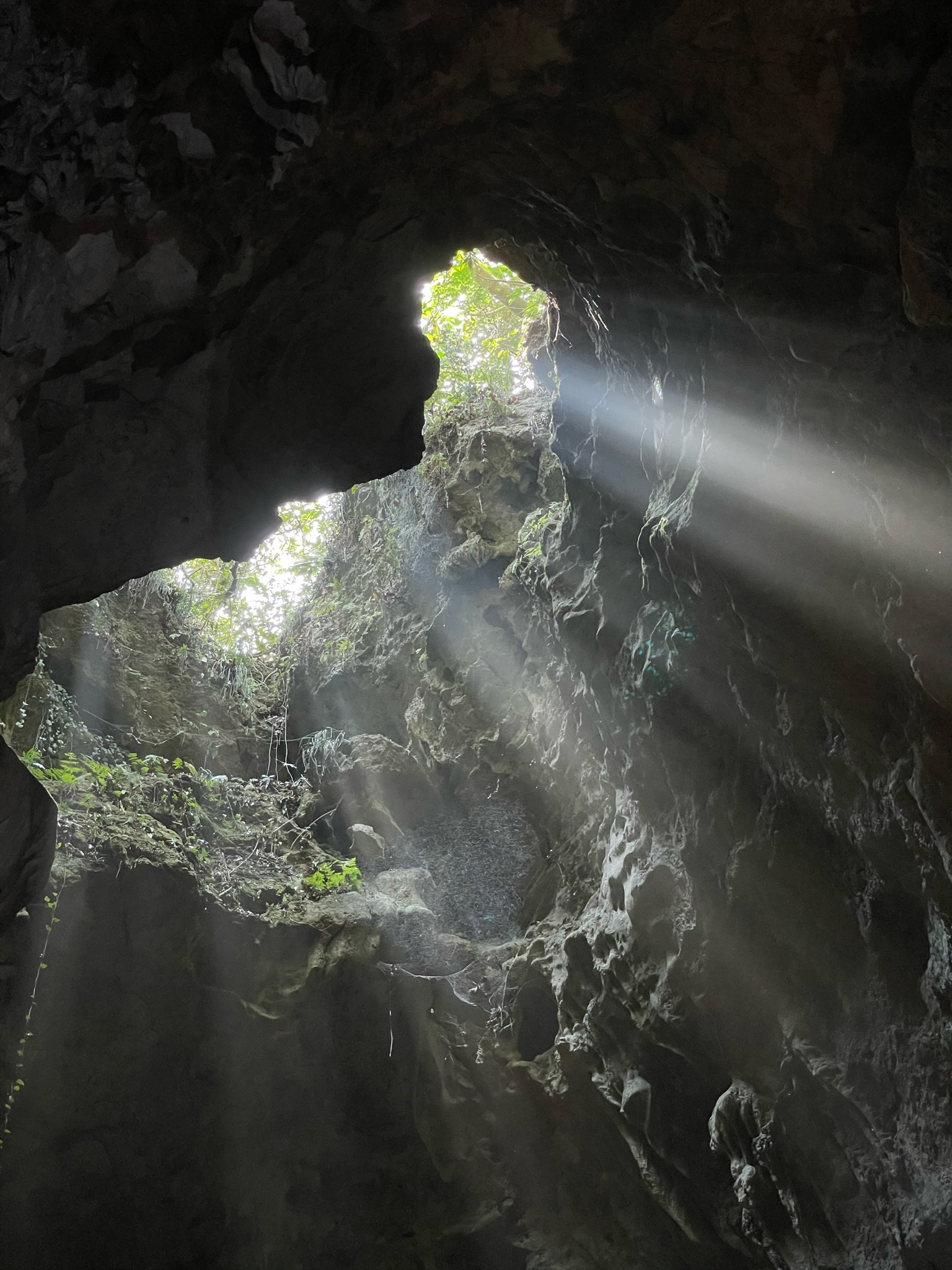
During the “dry” months between October to April, one can hire a park guide to explore four “off-the-beaten path” caves that require permits, including the glorious Tianyu Cave (柴山天雨洞). For those less interested in hiking, there is also the currently free Kaohsiung City Shou Shan Zoo (高雄市壽山動物園) and a number of grand and unique temples in various states of refurbishment sitting at the base of the mountains.
Siziwan (西子灣)
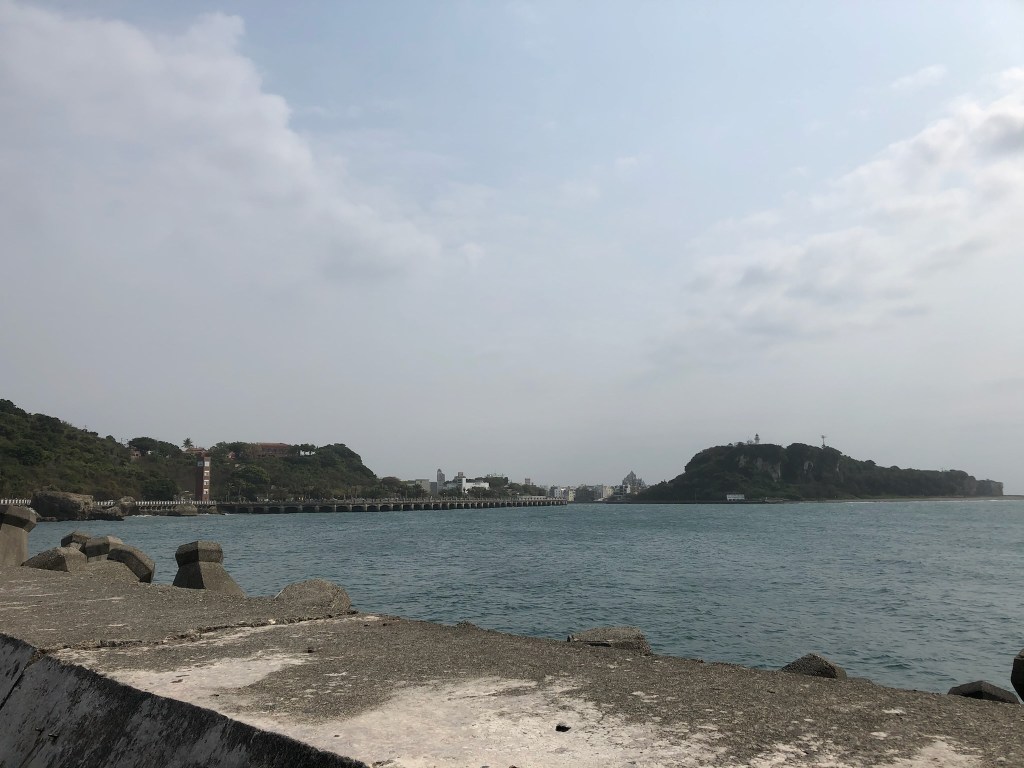
Siziwan is at the southern end of the Shousan mountain and meets the ocean. Here, one can go explore the British Consulate that overlooks the bay and with a little effort, visit Secret Beach (秘境沙灘) which is a patch of rugged coastline and sandy beach that is popular with the expats. The beach is accessed via a non-descript path from the University which is easily missed, but that is part of the fun.
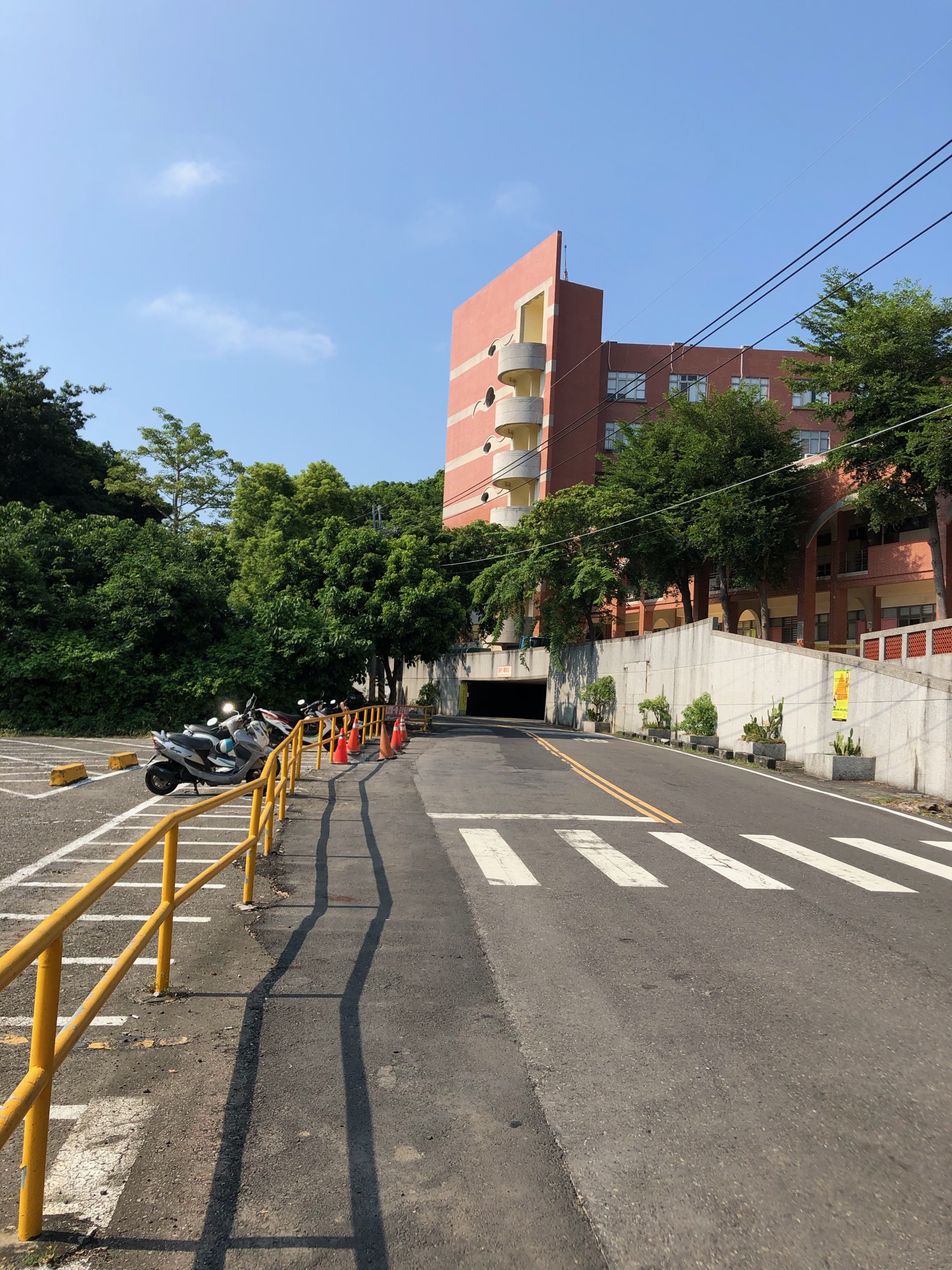
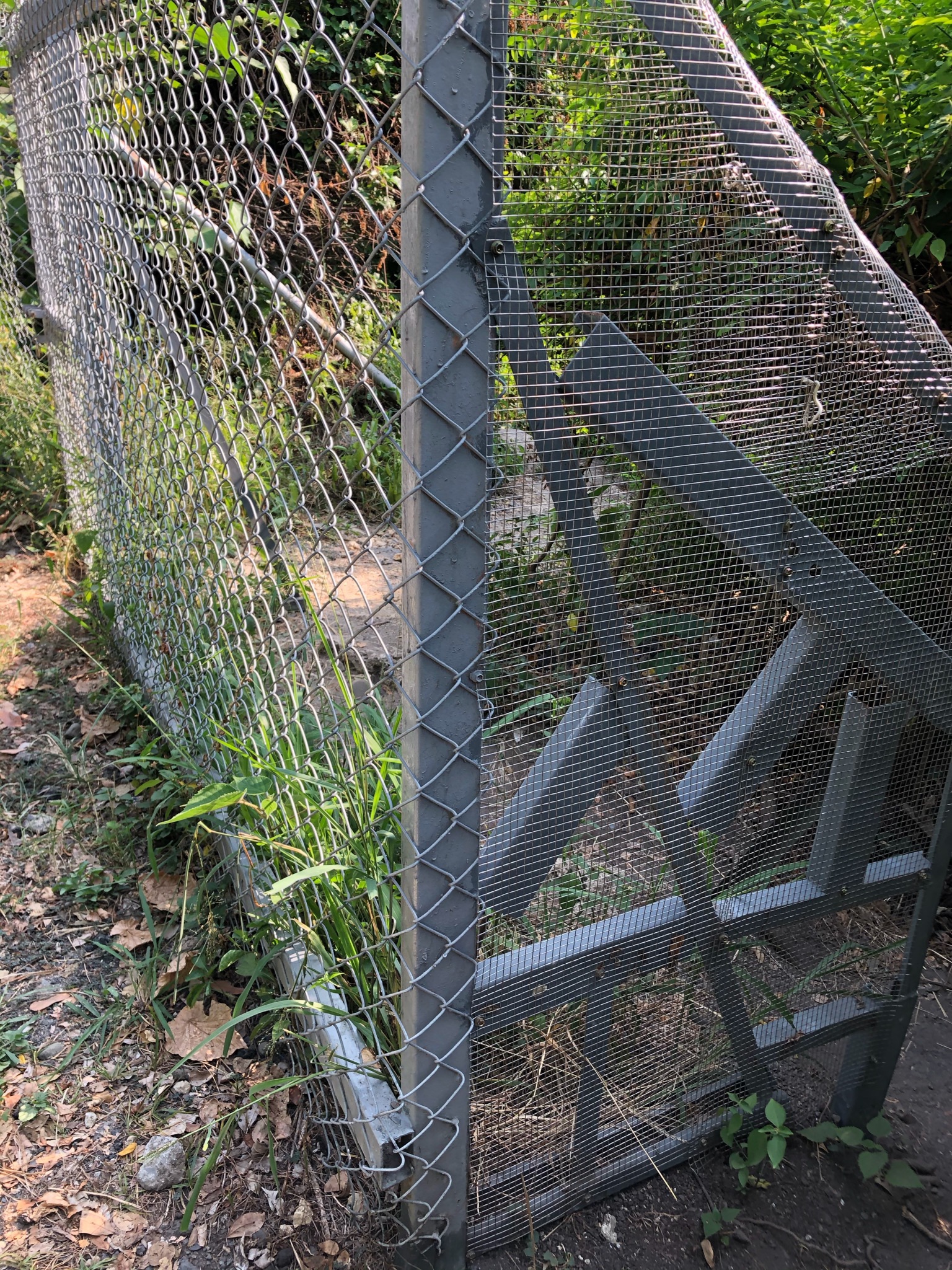
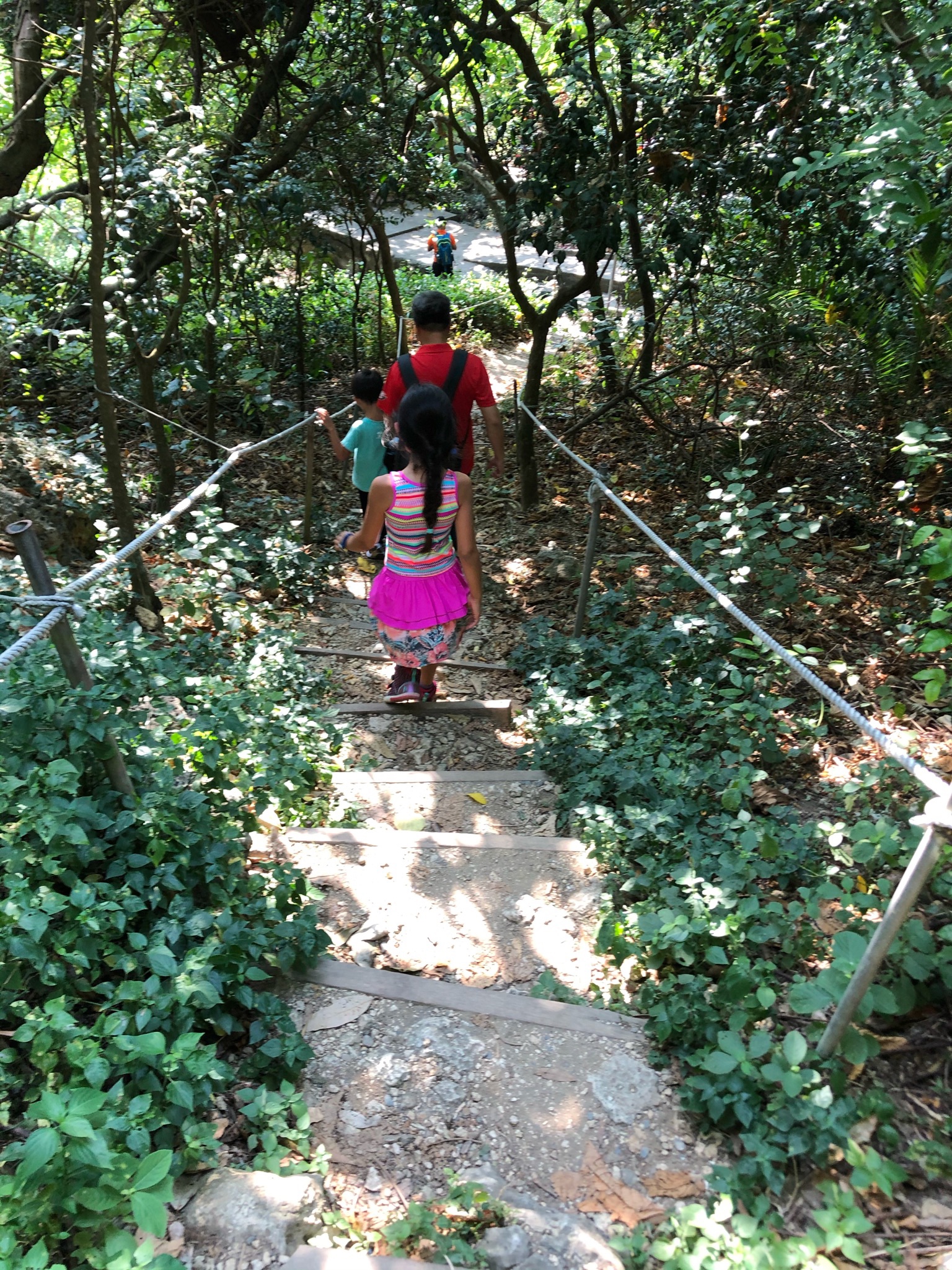
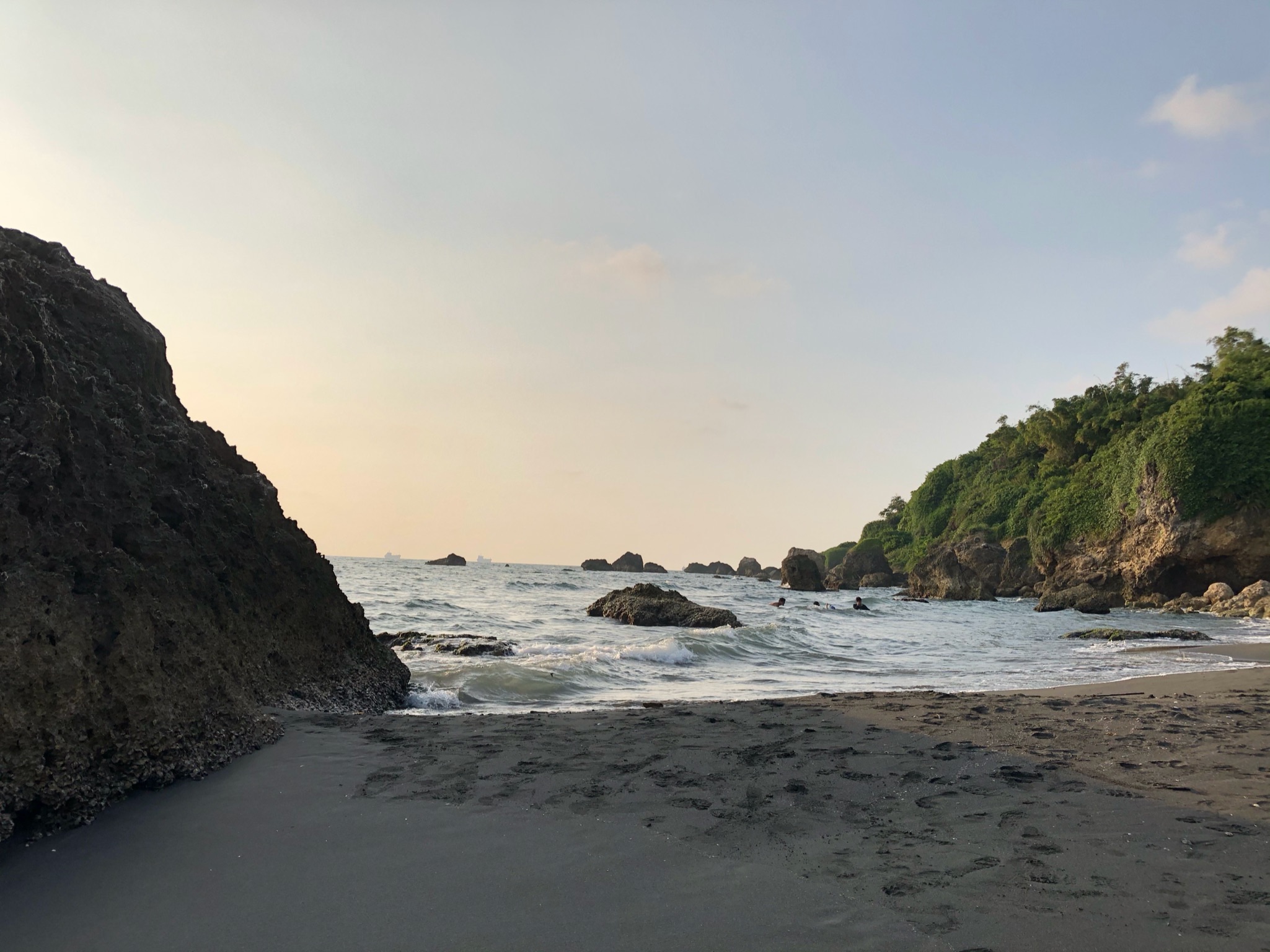
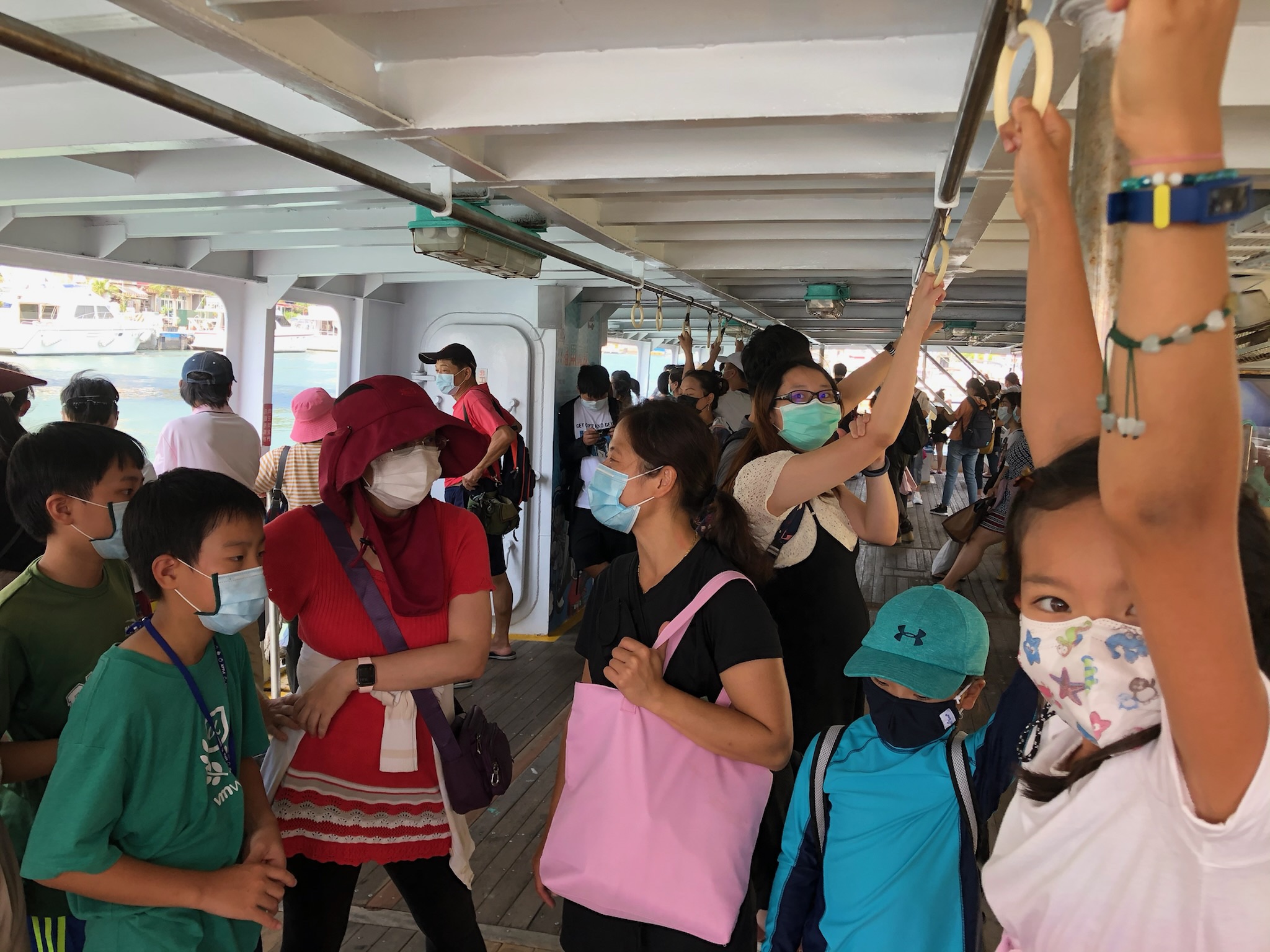
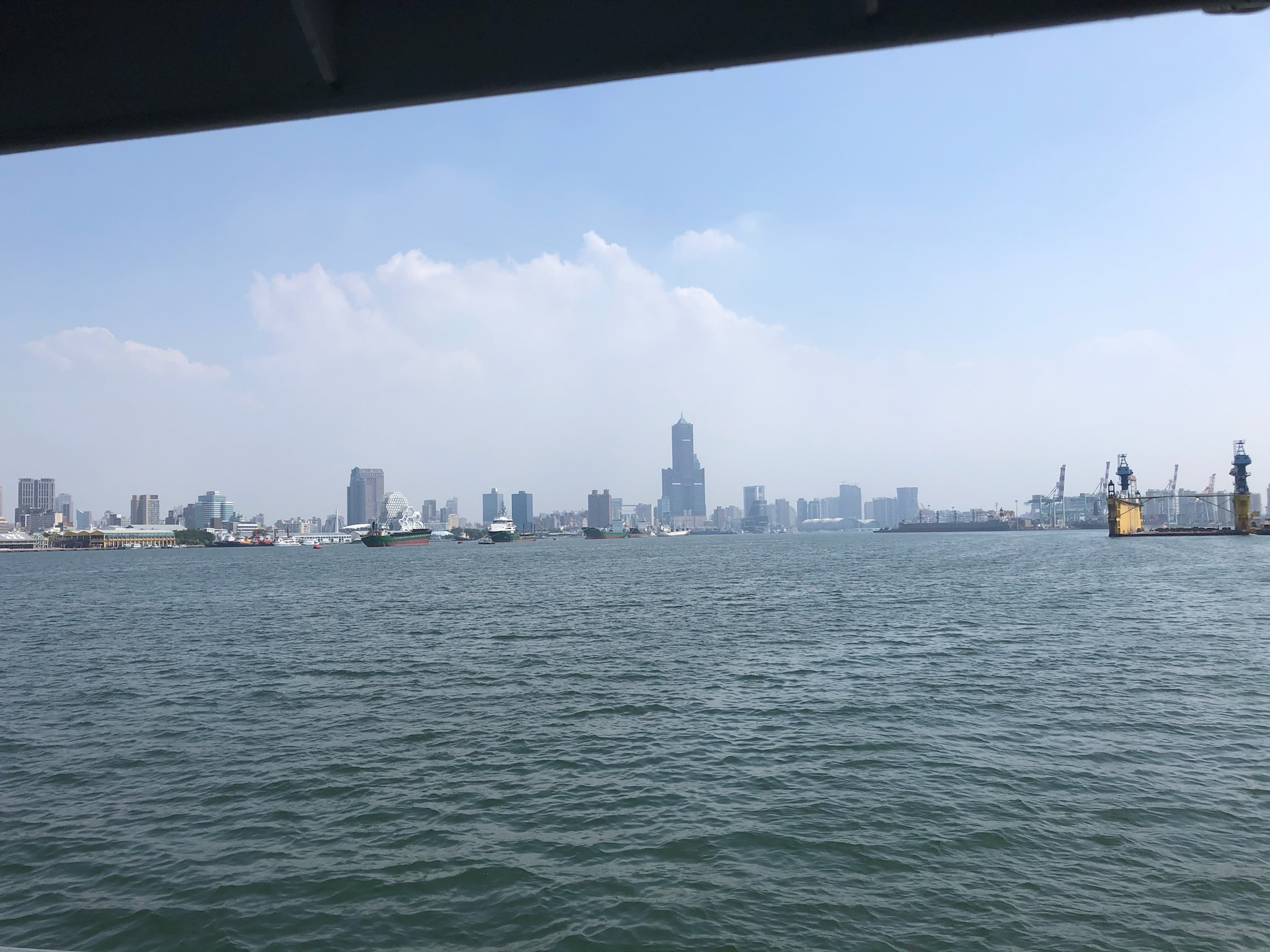
Siziwan is also the last stop on the MRT Orange Line and connects to the Gushan Ferry Terminal (鼓山輪渡站) where one can catch a ferry to Cijin Island on a quick 5 minute ferry ride, which is the recommended next destination. If you need to change or shower, there are public bathrooms and shower facilities on Cijin near the beginning of the beach.
Cijin Island (旗津)
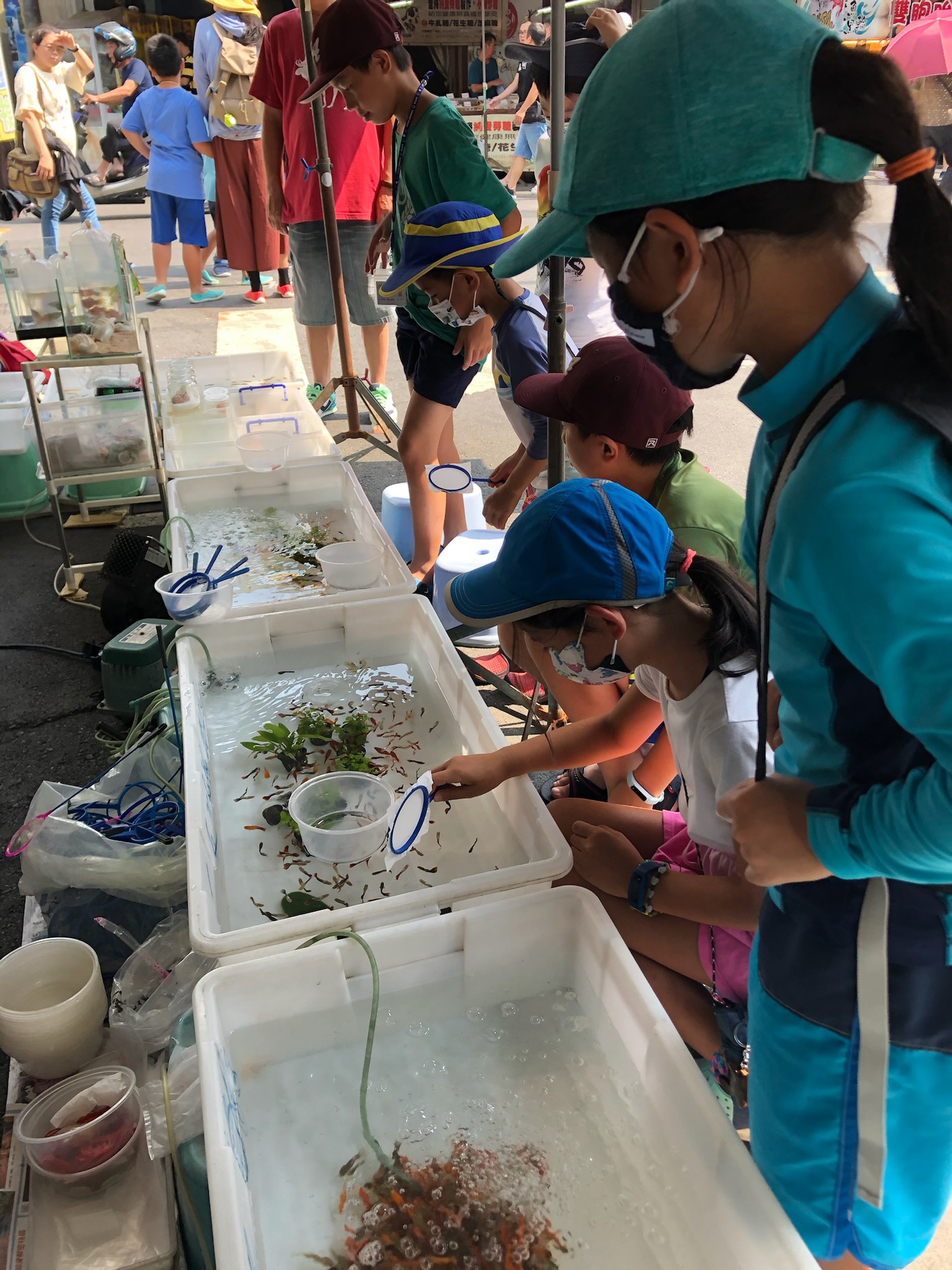
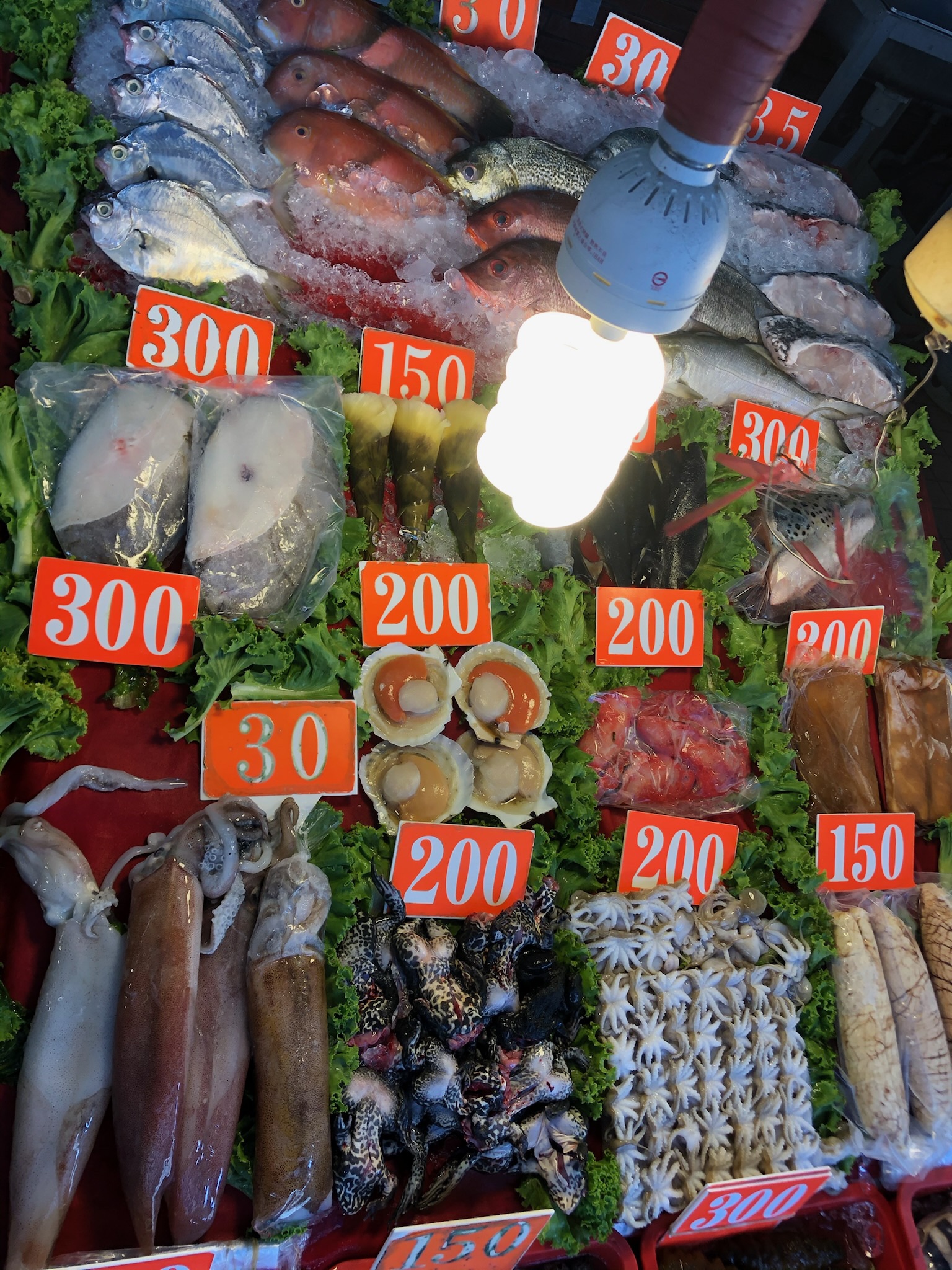
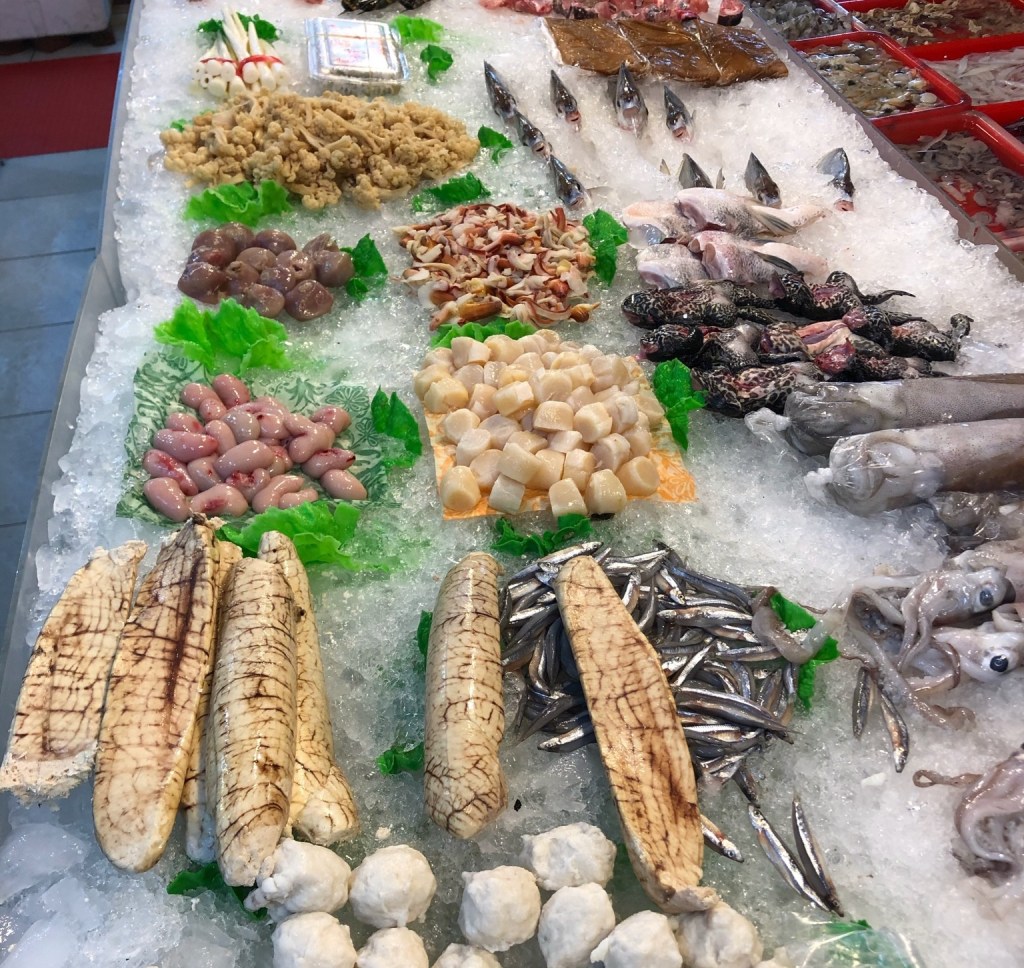
Cijin Island has an old street great for souvenir shopping, carnival games, eating street food, and having very fresh, inexpensive seafood served up in its numerous seafood restaurants. It is difficult to distinguish or pick one but it’s hard to go wrong.
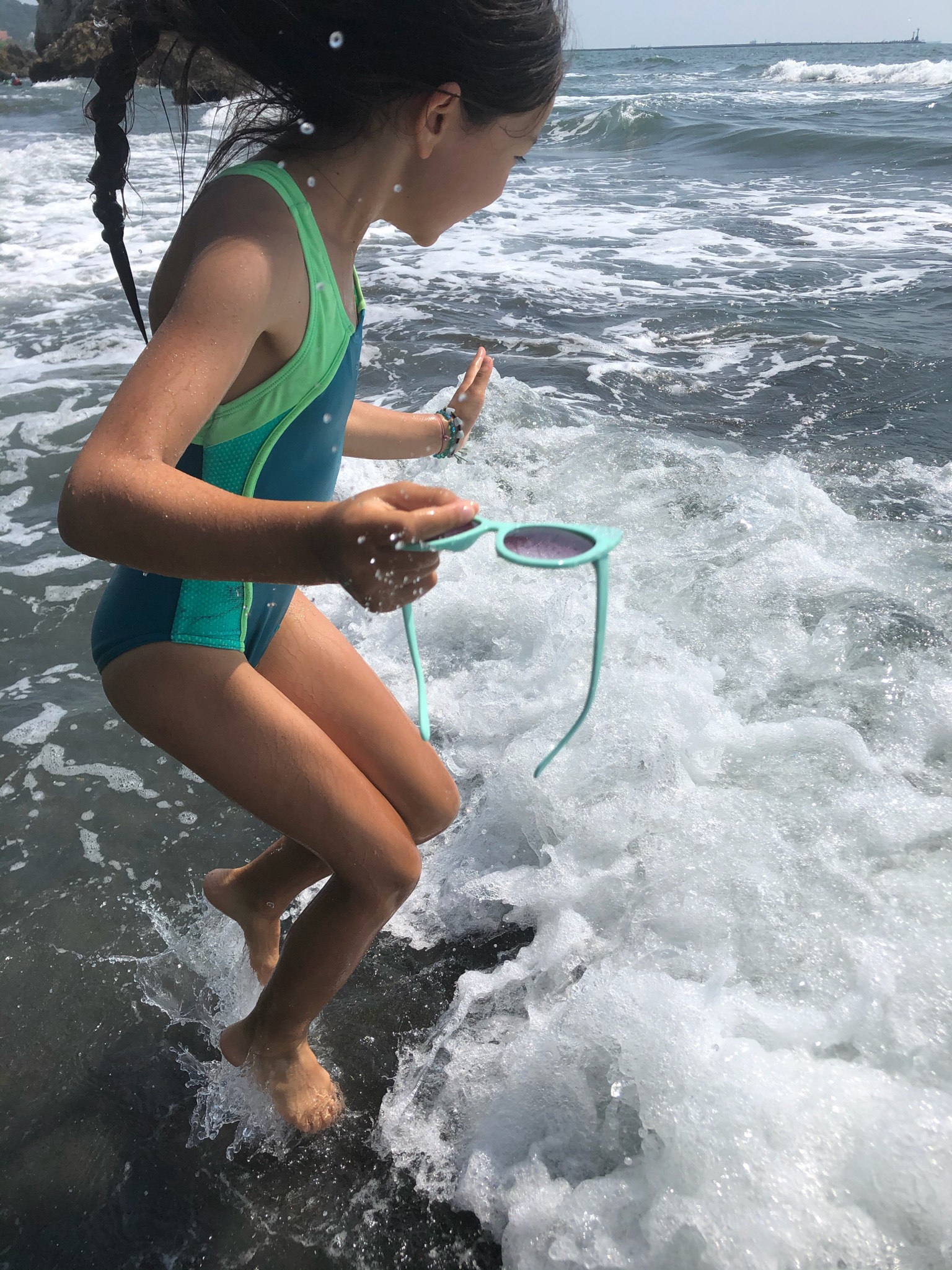
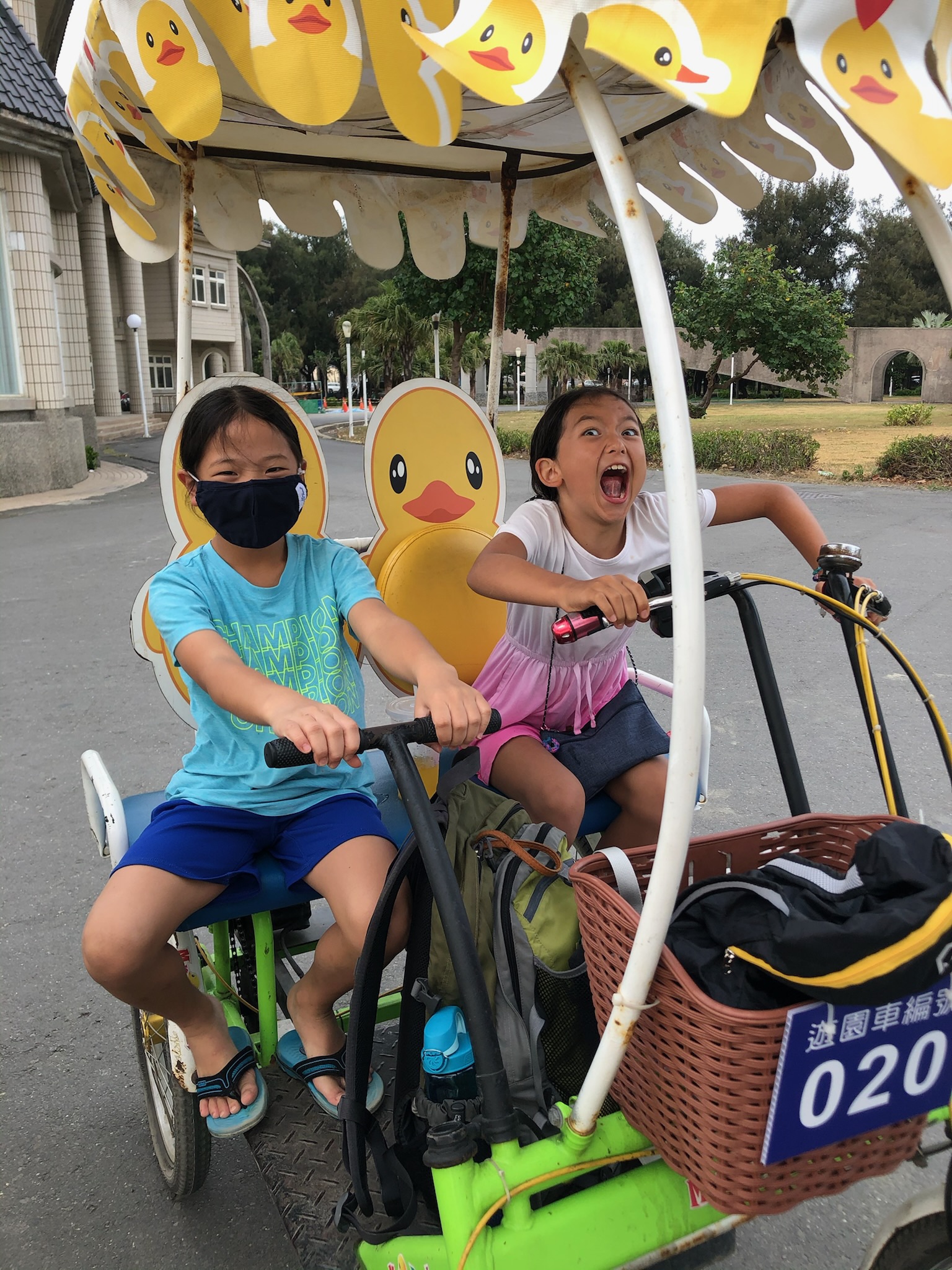
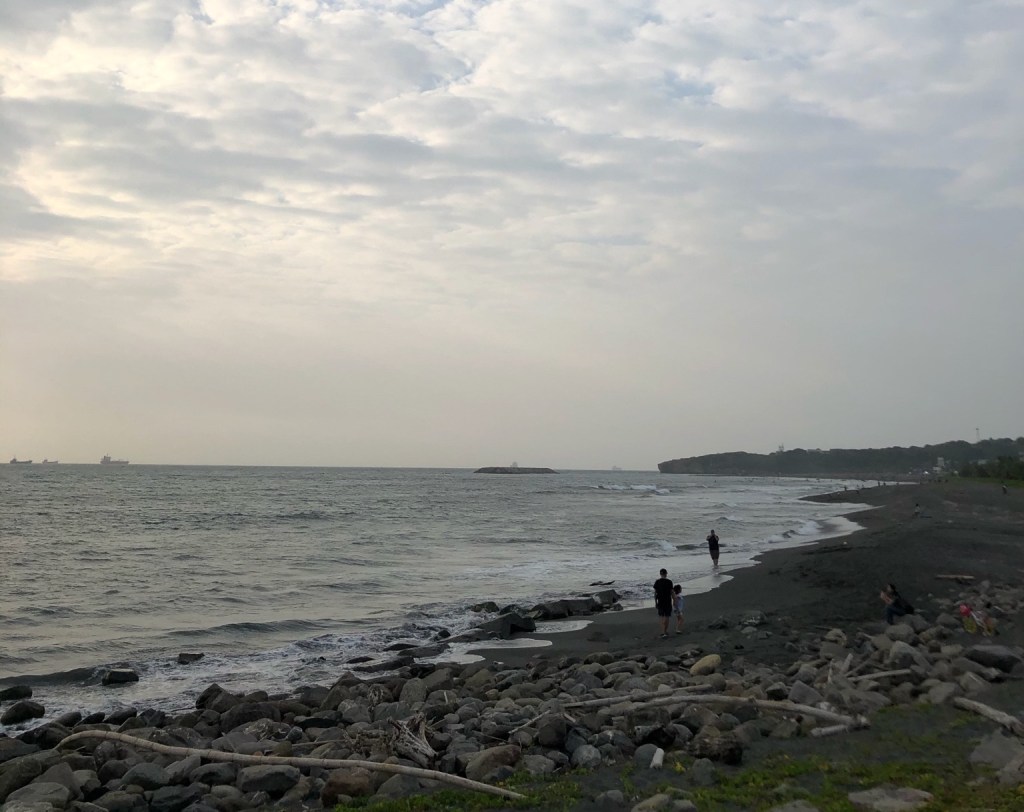
There’s much more to the island beyond the old street including an amazingly long stretch of black sand beach with a designated swim area, a lighthouse, centuries old temples, and a bike path that goes along the ocean with instagramable public art structures. There’s an outdoor bar called Sunset Bar, frequented mostly by expats and foreign visitors. Be prepared for the loud carnival atmosphere if the weather is good. They love the music loud on this stretch! Also, if not feeling like hoofing it, rent a four wheel electric bike to haul the crew along the beach.

Pier 2 and Love River
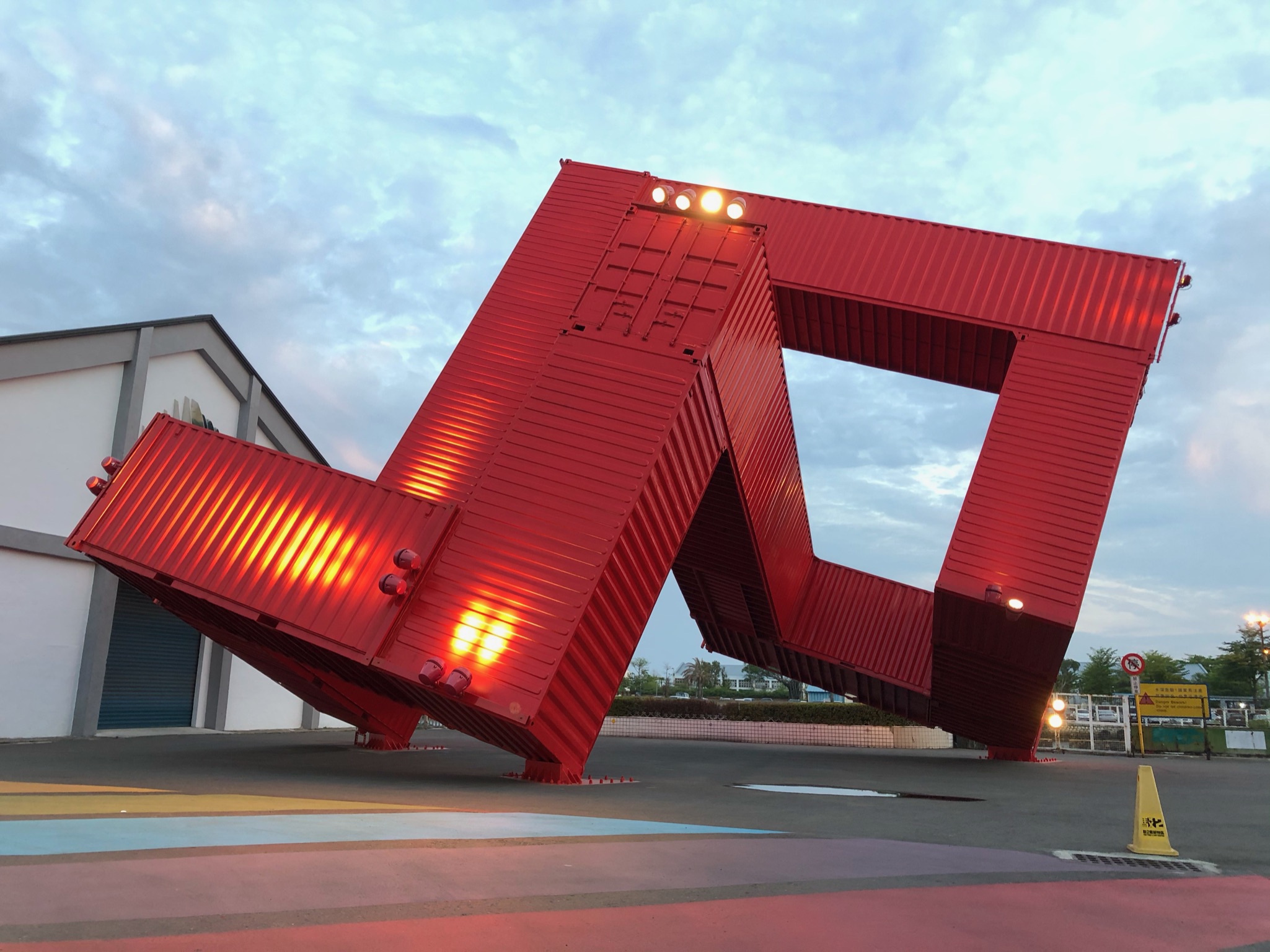
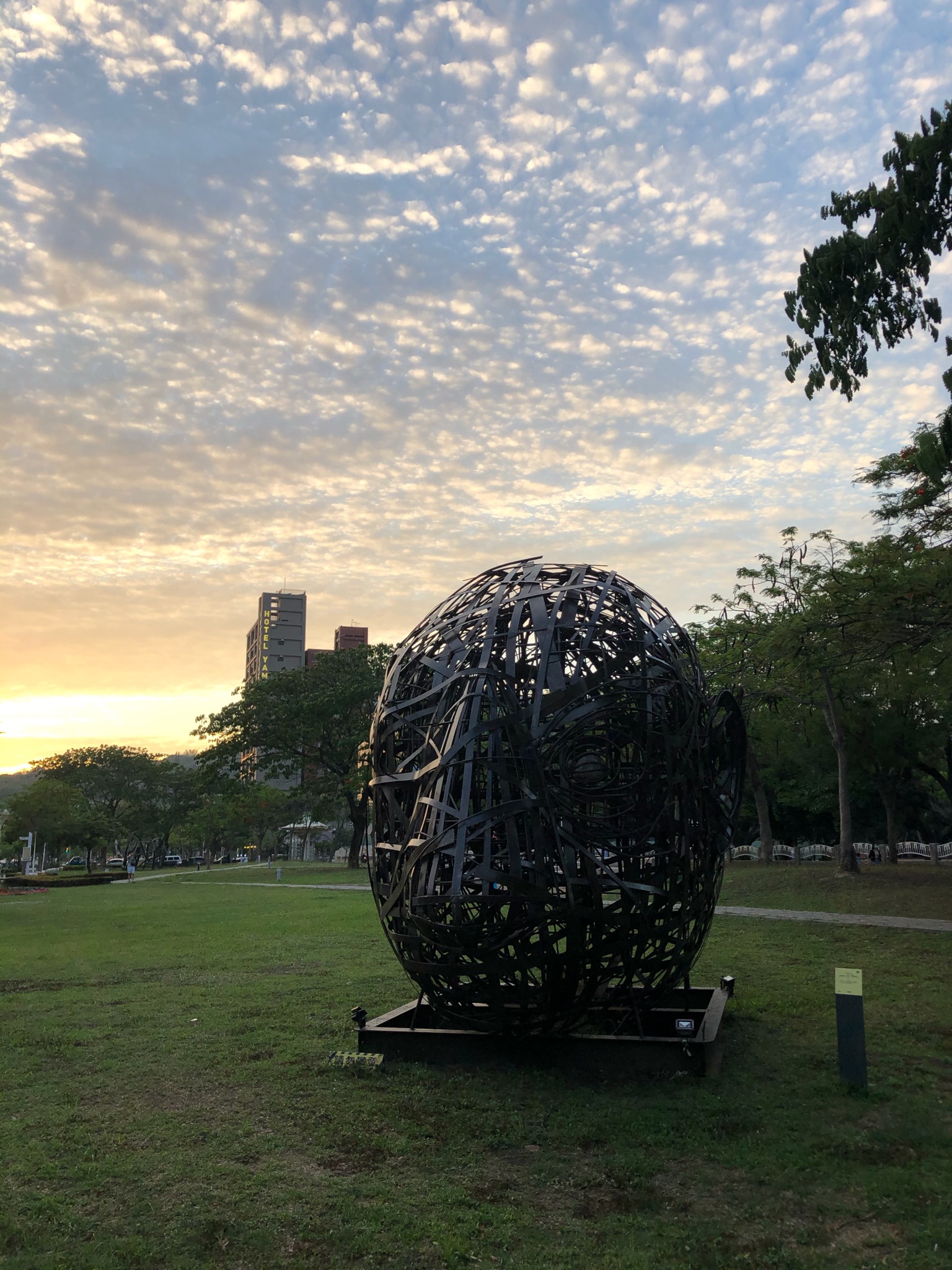
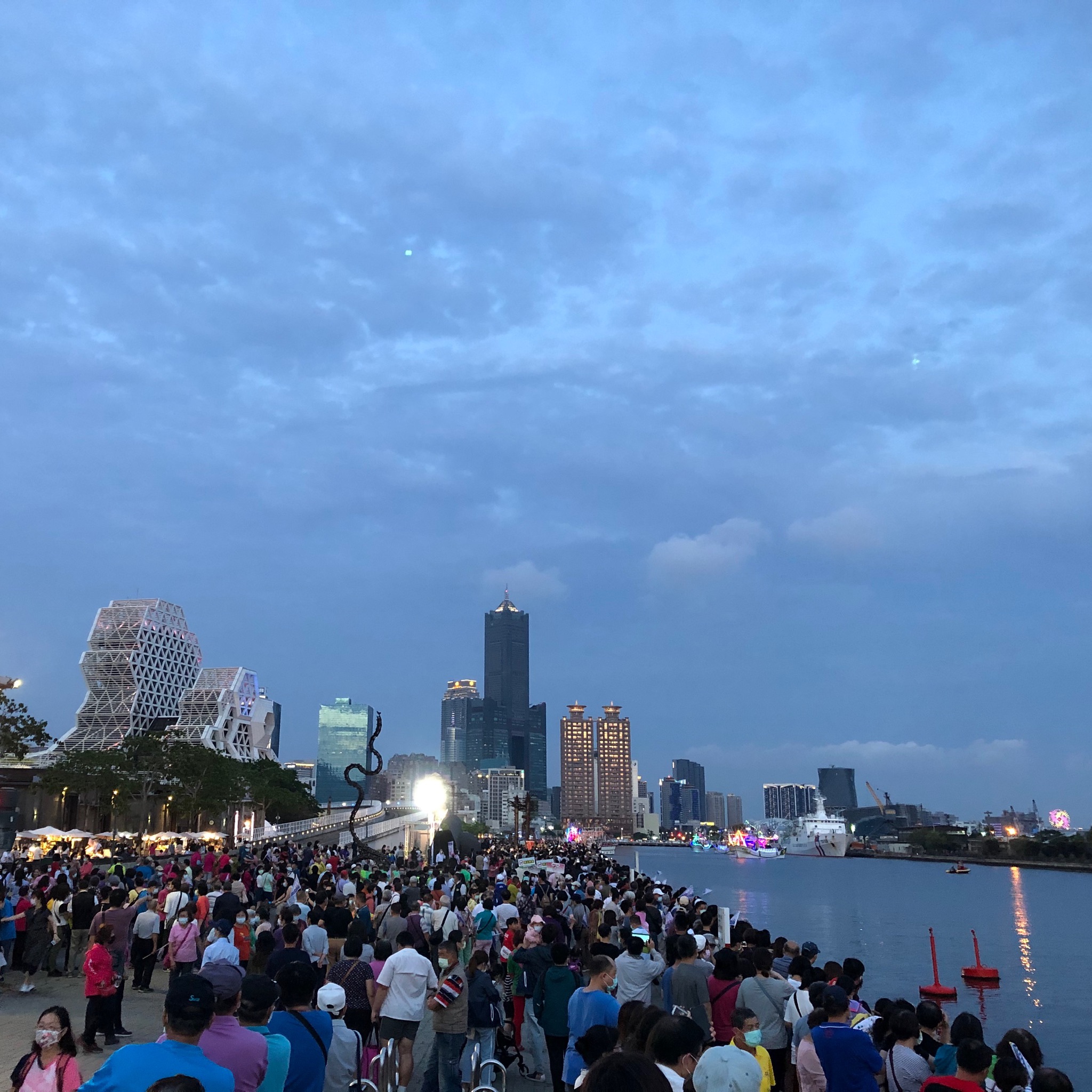
After returning to Siziwan from Cijin, one can call it a day or take a sunset stroll along Pier 2 to admire the art area, art market and cityscape lit up at night.
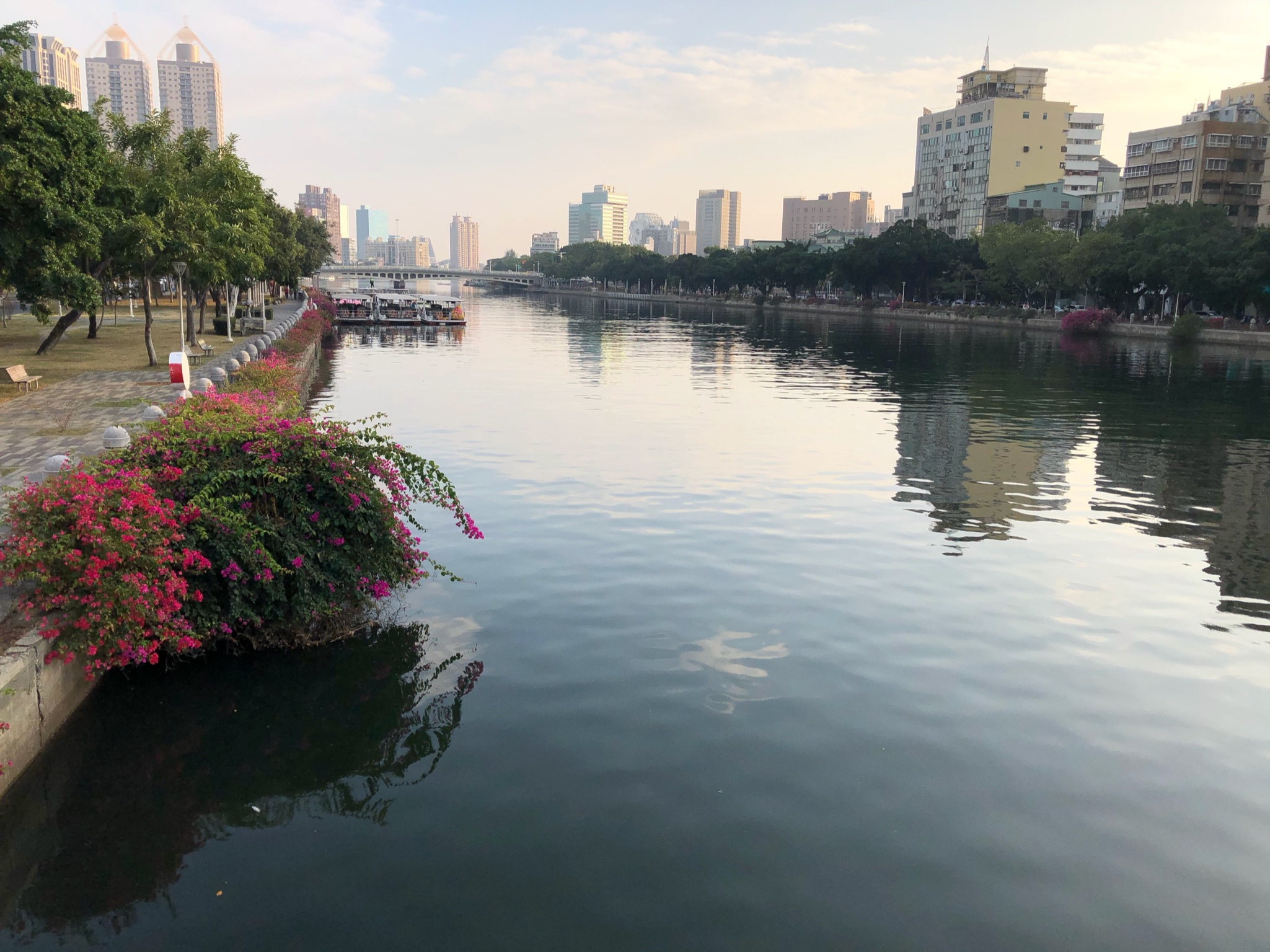
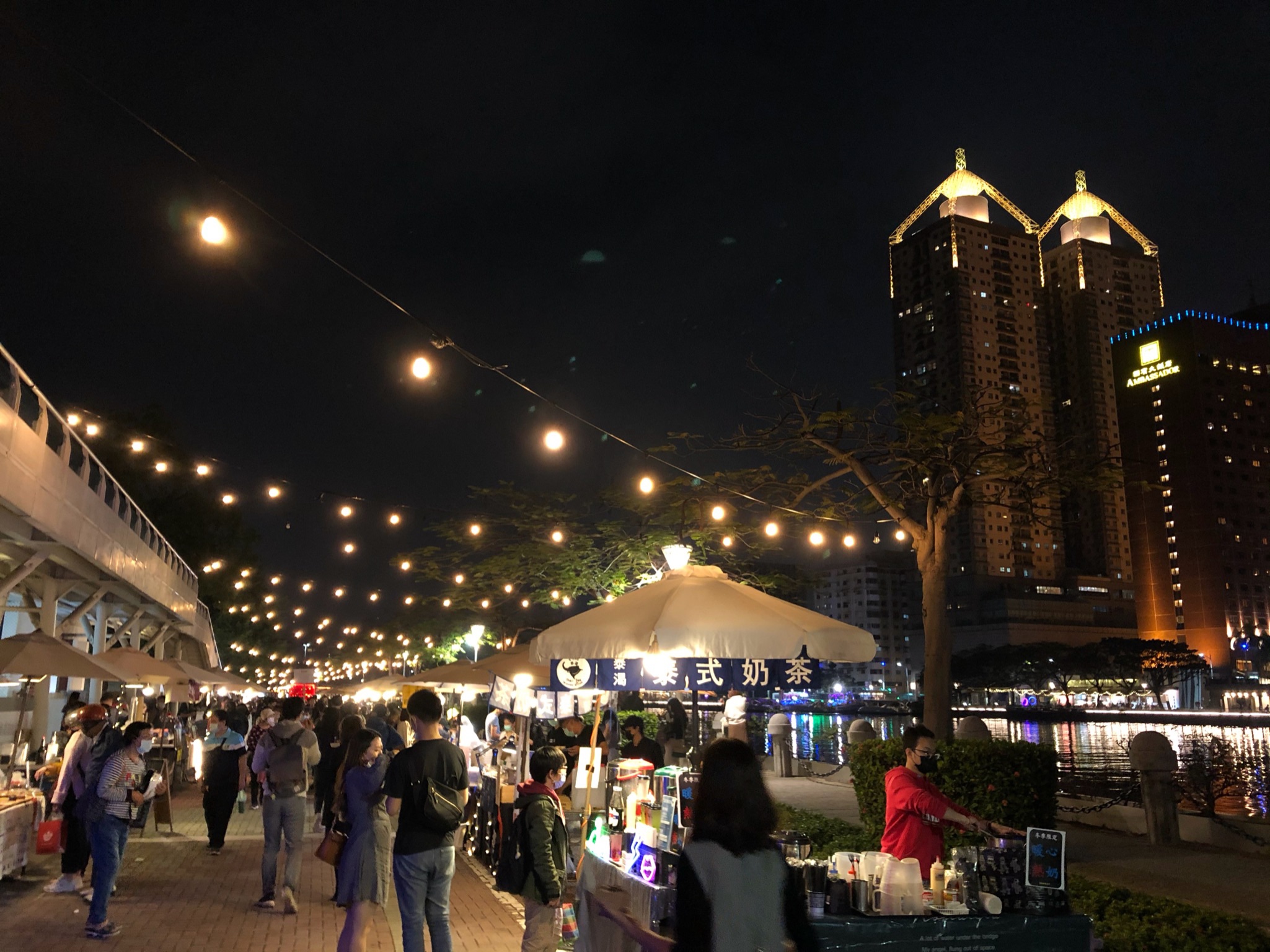
If truly ambitious, continue the stroll along the harbor to the Love River and see the reclamation efforts of the once toxic waterway. It is still a work in progress but I am told the river has improved tremendously (i.e. it doesn’t wreak if sewage anymore) compared to two decades ago. It now hosts a trendy artisan night market manned by the next generation of hip vendors.
Day 2 (New and Old)
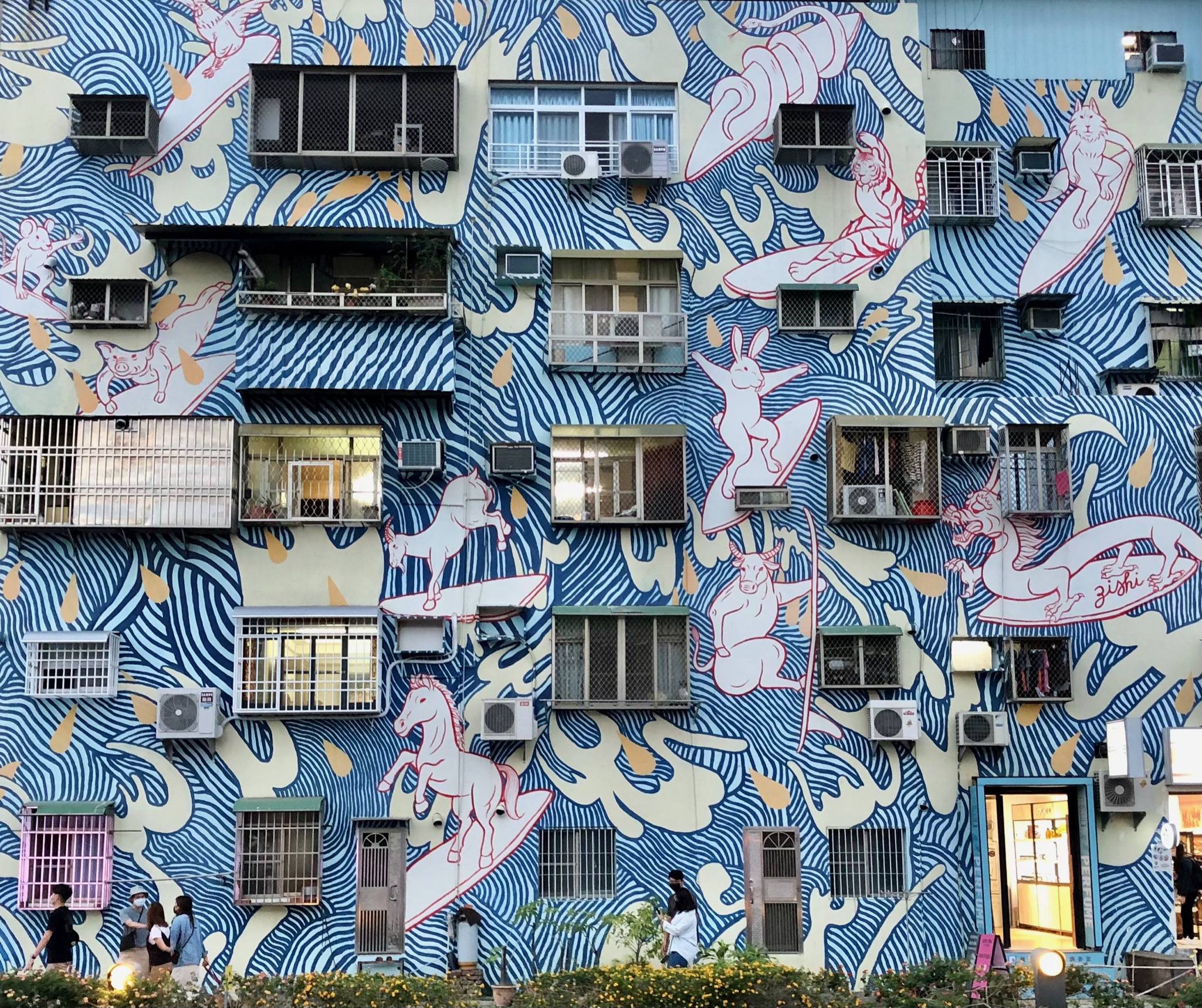
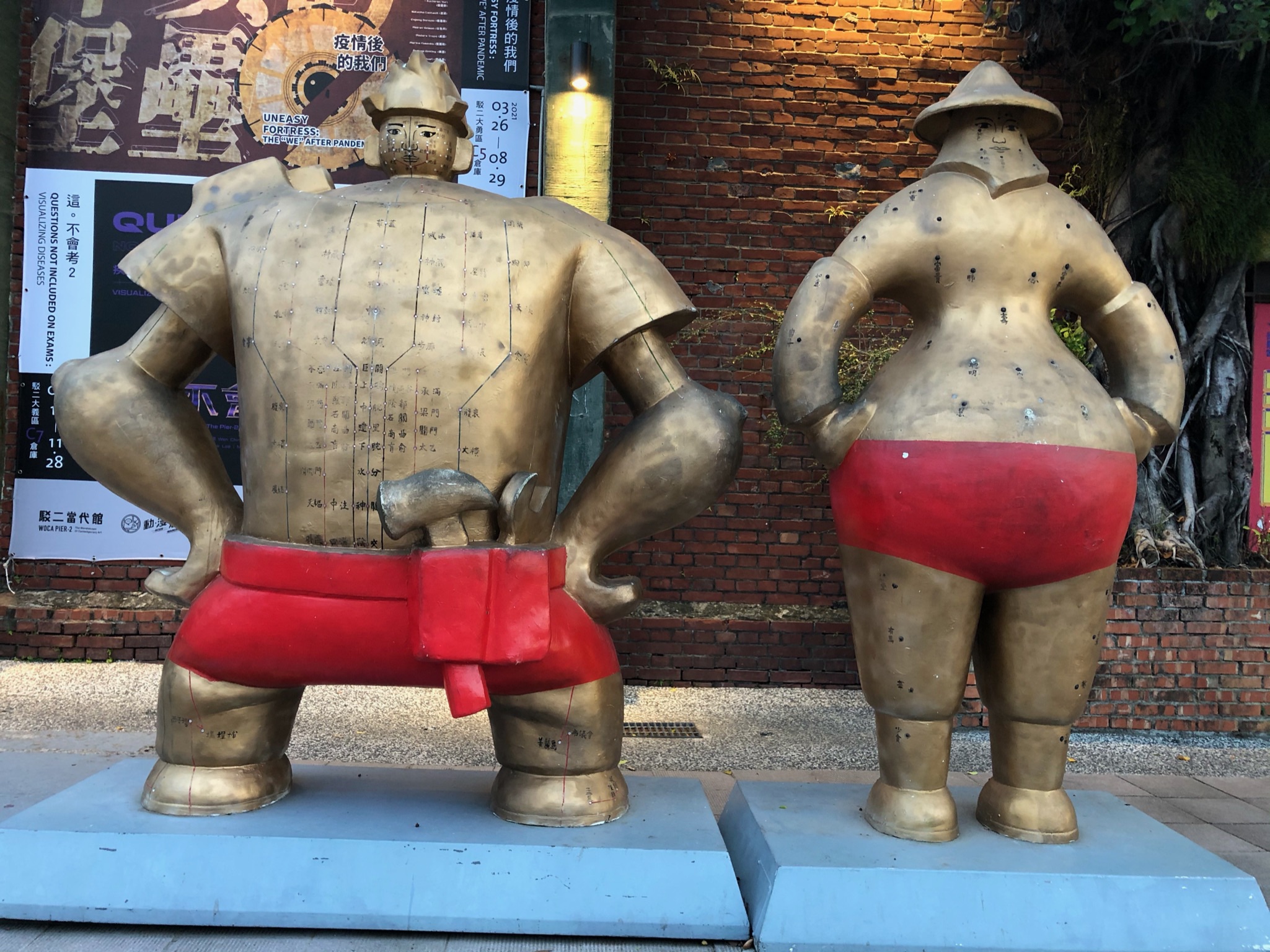
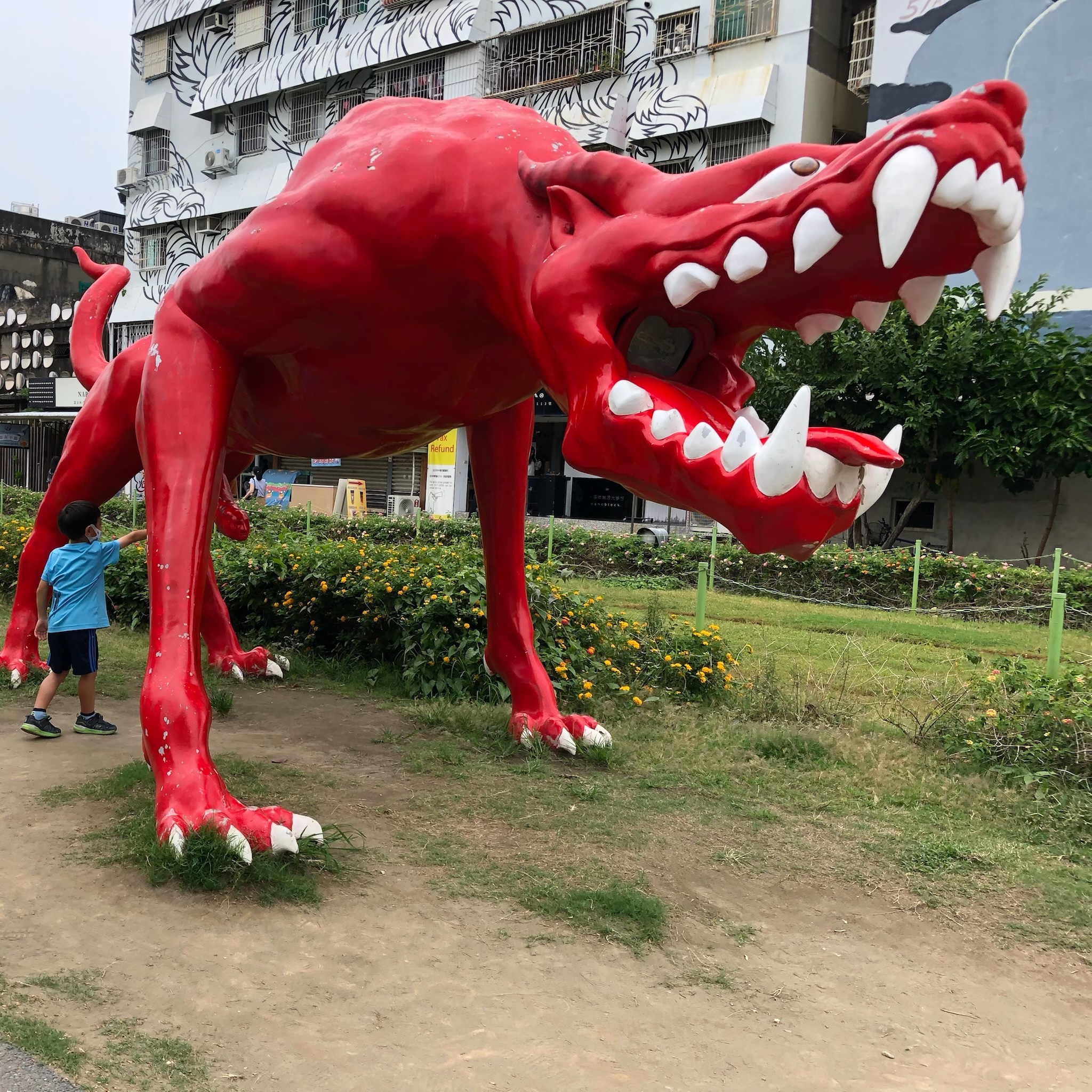
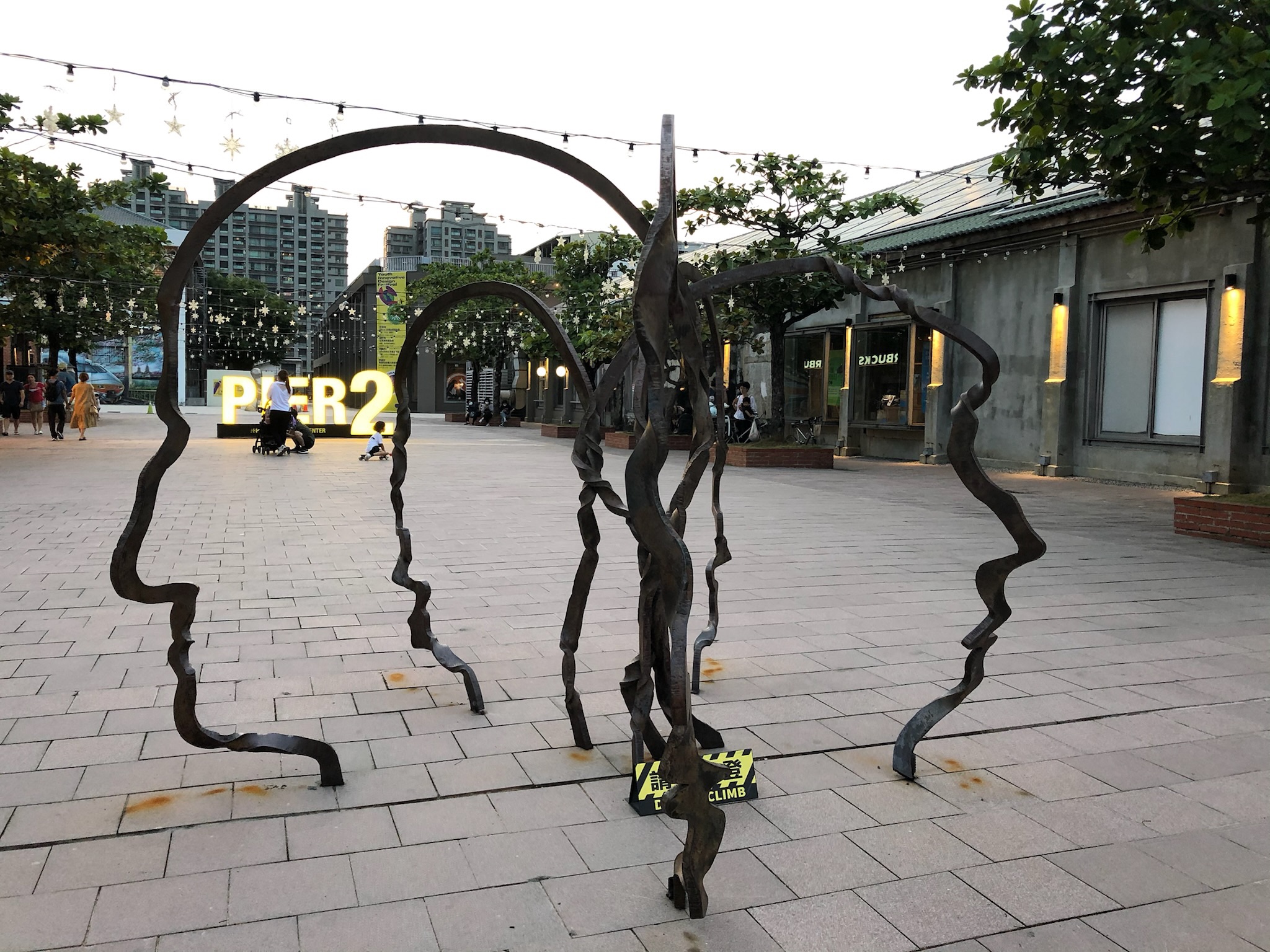
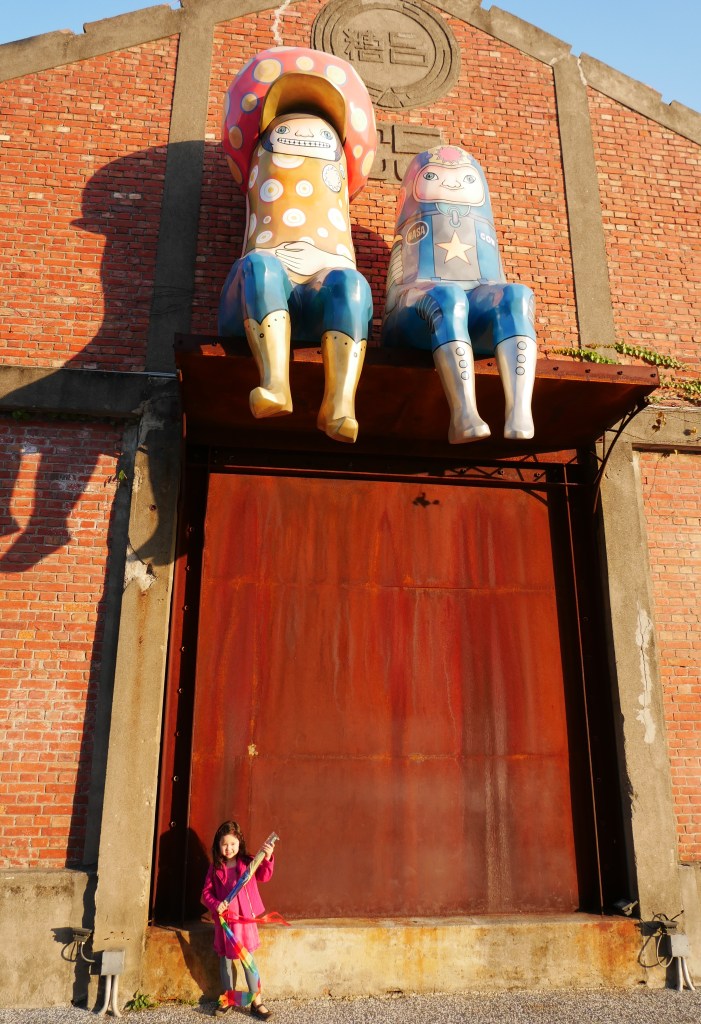
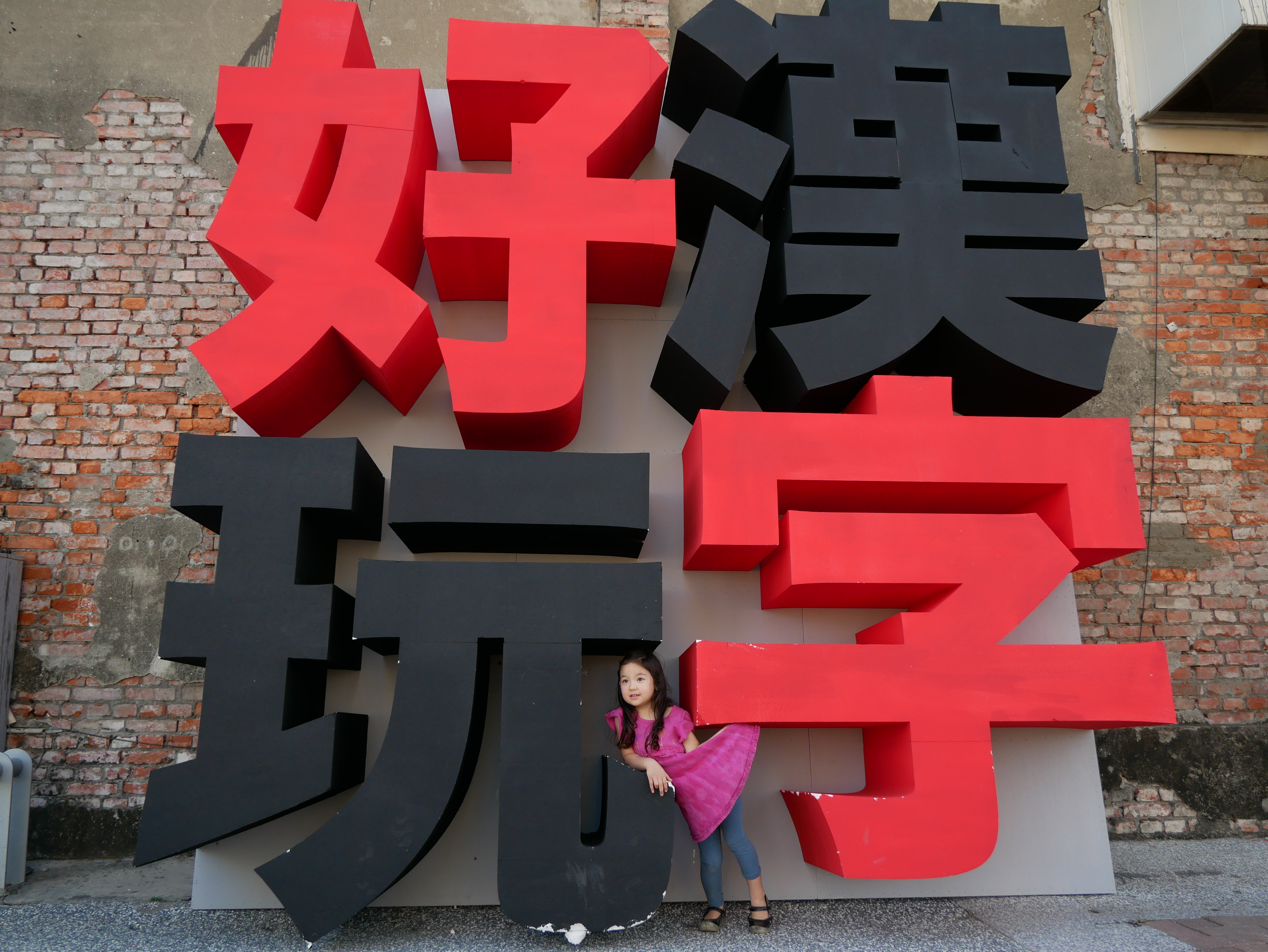
On Day 2 of the visit, one can continue to explore the Pier 2 area during the daytime as there are numerous sculptures and graffiti to delight, plenty of unique shopping, the famous Pasadena bakery and a likely opportunity to fly a kite in the massive field of defunct train rails of the old warehouse district. The location is perfectly situated for a steady wind and void of electrical wires for kite flying.

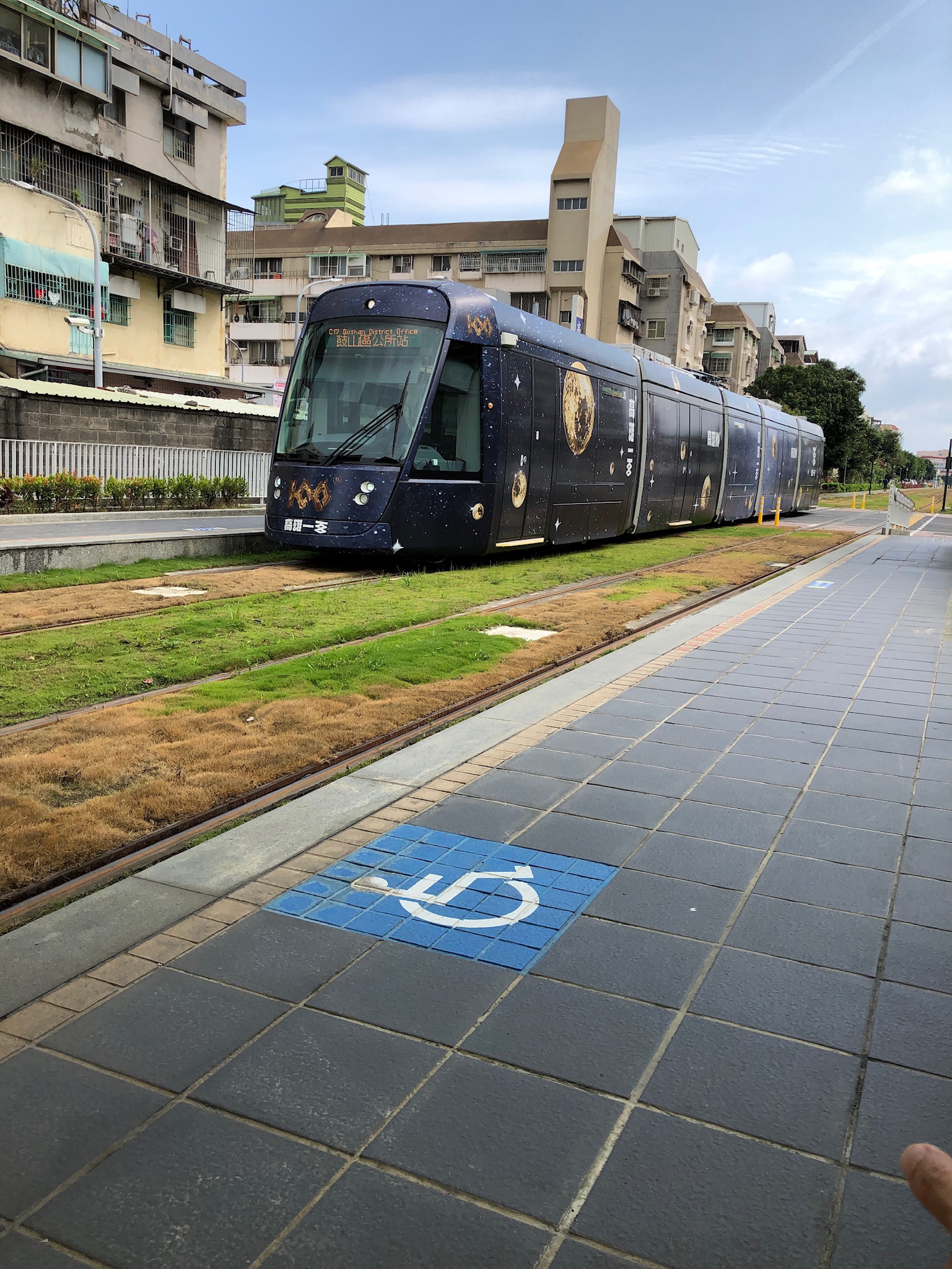
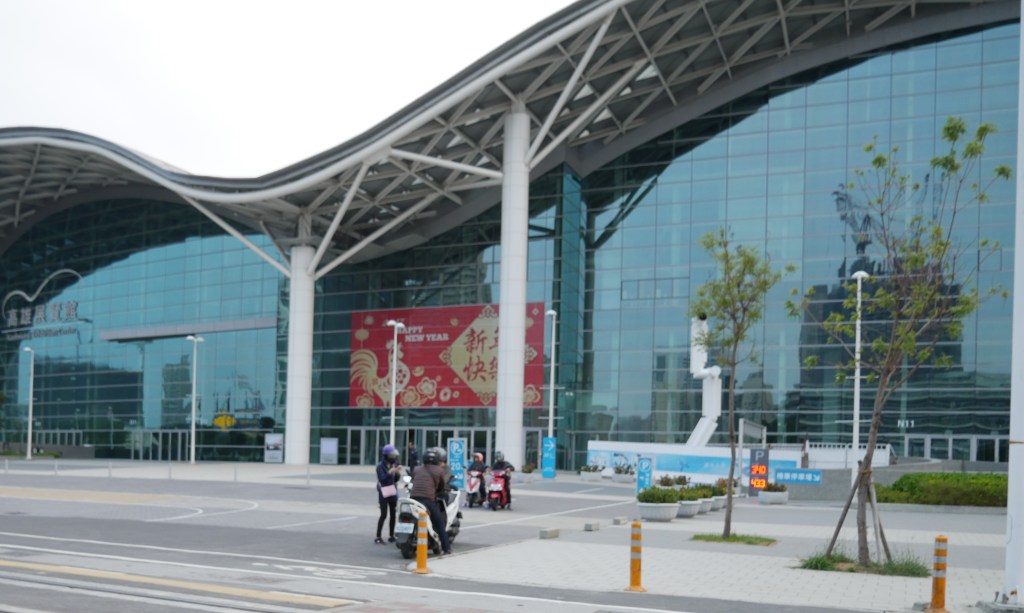
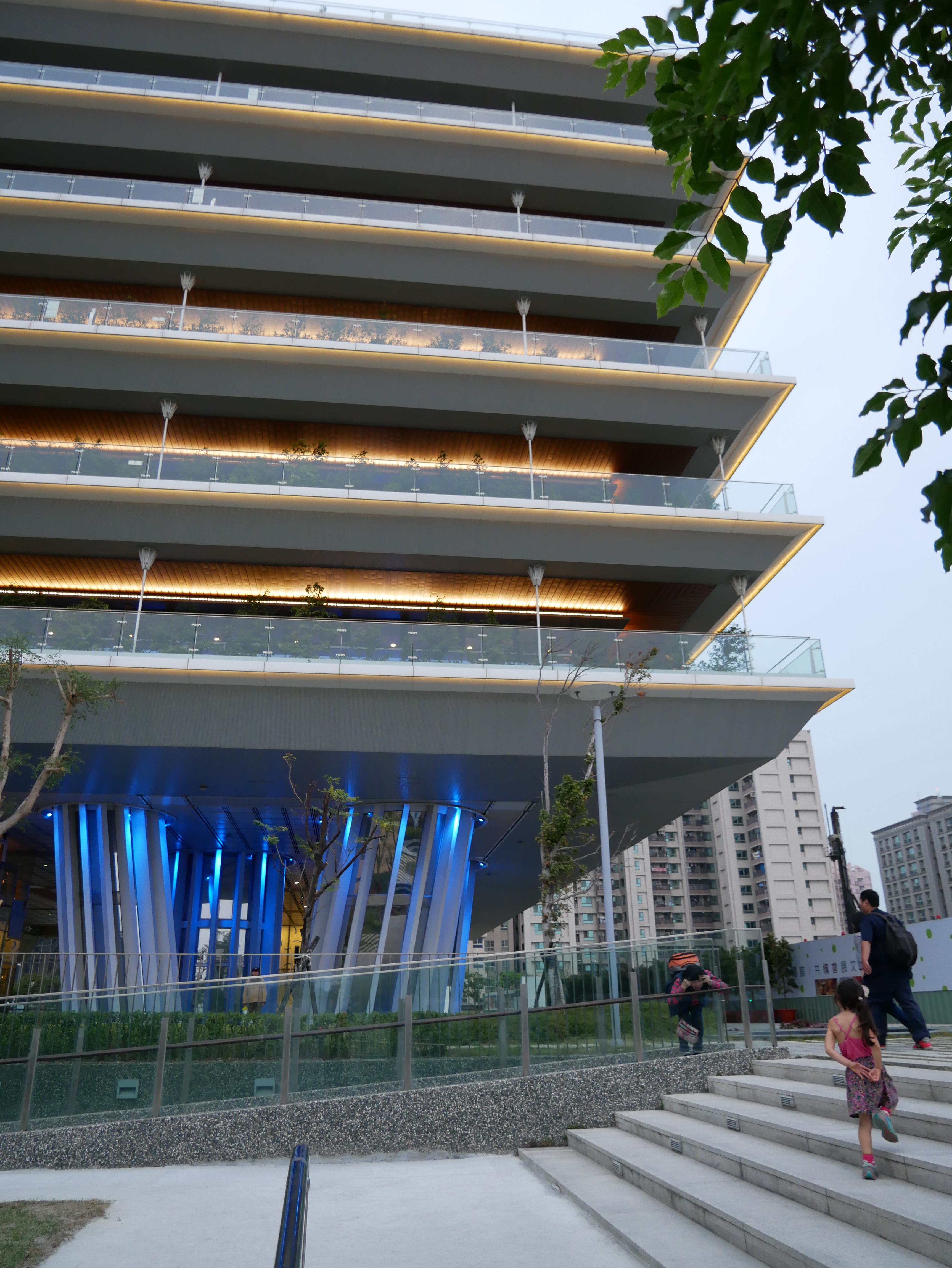
Then, one can take the recently expanded Light Rail Tram (LRT) all the way to its terminus at Kaisyuan Park Station. This ride will give one a leisurely view of the development occurring on the waterfront and allow one to get off and on as one pleases. The new pier and the Convention Center and Central Library are two beautiful architectural structures. Continue on and pass the Dream Mall with its kids’ amusement park on the top floor and then pass by older neighborhoods with daily street and market scenes. Make frequent stops to get out and explore.
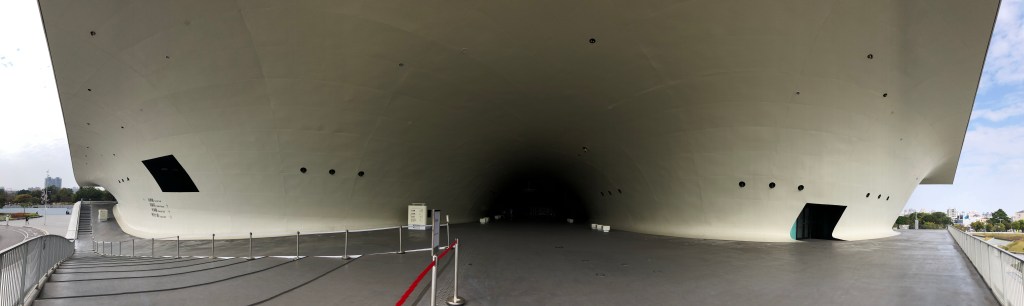
Transfer to the subway to get to the Weiwuying Art Center and tour the interior with multiple event spaces including the largest organ in Asia. The exterior is constructed of steel and rivets, utilizing the shipbuilding know how in the city.
End your night at several night market options: (1) Reifung Night Market where there’s a huge mix of vendors and a crush of people, 2) Liuhe Tourist Night Market where most of the vendors are geared toward tourists or (3) Shinkuchan Shopping District to see what’s the latest trends with the youths.
Day 3 Old Kaohsiung and Lotus Pond
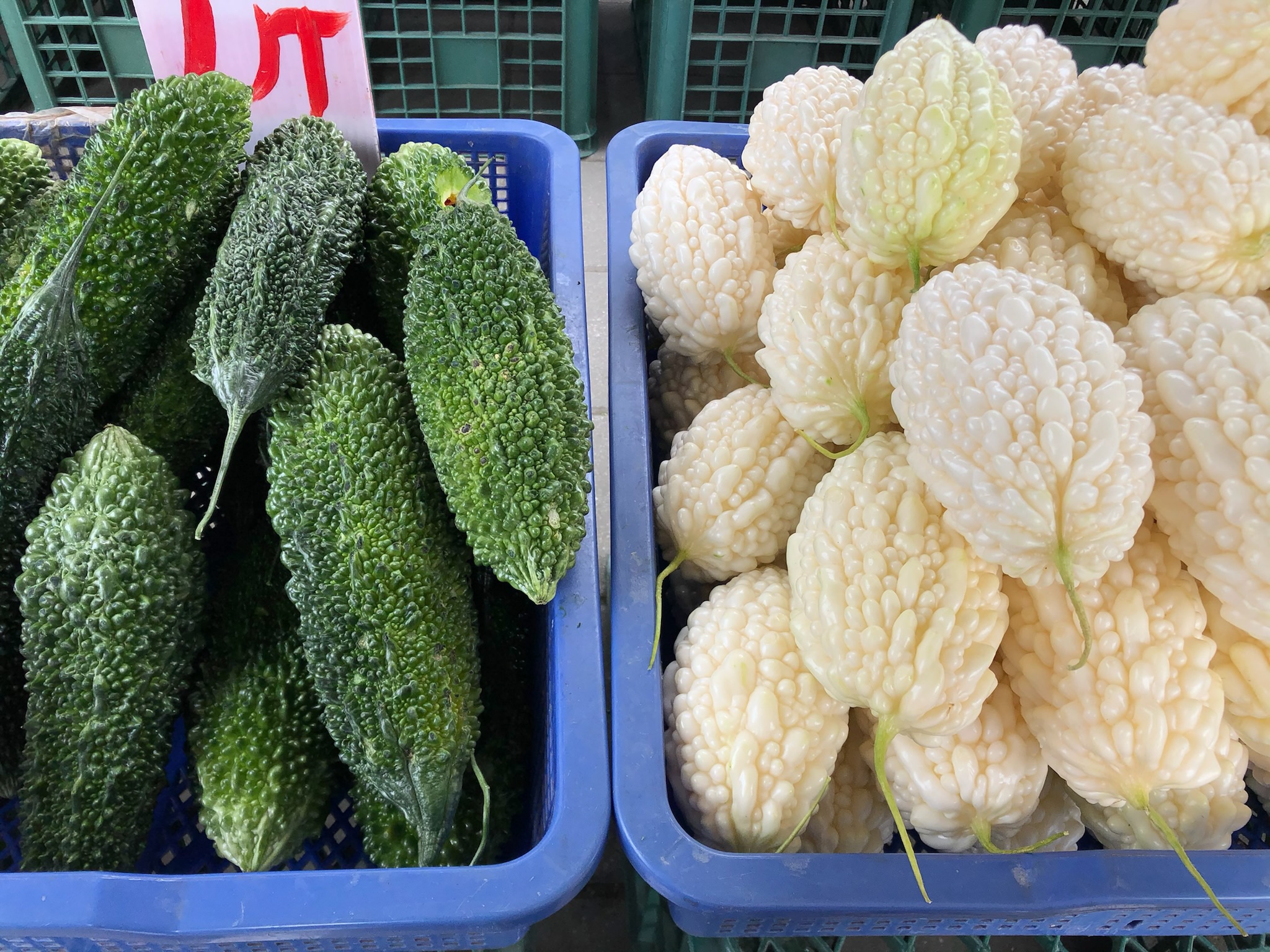
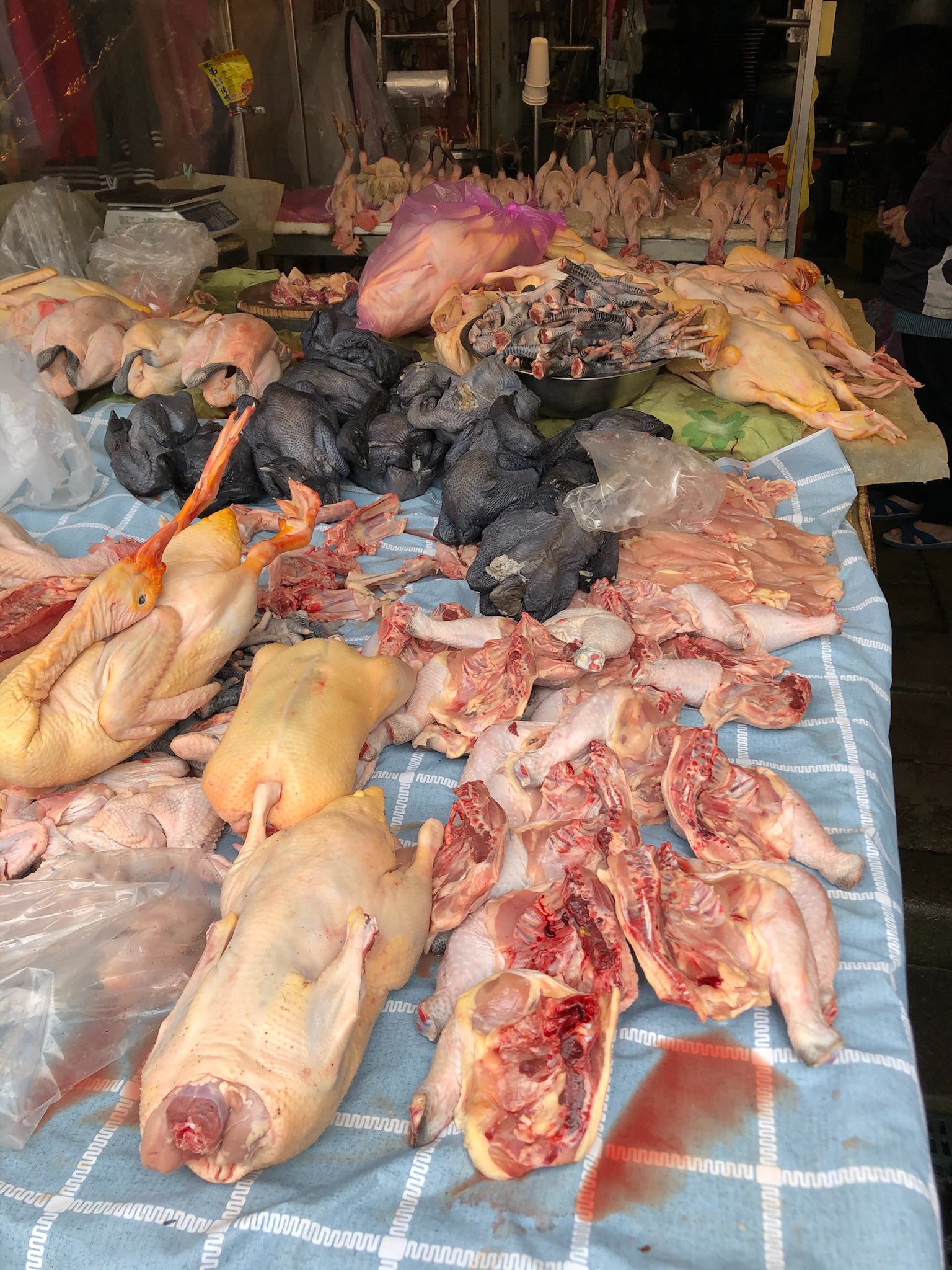
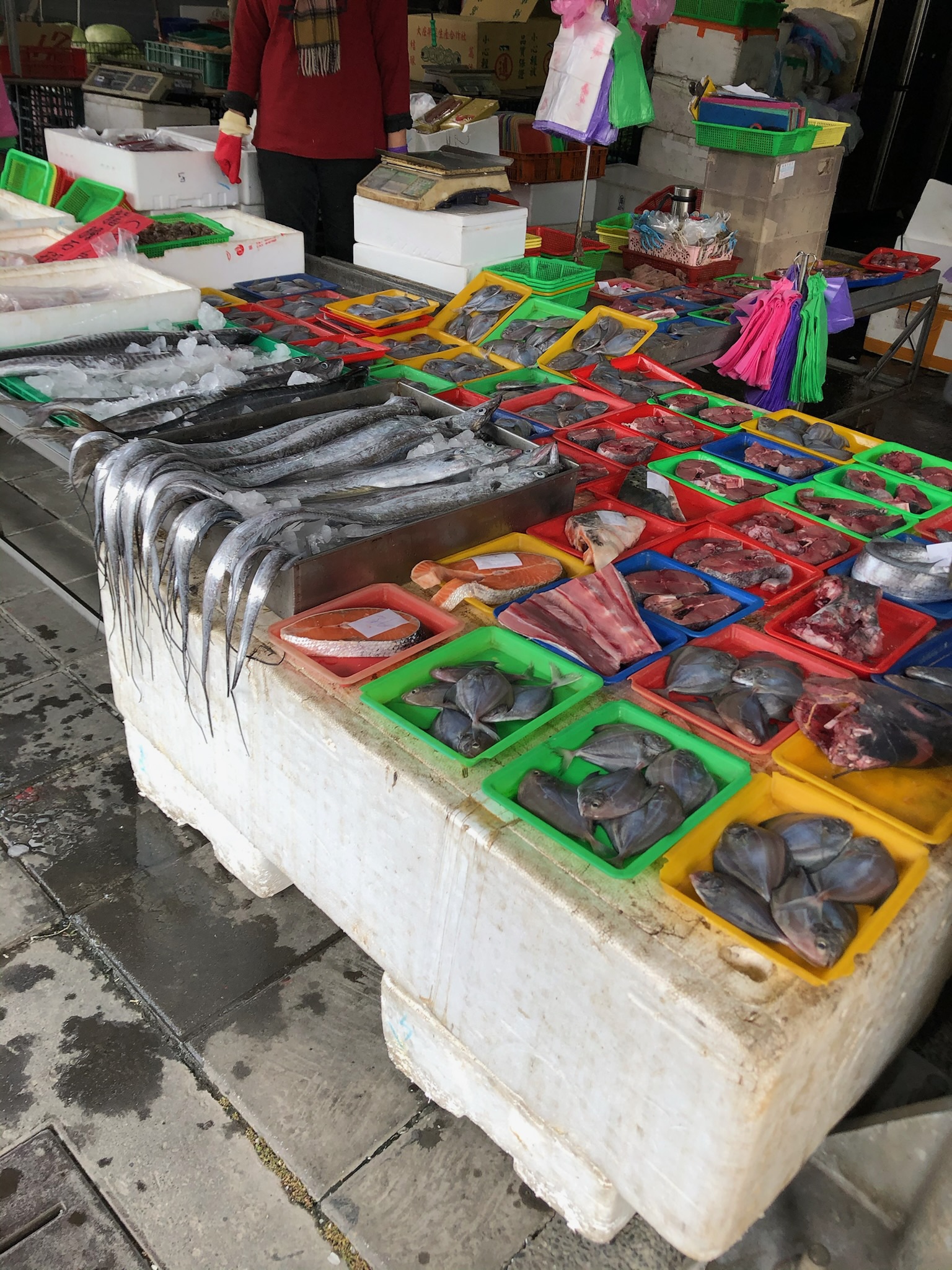
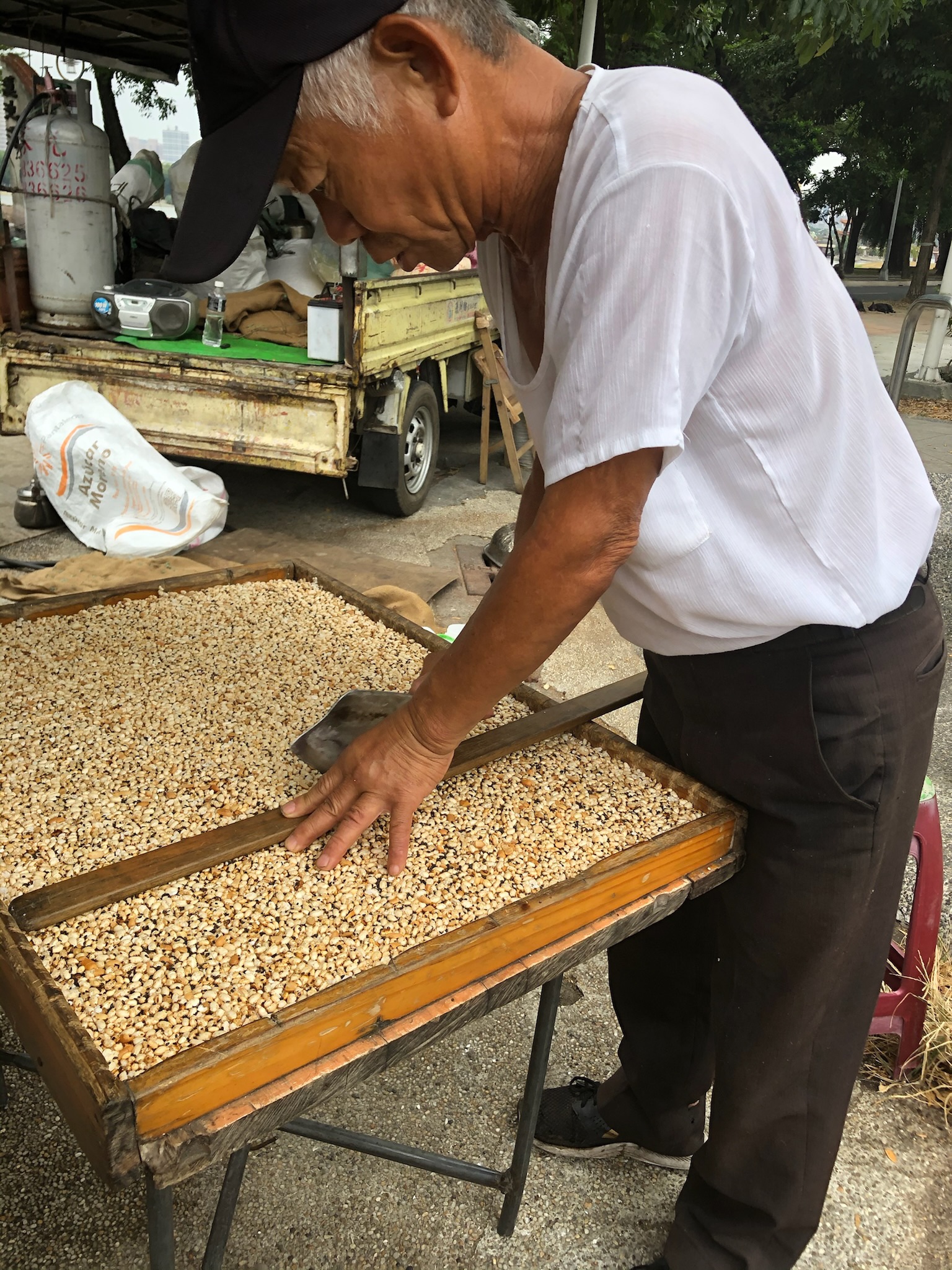
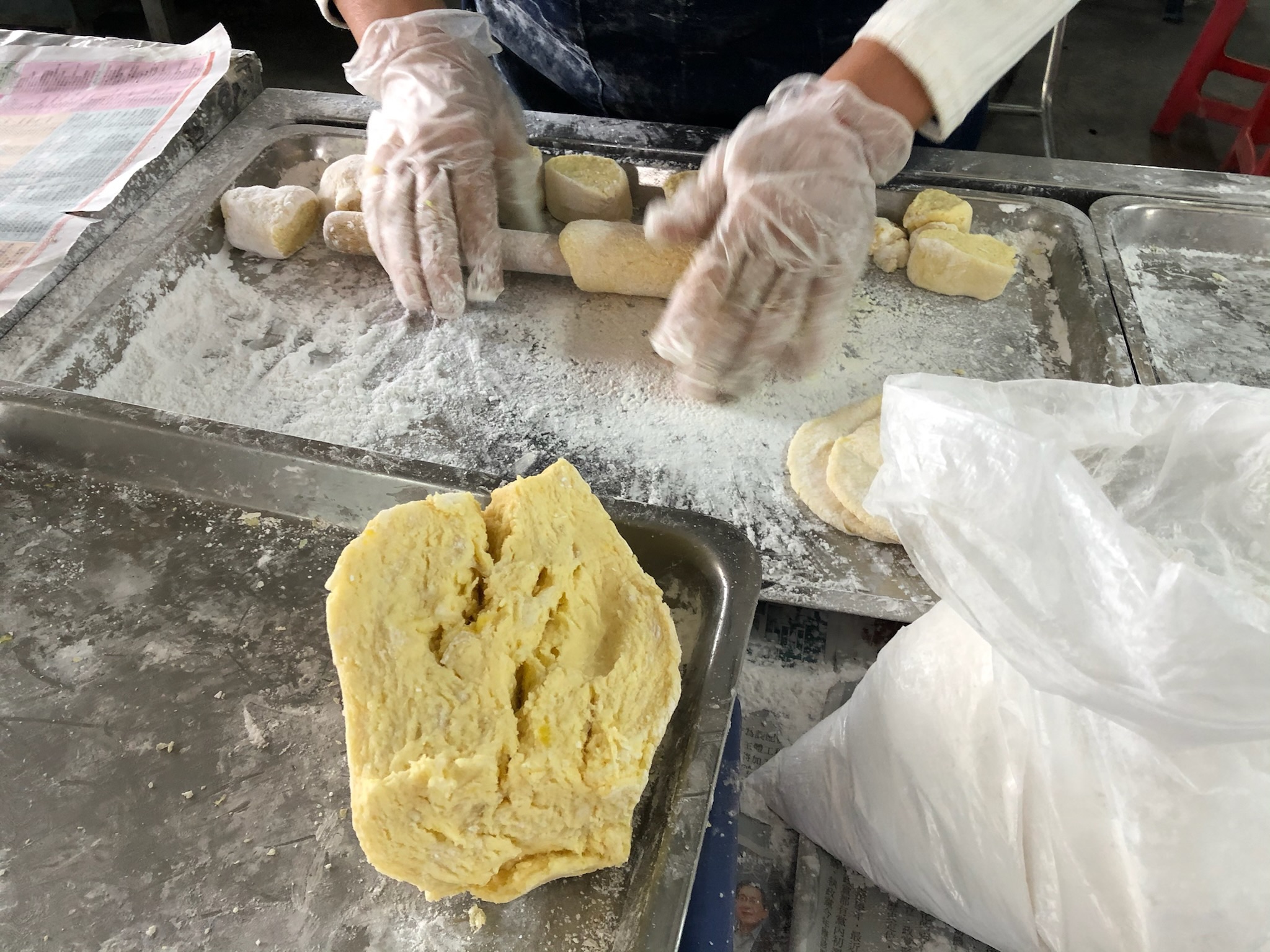
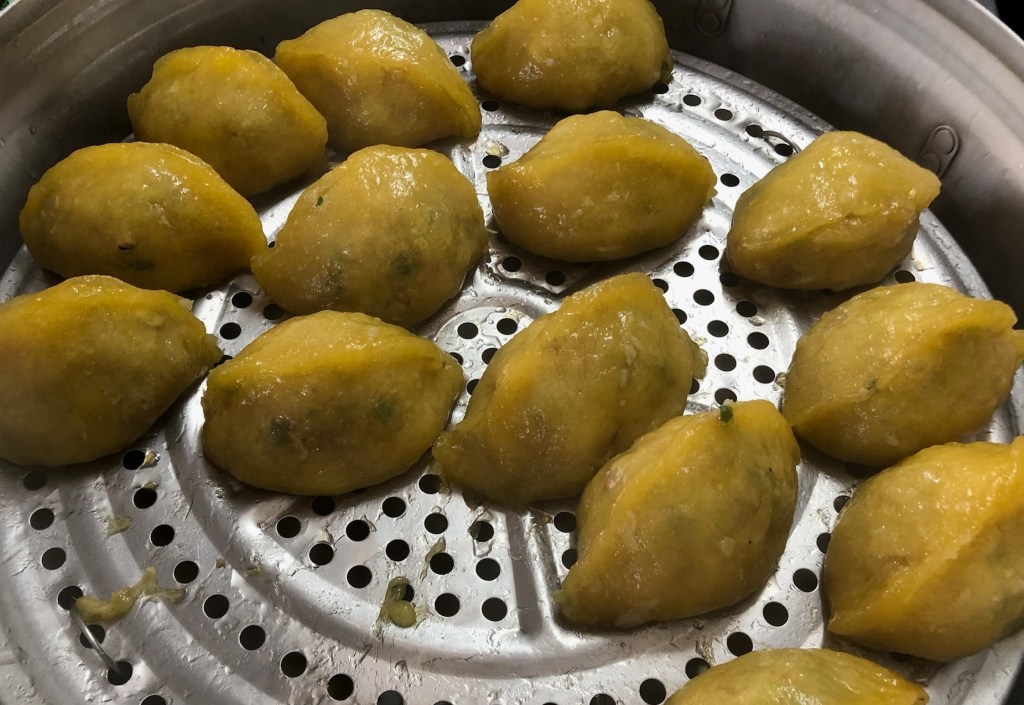
If you like to get moving early in the morning, then check out the morning market (closed by noon) at the north end of Lotus Pond. It is reachable by taking the subway to Zuoying station and exiting the west side towards the Pond, where one can get a YouBike and ride around the lake, catch a bus, or walk 5-10 minutes to reach the market. Here, one can see the traditional produce and meat vendors who have been in operation for decades and maybe generations, selling to moms and grandmas and small restaurant owners alike. This is one of the oldest parts of Kaohsiung, once the lively center. There are also food vendors creating traditional food stuffs that my mom still vividly remembers from her childhood.
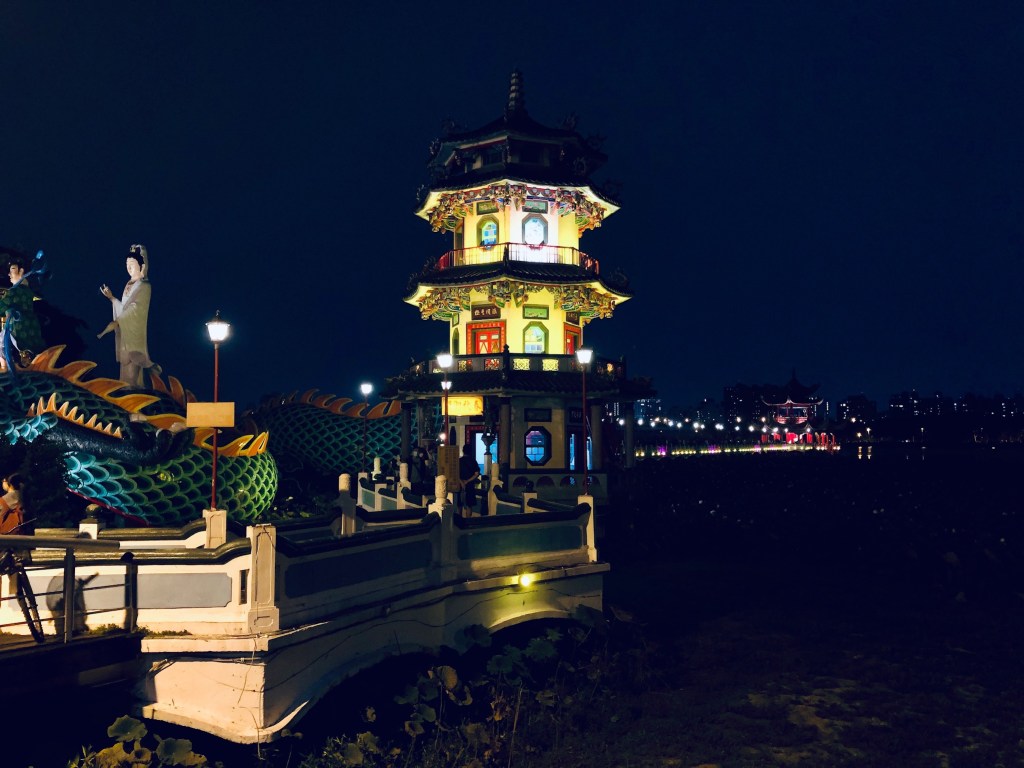
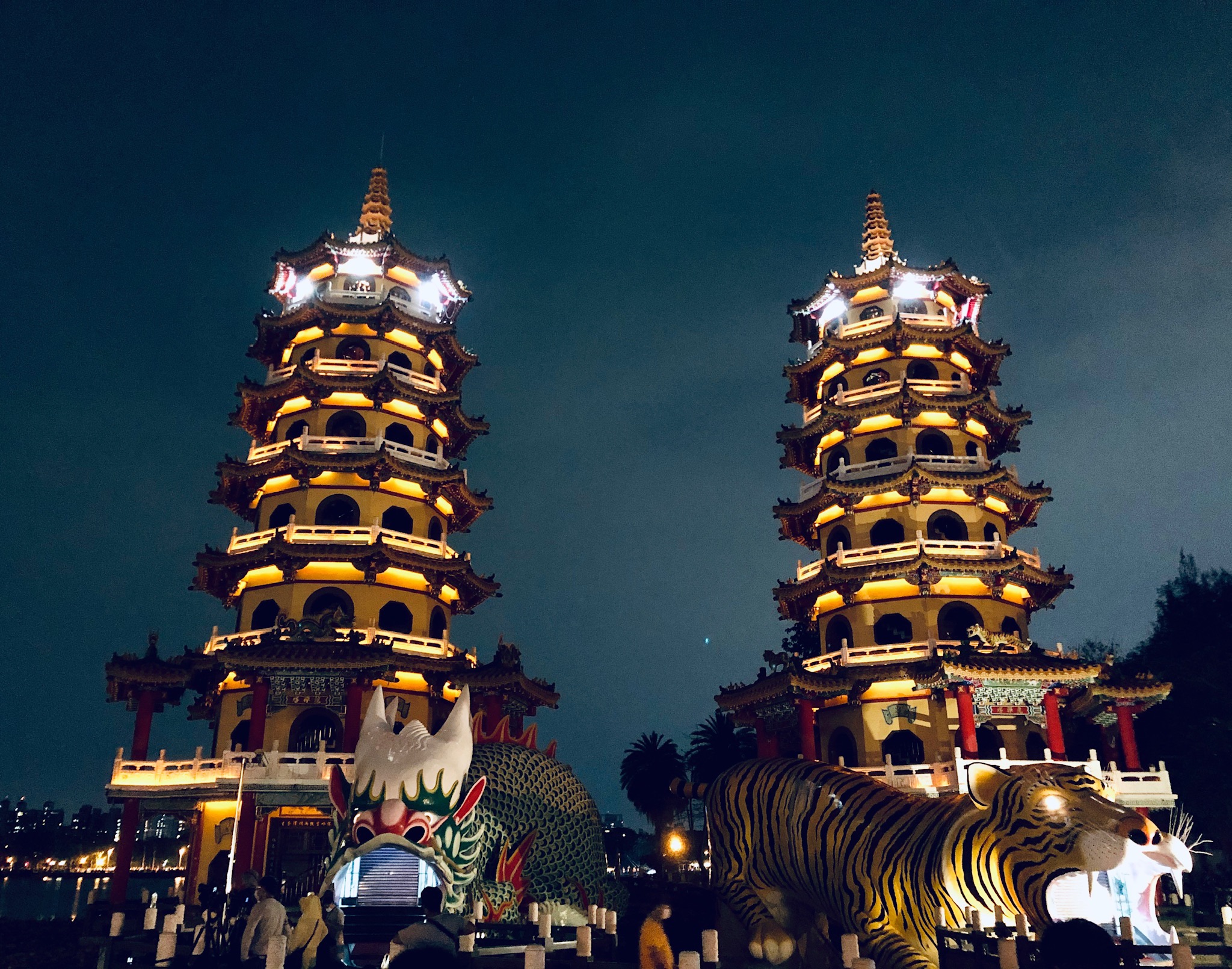
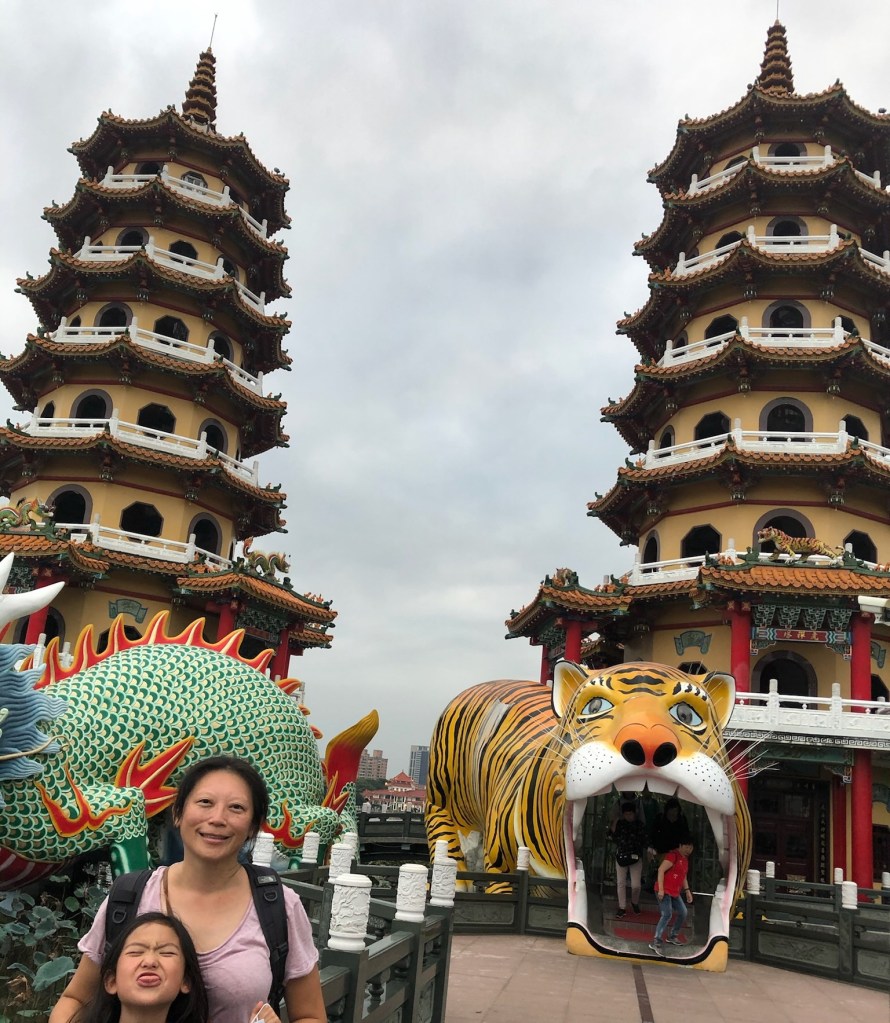
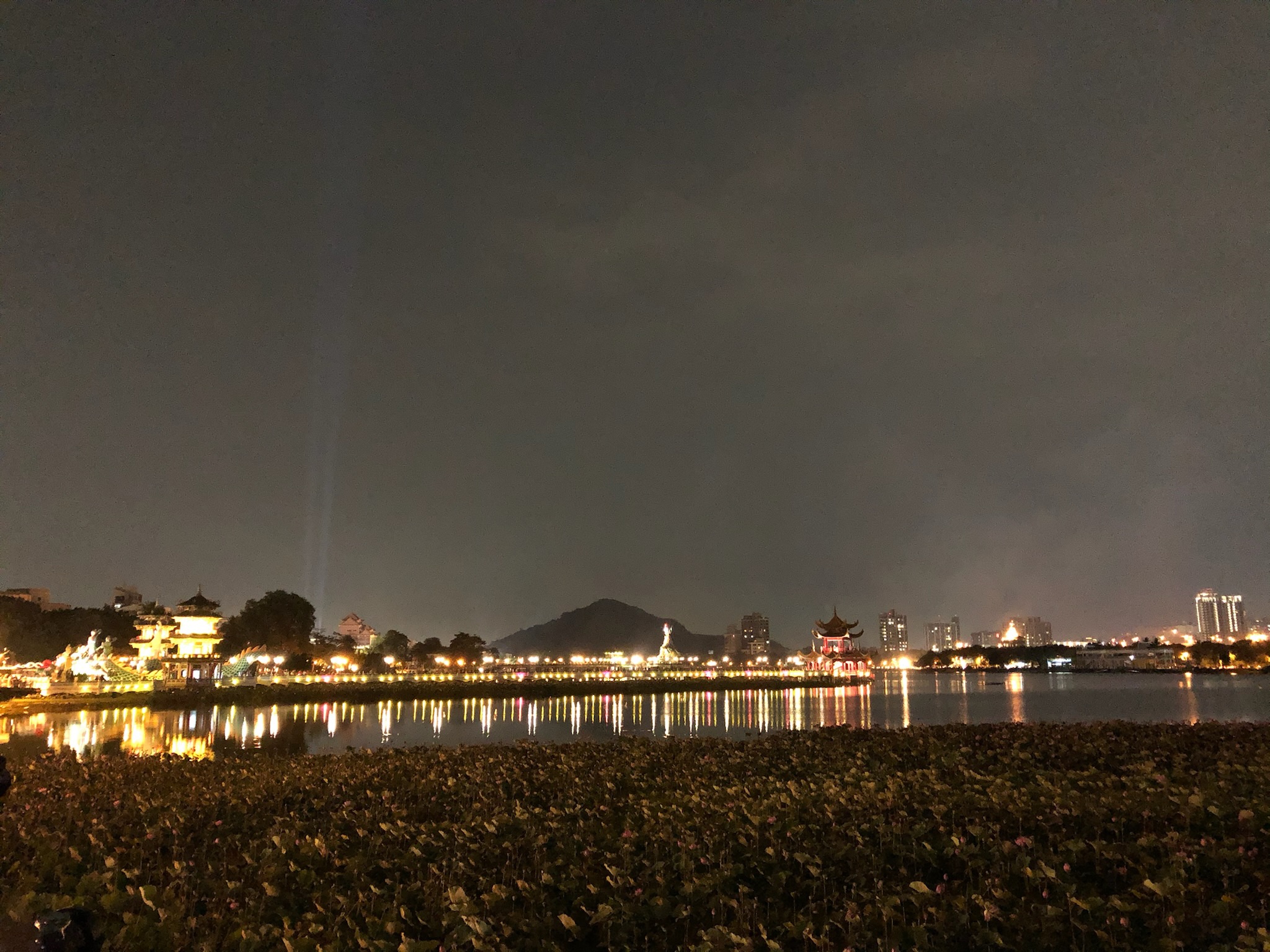
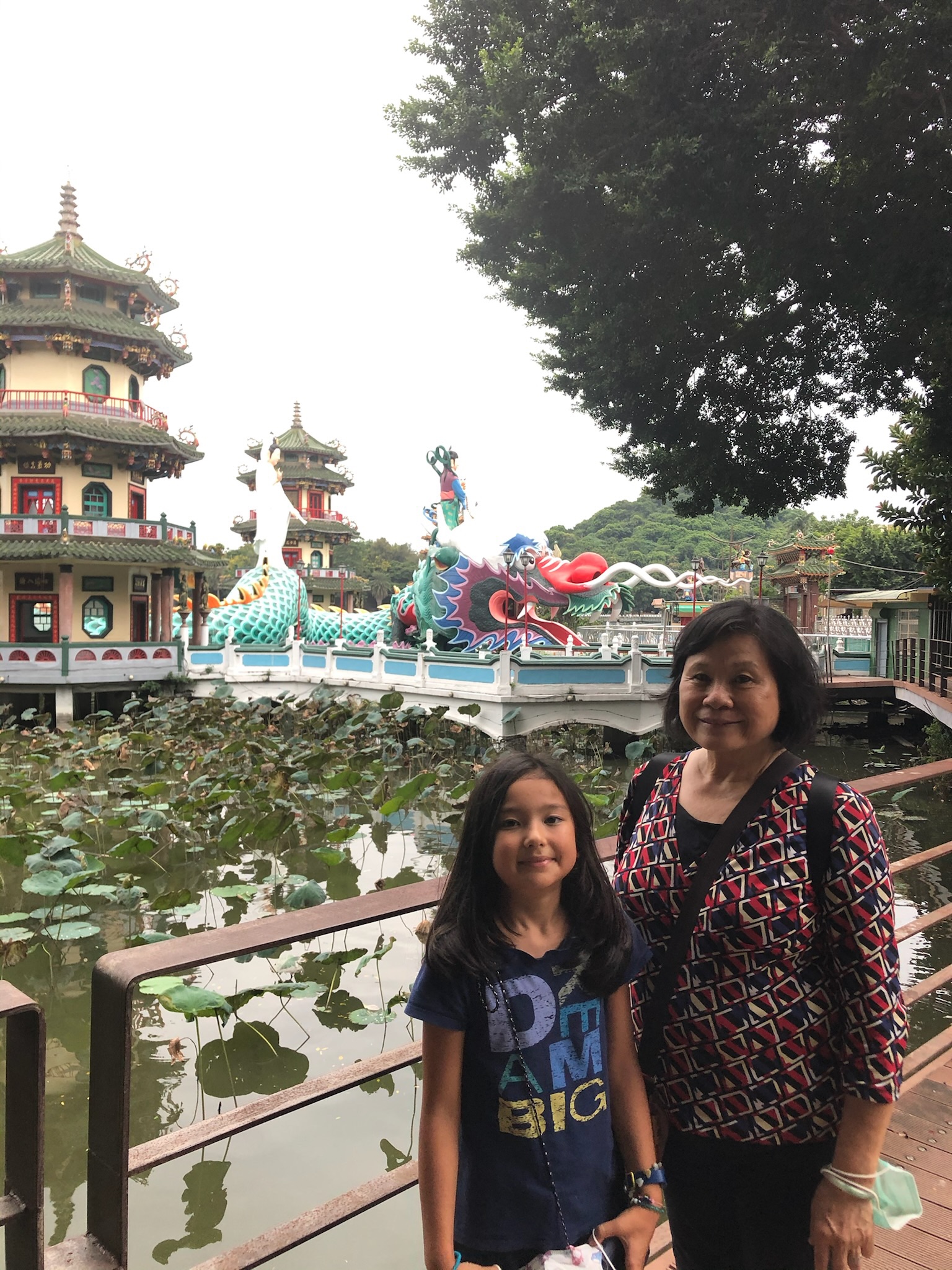
If on bike, one can take a leisurely ride around the pond and admire the many temples big and small, old and new, that dot the shores and even are built out into the lake. There’s the sedate Confucian temple contrasted with the numerous bright and gaudy sculptures and temples along the lake. The now famous twin towers and dragon and tiger temple are found at the southwestern part of the pond. Upon first impression, the gaudiness is intense but with further inspection, the colorfulness of the scene reflects the unique style of this form of religious art. The best part of the leisurely bike ride or stroll around the pond is experiencing the relaxed pace and rhythm of life in this neighborhood.
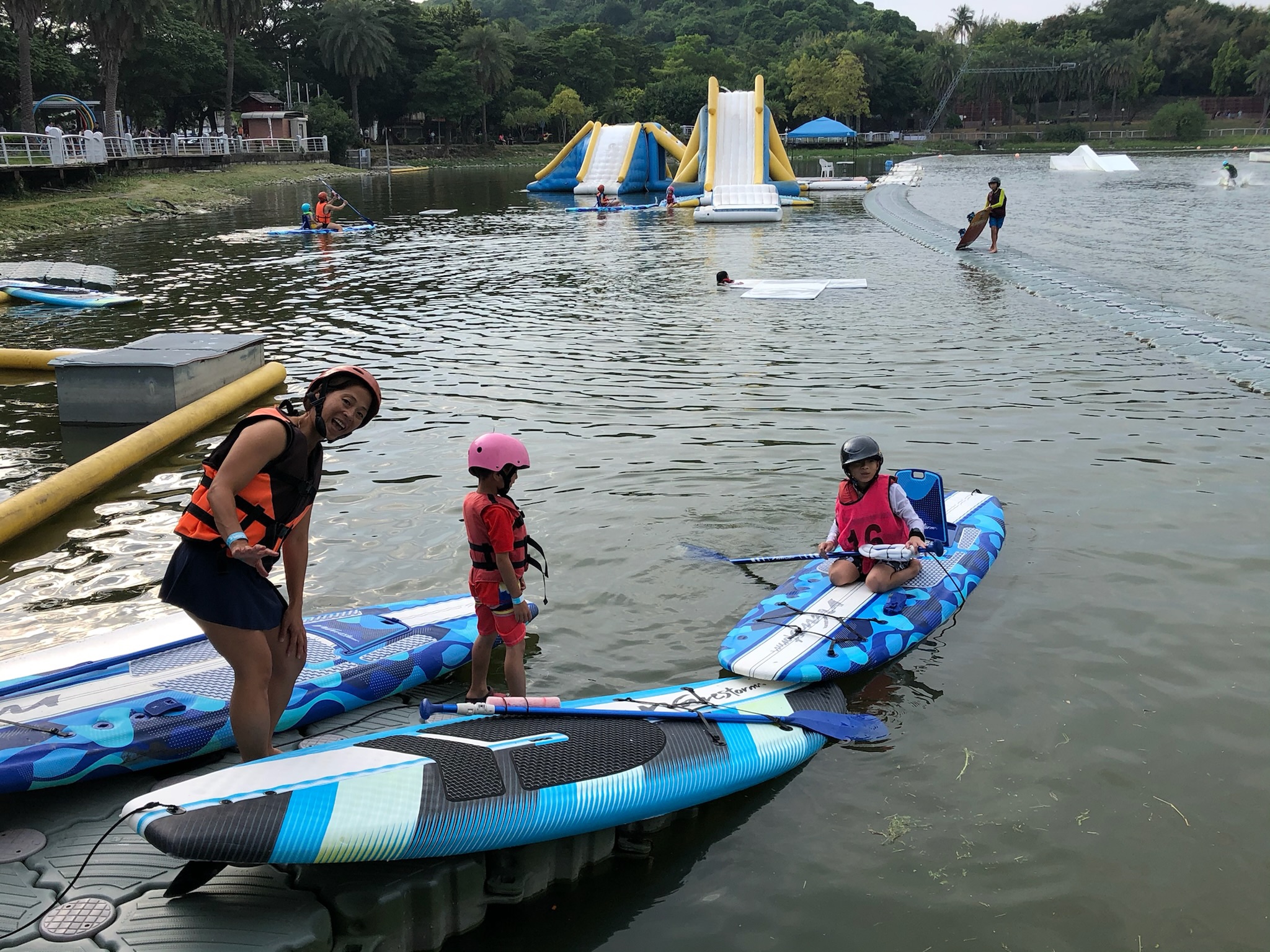
On the other side of the pond is also home to a wakeboarding venue open to the public. This somewhat odd juxtaposition with the religious setting of the pond is a welcome activity, especially in the heat of the day. One can also borrow standup paddle boats from the venue and use the water slides. Alternatively, for a less active form of sport, try shrimp fishing with the locals in the indoor shrimp farm if you can tolerate the smoking.
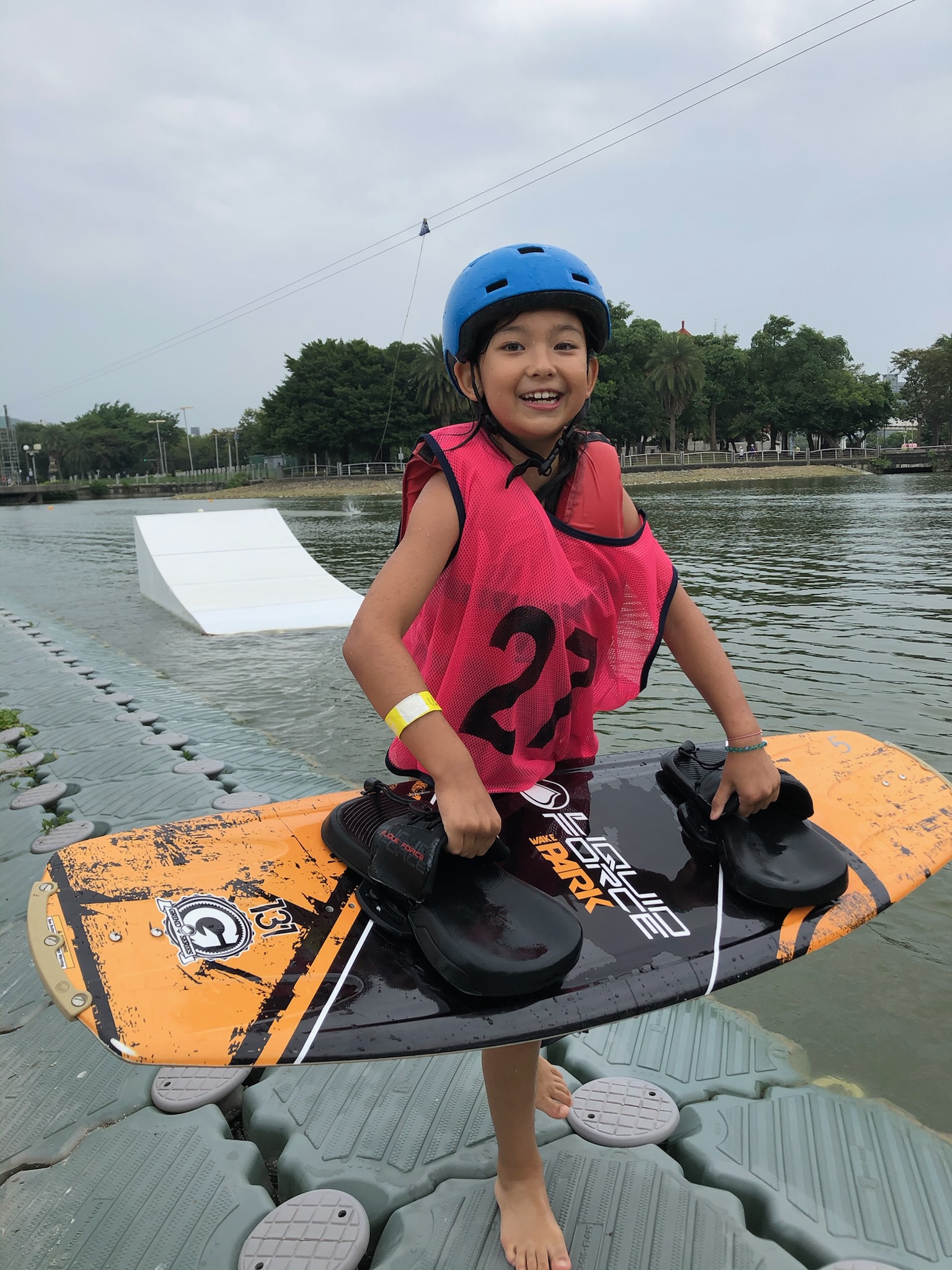
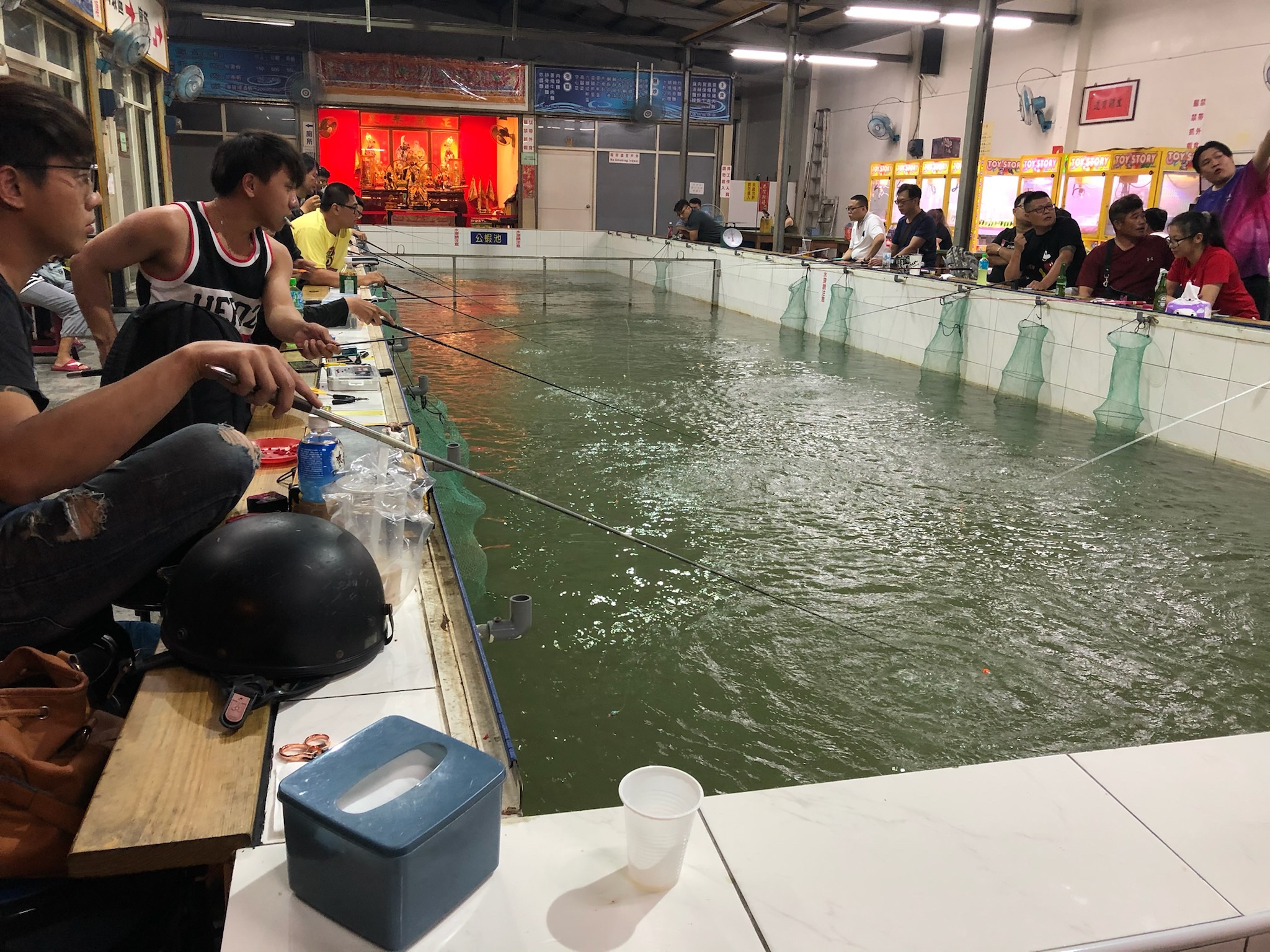
At anytime the heat and humidity of the day get too intense, do what the locals do and pop into the nearest indoor mall with plenty of international brands and multi-levels of food courts to sample.
Kaohsiung has a population of 2.7 million people but it certainly doesn’t feel like it as there’s plenty of parks, wide avenues, and elbow room compared to other Asian cities.
 Everyday Dan Bing